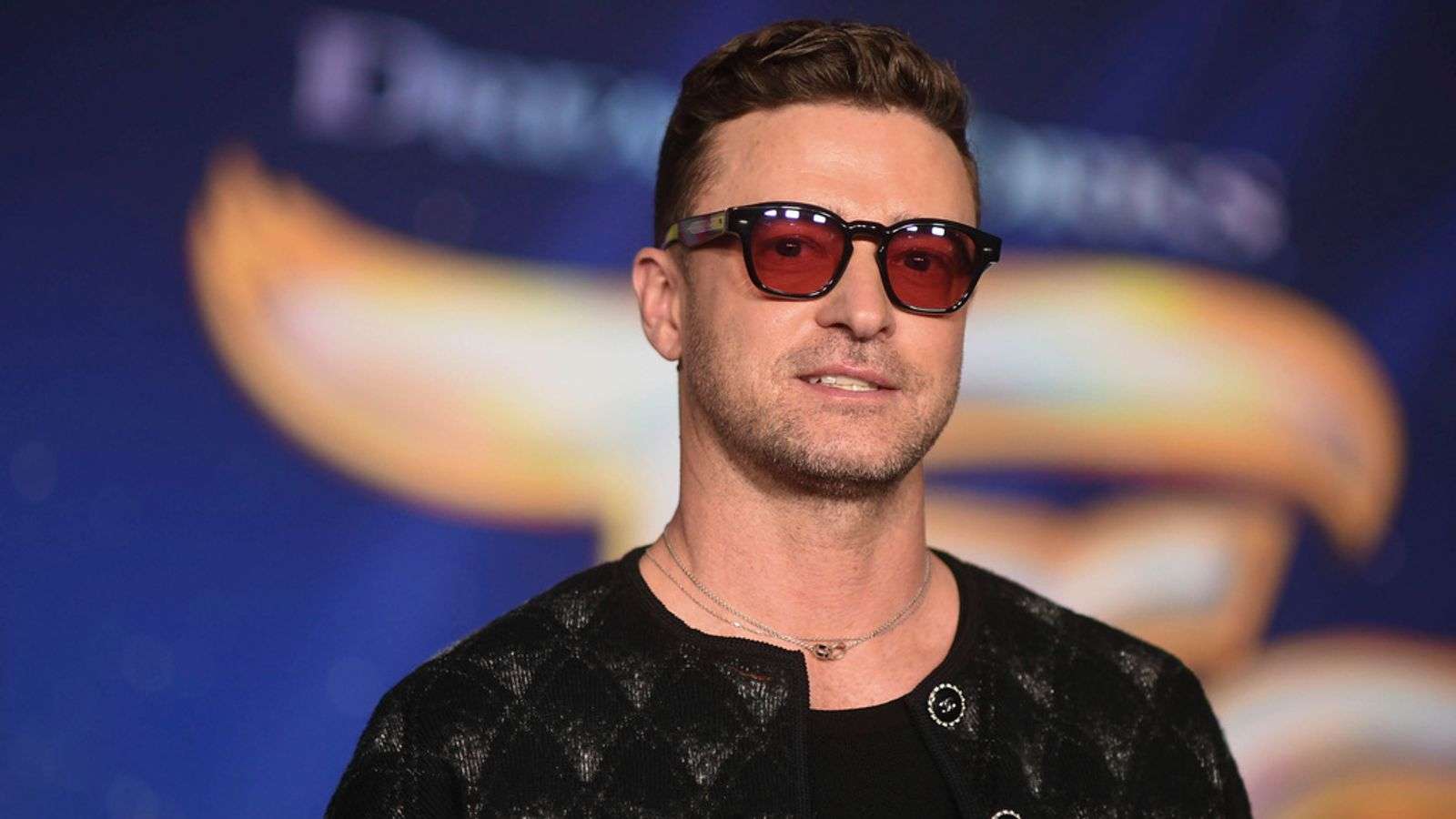
SAG HARBOR, NEW YORK: The final legal barriers preventing the public release of police bodycam footage involving Justin Timberlake have been lifted.
The singer, arrested in June 2024 on suspicion of driving while intoxicated, has now had the raw visual record of his interaction with New York State police made available after a protracted legal dispute.
It is the kind of clip that, a decade ago, might have lived and died in a courtroom filing, maybe resurfacing in a carefully managed documentary years later.
Instead, it lands straight in the feed: unedited, endlessly shareable, and awkward in the way real life tends to be.
The arrest that everyone is watching
The footage shows the moments leading up to Timberlake’s arrest, including the exchange with a junior officer who reportedly did not recognise him.
That small detail has travelled almost as far as the arrest itself, because it punctures the usual celebrity bubble in a single line: this is a famous person, but the situation is still just a roadside stop with rules, procedures, and consequences.
Timberlake’s legal team had argued that releasing the video would violate his right to privacy and cause irreparable damage to his reputation.
A New York judge disagreed, ruling that the public interest in the conduct of law enforcement and the principle of equal treatment under the law outweighed the star’s personal concerns.
Redactions were made to protect third parties and sensitive police procedures, but the core of the interaction remains intact.
When viral fame meets reality
The timeline matters.
The incident dates back to the early hours of 18 June 2024, when Timberlake was pulled over after failing to stop at a stop sign and reportedly weaving out of his lane in Sag Harbor.
Initial reporting described “bloodshot and glassy” eyes and a strong odour of an alcoholic beverage.
The criminal case ended later in 2024 with a plea deal that reduced the charge to a traffic violation of driving while ability impaired, but the fight over releasing the bodycam video kept rolling long after the courtroom bit had wrapped.
This is where the modern dynamic feels different.
The legal system might be done, but the internet is never done, and the clips live on as a kind of informal, crowd-sourced “accountability programme” that can be harsher than any official penalty.
That is partly why this footage has become bigger than the specific offence: it is content now, and content has its own logic.
The shifting rules of modern Hollywood
For decades, celebrity crisis management relied on distance and scarcity: a statement from a publicist, a friendly interview, a strategically timed apology, then moving on.
Bodycams and phone cameras have changed the baseline.
The footage is objective, persistent, and frankly a bit grim in its normality, stripping away the polish that usually props up a public image.
There is also a wider point that fans are increasingly unwilling to ignore: privilege does not translate well on video, especially in moments that look like everyday enforcement.
At the same time, the release acts as a check on policing too, offering a record of whether officers were fair, professional, and consistent.
In this case, the footage appears to confirm professional conduct, undercutting claims that a famous suspect was either targeted or given special treatment.
The message, for Hollywood and everyone who depends on a curated persona, is pretty simple: the “edit” no longer belongs to the star, and the camera rarely cares who you are.