



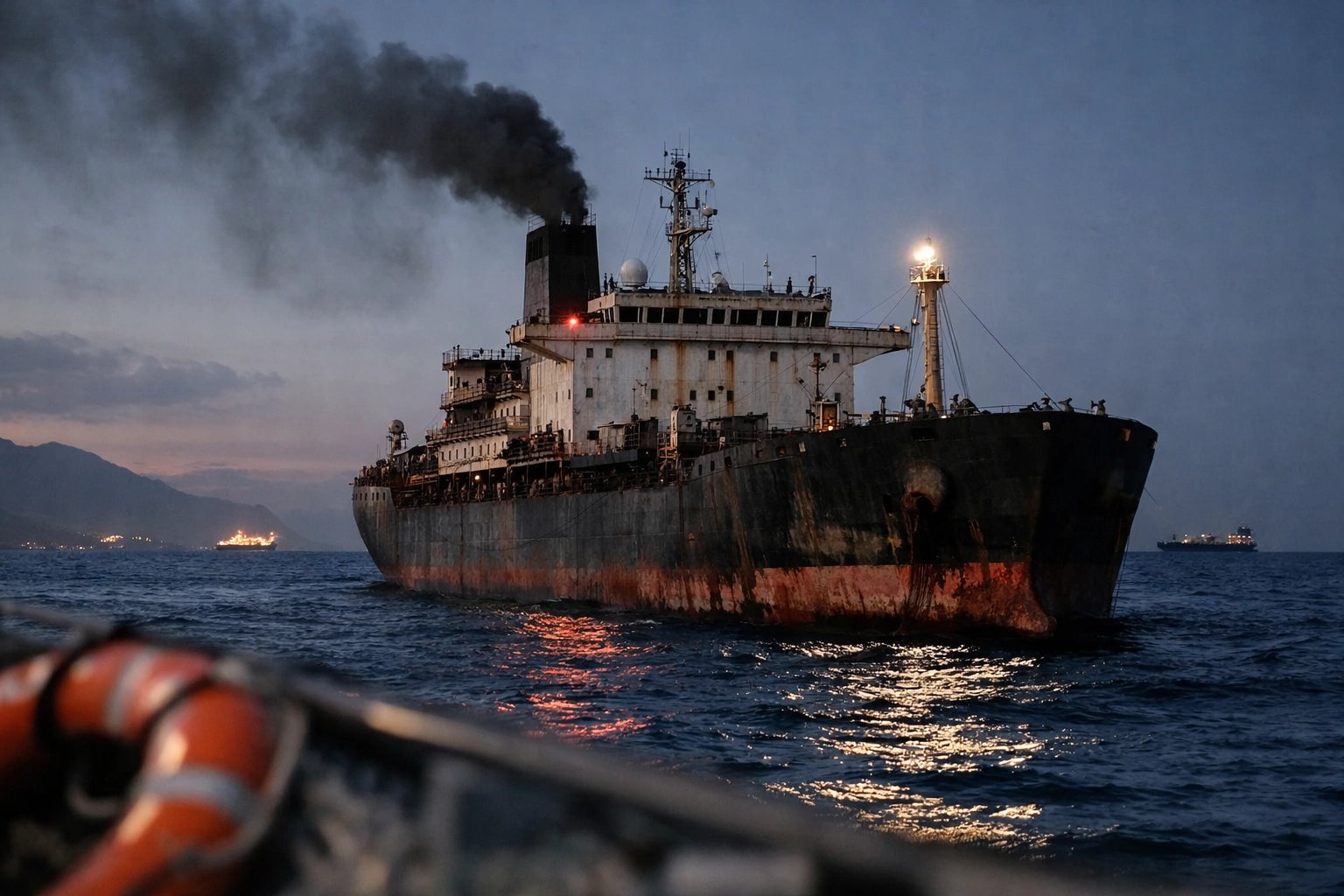
A Russian shadow fleet tanker remains adrift in the Mediterranean Sea following a suspected sea drone strike, sparking urgent fears of an ecological catastrophe. The vessel, identified as the Arctic Metagaz, was reportedly targeted in international waters near the coast of Malta.
The incident marks a significant escalation in the maritime conflict linked to the ongoing war in Ukraine. If confirmed as a Ukrainian strike, it represents the first time a Russian liquefied natural gas (LNG) tanker has been targeted by sea drones.
Emergency maritime services in both Malta and Italy have been placed on high alert as the damaged vessel continues to list in heavily trafficked shipping lanes. The Arctic Metagaz is part of a clandestine network of ships used by Moscow to bypass international sanctions and continue the flow of energy exports.
This "shadow fleet" operates outside standard maritime regulations, often lacking the necessary insurance and safety certifications required by international law. Experts warn that the structural integrity of these ageing vessels is frequently compromised, making the threat of a major spill a primary concern for Mediterranean nations.
The Mediterranean ecosystem is particularly vulnerable to hydrocarbon pollution due to its semi-enclosed nature. A significant breach of the Arctic Metagaz’s hull could lead to devastating consequences for marine life and the tourism-dependent economies of Southern Europe.
The Shadow Fleet: A High-Stakes Game of Evasion
The presence of the Arctic Metagaz near Malta highlights the growing scale of Russia’s shadow fleet operations. Intelligence reports suggest the fleet now comprises approximately 590 vessels, many of which are decades old and have been purchased through shell companies to obscure their true ownership.
These ships are frequently registered under "flags of convenience," such as those of Panama or Liberia, to evade the scrutiny of Western regulators. They often disable their Automatic Identification System (AIS) transponders, a practice known as "going dark," to hide their movements and locations from satellite tracking.
The primary purpose of this fleet is to transport Russian oil and gas at prices exceeding the G7-imposed price caps. By operating outside the traditional Western-led shipping and insurance sectors, Moscow has managed to maintain a vital revenue stream for its military operations.
However, the lack of P&I (Protection and Indemnity) insurance means that in the event of a collision or spill, there is no guaranteed financial mechanism to cover the costs of a clean-up. This leaves coastal states like Malta and Italy to bear the potential multi-billion-pound burden of environmental remediation.
Recent investigations into the shadow fleet have revealed a pattern of substandard maintenance and frequent ship-to-ship transfers in the open ocean. These transfers, conducted to further mask the origin of the cargo, are inherently risky and significantly increase the likelihood of accidental discharge.
The Arctic Metagaz was reportedly involved in such activities before the strike. Marine salvage experts have noted that the damage to the vessel’s propulsion system has left it unable to navigate, forcing it to drift at the mercy of prevailing currents.
Environmental Hazard: The Mediterranean Under Threat
The prospect of a damaged LNG or oil tanker drifting uncontrollably presents a nightmare scenario for environmental authorities. The Mediterranean Sea contains nearly 10 percent of the world's marine biodiversity despite making up less than 1 percent of the global ocean surface.
Maltese authorities have expressed grave concern over the proximity of the vessel to their territorial waters. Current wind patterns suggest that any leaked pollutants could reach the shores of Gozo and the main island of Malta within 48 hours, threatening sensitive coastal habitats.
Italy has also deployed coastguard vessels to monitor the situation, with the island of Sicily sitting directly in the potential path of the drifting tanker. The Italian Ministry of the Environment has warned that a major spill would impact protected marine areas and critical fishing grounds.
The Arctic Metagaz is believed to be carrying a significant volume of volatile cargo. While LNG disperses more quickly than crude oil, the thermal impact of a leak and the risk of fire or explosion pose immediate dangers to nearby shipping and crews.
Historical precedents in the region, such as the Haven oil spill off the coast of Italy in 1991, serve as a stark reminder of the long-term damage caused by tanker accidents. Recovery from such events can take decades, with pollutants remaining in the sediment and entering the food chain.
Western nations have increased their surveillance of these vessels, but the legal framework for intervening in international waters remains complex. The shadow fleet effectively exploits these legal grey zones to continue its operations despite the obvious risks to global maritime safety.
The incident has reignited calls for stricter international enforcement against "rogue" shipping. Critics argue that until the vessels are physically prevented from operating without valid insurance and safety records, the Mediterranean will remain at risk of a man-made disaster.
Global Security: Disruption of the Russian War Machine
The strike on the Arctic Metagaz coincides with a broader crackdown on the shadow fleet by European powers. On 20 March, French authorities successfully intercepted and seized the tanker Deyna in the Western Mediterranean, acting on intelligence regarding sanctions violations.
These enforcement actions are part of a coordinated strategy to "starve Putin’s war machine of funds," according to British defence officials who provided logistical support for the French operations. The goal is to make the operation of shadow vessels so risky and expensive that they are no longer viable for the Kremlin.
Intercepting these ships requires a high degree of international cooperation. The European Union has recently expanded its "shadow fleet list," which identifies specific vessels and companies that are prohibited from entering EU ports or receiving maritime services from member states.
The targeting of LNG tankers represents a new phase in the economic warfare between the West and Russia. While crude oil has been the primary focus of sanctions, the Russian gas sector is a critical component of Moscow's long-term economic strategy.
Strategic analysts suggest that disabling Russia's ability to transport gas via the sea forces the Kremlin to rely more heavily on pipelines, which are easier to monitor and regulate. This shift puts additional pressure on the Russian economy, which is already struggling under the weight of prolonged conflict.
However, the use of sea drones in the Mediterranean raises questions about the security of all commercial shipping in the region. The proliferation of drone technology has made it possible for non-state actors or smaller nations to strike targets far from their own shores.
As the Arctic Metagaz remains adrift, the international community faces a difficult choice. Allowing the vessel to continue its current course risks an environmental disaster, while attempting a boarding or salvage operation on a damaged ship in international waters carries significant geopolitical and physical risks.
The situation remains fluid, with satellite imagery showing the vessel moving slowly towards the north-west. Maritime salvage teams from private contractors are reportedly in the area, but their ability to secure the vessel is hampered by the ongoing threat of further attacks and the vessel’s uncertain structural condition.