






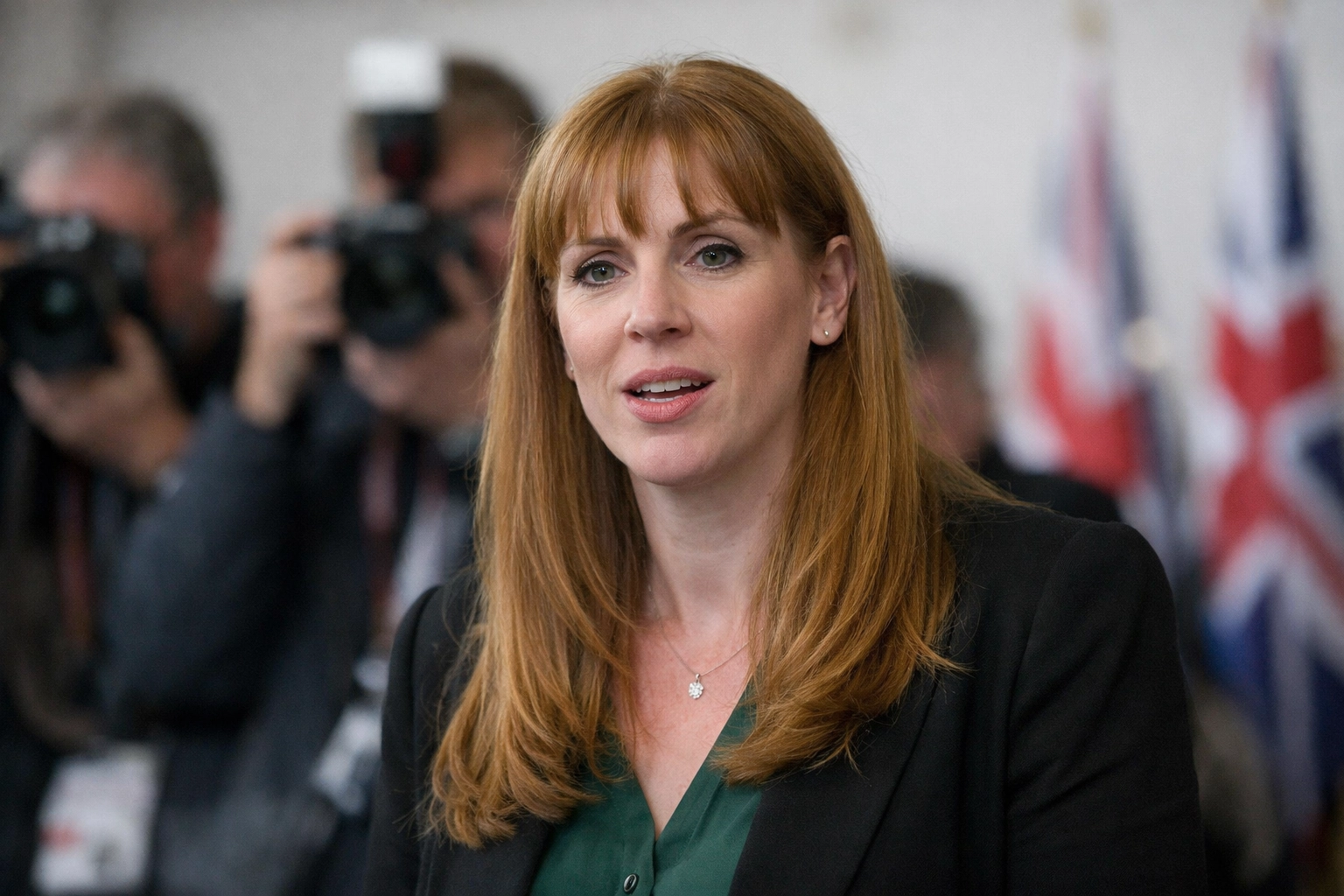
Baroness Harriet Harman has launched a blistering critique of Angela Rayner, accusing the Deputy Prime Minister of undermining the Labour government with a "negative intervention" that risks destabilising the party’s central mission.
The intervention from Baroness Harman, a veteran figure and former deputy leader, marks a significant escalation in internal tensions within the Starmer administration. Speaking in an interview on Monday morning, Harman described Rayner’s recent public warnings as "wrong" and warned that such rhetoric only serves the interests of political opponents.
The dispute follows a high-profile speech by Rayner in which she suggested the government was "running out of time" to deliver on key promises. She also took direct aim at the Home Office’s latest immigration reforms, labelling the proposed restrictions as "un-British."
Harman, who served in the cabinets of both Tony Blair and Gordon Brown, suggested that Rayner’s approach was unhelpful and lacked the constructive focus required of a senior cabinet minister. She argued that the Deputy Prime Minister had failed to offer viable alternatives while simultaneously attacking the government’s collective stance.
The Growing Ideological Divide Within Downing Street
The friction between Baroness Harman and Angela Rayner highlights a widening gap between the pragmatic, centre-ground strategy adopted by Sir Keir Starmer and the more radical, grassroots-focused wing of the party. Rayner, often seen as the bridge between the leadership and the trade unions, has increasingly voiced concerns regarding the pace and direction of government policy since the turn of the year.
In her address last week, Rayner cautioned that the electorate’s patience is not infinite. She argued that the Labour Party must move faster to address the cost-of-living crisis and public sector infrastructure, or risk a terminal loss of confidence. However, it was her critique of internal government policy that drew the sharpest rebuke from the party’s old guard.
Harman’s primary contention is that public dissent from within the cabinet is a luxury the government cannot afford in the current economic climate. She suggested that while debate is essential within the privacy of the cabinet room, taking these grievances to the public stage creates a perception of a fractured executive.
The former mother of the House of Commons emphasised that the role of the Deputy Prime Minister should be to unify and implement, rather than to serve as an internal opposition. Political analysts suggest this clash is not merely a personal disagreement between two influential women, but a proxy battle for the soul of the Labour Party as it navigates a difficult second year in power.
The government currently faces significant pressure from the backbenches, where a growing number of MPs have expressed private concerns about the "Starmerite" approach to fiscal discipline. By vocalising these concerns, Rayner has effectively become a lightning rod for those who feel the government has strayed too far from its socialist roots.
Immigration Policy and the Rhetoric of ‘Un-British’ Reforms
Central to the dispute is the Home Office's latest strategy for managing net migration and asylum processing. The government’s proposed reforms include tighter visa caps and streamlined deportation processes for those without a legal right to remain in the United Kingdom.
Angela Rayner’s description of these measures as "un-British" has caused particular consternation among the Labour leadership. She claimed that the reforms mirrored the "hostile environment" policies of previous Conservative administrations and failed to reflect the country's historical values of fairness and sanctuary.
Baroness Harman responded directly to this phrasing, asserting that such emotive language is counterproductive. She stated that it was "wrong" for Rayner to condemn the proposals without providing a detailed, alternative framework that addresses the public’s very real concerns regarding border control and population growth.
Harman went a step further, drawing a direct comparison between Rayner’s rhetoric and the tactics used by fringe political entities. She argued that by using highly charged, idealistic language to attack practical policy, Rayner was echoing the communication styles of Nigel Farage’s Reform UK on the right, and the Green Party on the left.
The comparison to Farage is particularly stinging within the context of British politics. Harman suggested that both extremes of the political spectrum rely on "negative interventions" that focus on what is wrong with the current system without the responsibility of governing. For a sitting cabinet minister to adopt this tone, Harman argued, is a dereliction of duty.
The Home Office has defended its proposals, stating they are necessary to reduce the strain on public services and ensure the sustainability of the UK's social infrastructure. Internal sources suggest that Sir Keir Starmer remains fully committed to the reforms, viewing them as essential to retaining the support of "red wall" voters who prioritised immigration during the last election.
A Warning to the Front Bench and the Threat of Polarisation
The public nature of this disagreement has raised questions about the stability of the relationship between Number 10 and Number 11. While Sir Keir Starmer has so far avoided a direct public confrontation with his deputy, the intervention by a figure as senior as Baroness Harman is widely interpreted as a sanctioned warning.
Harman’s critique serves as a reminder of the fragility of the Labour coalition. The party’s landslide victory was built on a broad church of voters, many of whom hold diametrically opposed views on issues such as immigration, transgender rights, and net-zero targets. Harman argued that "negative interventions" only serve to highlight these internal contradictions, providing ammunition for an opposition that is currently regrouping.
Furthermore, Harman highlighted the risk of political polarisation. She noted that when senior ministers use language that suggests their own government is acting in an "un-British" manner, it validates the arguments of those who seek to portray the political establishment as out of touch or morally compromised.
The timing of the dispute is also significant. With local elections approaching and the government facing a difficult spring budget, the appearance of a cabinet in conflict could damage voter turnout and enthusiasm. Harman’s message was clear: the government must speak with one voice if it is to maintain its mandate for change.
The fallout from this clash is likely to continue throughout the week. Supporters of Angela Rayner have already begun to push back, arguing that her role is to be the "conscience of the party" and that her honesty is what makes her popular with the public. They contend that Harman’s views reflect an outdated era of "spin" and "message discipline" that no longer resonates with a modern electorate.
However, for Sir Keir Starmer, the challenge remains one of authority. As the Prime Minister attempts to navigate a complex series of international crises and domestic economic hurdles, the need for a cohesive front bench has never been more pressing. Whether Rayner will heed Harman’s warning and dial back her public criticism, or whether this marks the beginning of a more formal split within the cabinet, remains to be seen.
The Labour Party finds itself at a crossroads, balancing the demands of governance with the ideological expectations of its core base. The coming months will determine whether the "negative intervention" highlighted by Baroness Harman is a momentary lapse in discipline or a symptom of a deeper, more permanent divide.