





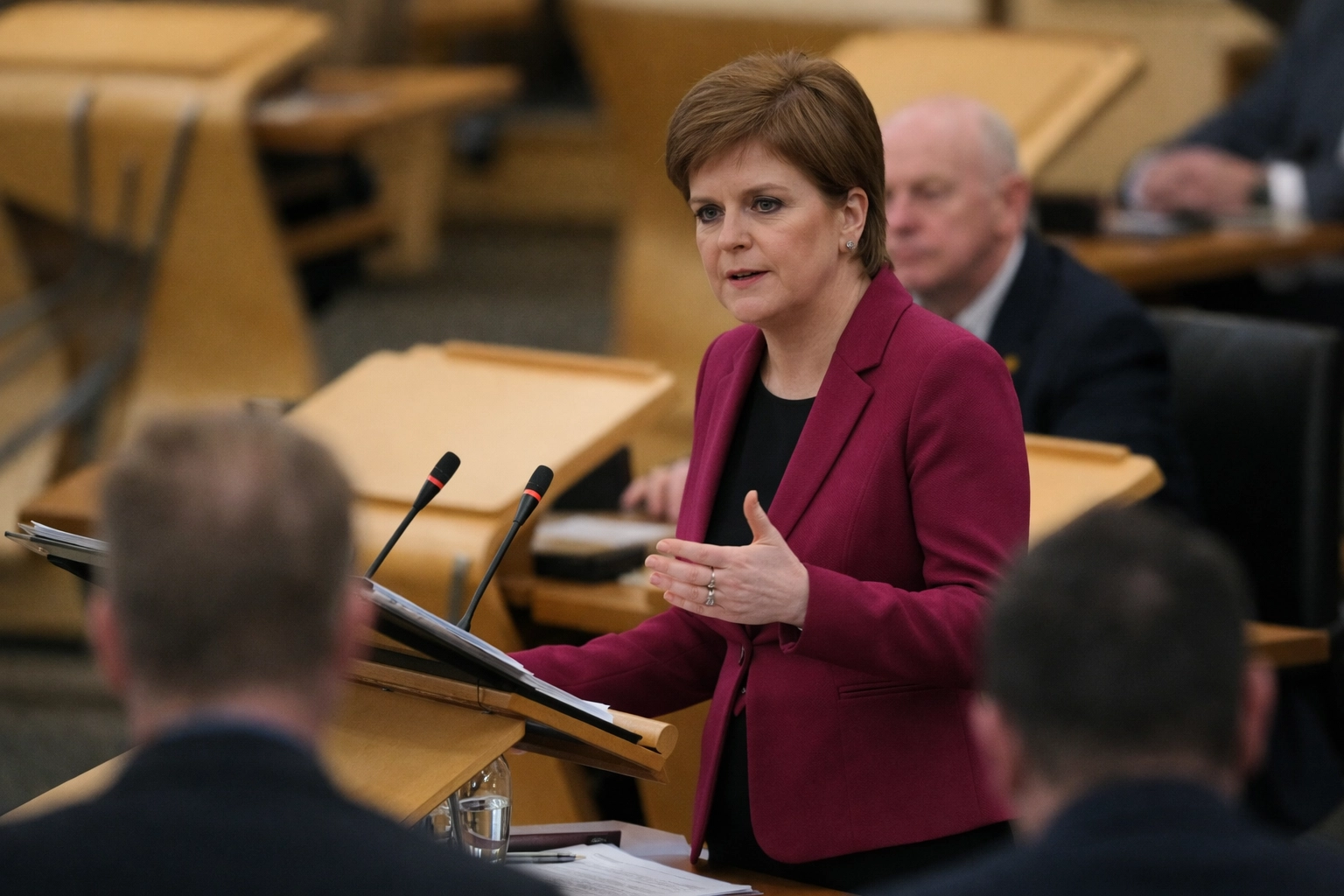
Nicola Sturgeon, Scotland’s longest-serving First Minister, has delivered a final, stark warning to the Scottish Parliament and the wider public as she prepares to exit the political frontline. In a valedictory speech that moved away from the constitutional debates that defined her career, Sturgeon focused on the "corrosive" impact of digital culture. Her central message was a plea for the next generation of leaders and citizens to reclaim their lives from the grip of social media platforms.
The former SNP leader, who has spent nearly three decades in elective office, addressed a packed Holyrood chamber on Monday. She described the evolution of political discourse from the early days of the Scottish Parliament in 1999 to the hyper-connected, often toxic environment of 2026. Sturgeon suggested that the digital tools once praised for democratising information have become the primary drivers of political polarisation and personal distress.
Her departure marks the end of an era for Scottish politics. Having led the country through the 2014 independence referendum, the COVID-19 pandemic, and various legislative milestones, Sturgeon used her final moments on the floor to reflect on the psychological toll of modern public life. She argued that the "outrage economy" of the internet is not only damaging the mental health of individuals but is actively undermining the foundations of democratic debate.
The Erosion of Civil Discourse in the Digital Age
Sturgeon began her critique by highlighting how the nature of political disagreement has shifted since the advent of the smartphone. In the early 2000s, political debate in Scotland was largely conducted through traditional media, town hall meetings, and parliamentary exchanges. Today, Sturgeon noted, the majority of political interaction takes place in an environment where nuance is discarded in favour of "performative anger" and algorithmic engagement.
The former First Minister pointed to the rise of the "echo chamber" as a significant threat to the stability of the UK’s political landscape. She argued that social media platforms are designed to show users content that reinforces their existing biases, making it increasingly difficult for opposing sides to find common ground. This phenomenon, she suggested, has led to a "dehumanisation" of political opponents, where individuals are seen as avatars of an ideology rather than human beings with complex lives.
Data from recent parliamentary studies support Sturgeon’s concerns. Reports indicate that female politicians, in particular, are targeted with a disproportionate amount of online abuse, ranging from misogynistic slurs to credible threats of violence. Sturgeon admitted that while she had developed a "thick skin" over her years in office, the constant barrage of digital vitriol has made the profession of politics less attractive to talented young people, particularly those from marginalised backgrounds who fear the inevitable online backlash.
The Psychological Toll of the Infinite Scroll
Transitioning from the political to the personal, Sturgeon’s speech touched upon the broader public health implications of social media addiction. While she rose to prominence in an era that celebrated the "selfie-ready" politician, she expressed regret over how much of modern life is now mediated through a screen. Her advice to the youth of Scotland was simple: "don't live your life on social media; live it in the real world."
This warning mirrors recent global trends and warnings from health authorities. Research conducted over the last few years indicates that teenagers who spend more than three hours a day on social media platforms face double the risk of developing symptoms of depression and anxiety. Sturgeon highlighted that features such as infinite scrolling and push notifications are engineered to exploit human psychology, creating a cycle of dependency that is difficult to break.
She spoke candidly about the pressure to be "always on" and the impact this has on the ability to think deeply about complex issues. In a world where a political career can be derailed by a single misinterpreted post or an out-of-context video, Sturgeon argued that the fear of the "digital mob" is stifling creativity and bravery in policymaking. She urged MSPs to prioritise face-to-face interactions with their constituents, suggesting that the "humanity found in a community centre" can never be replicated by a viral thread on X or TikTok.
Reclaiming Reality for Future Generations
In the final section of her address, Sturgeon called for a fundamental shift in how society views its relationship with technology. She advocated for a "digital detox" of the political system, where the quality of an idea is valued more than the number of likes it receives. Her parting advice was aimed at the activists and students who have grown up in a world where their every move is recorded and shared online.
Sturgeon emphasised that the most meaningful moments of her career: those involving genuine connection and legislative change: did not happen in the comment sections of news sites. They happened in private meetings, in the quiet corners of the parliament building, and in the homes of people across Scotland. She warned that if the trend toward digital-first living continues, the country risks losing its sense of community and its capacity for empathy.
The speech concluded with a call for legislative bodies to take a more proactive role in regulating the platforms that have come to dominate public life. While acknowledging the importance of free speech, Sturgeon argued that the current lack of accountability for big tech companies is a "failed experiment" that has left children and democratic institutions vulnerable. As she stepped down from the podium for the last time, the chamber responded with a sustained ovation, reflecting a rare moment of cross-party agreement on the gravity of her message.
Sturgeon’s exit from the Scottish Parliament marks a turning point for the SNP and for Scotland as a whole. As the country moves forward into the latter half of the decade, the questions she raised about the survival of civil discourse in the age of the algorithm remain unanswered. The legacy of her leadership will be debated for years, but her final warning about the dangers of living life through a lens may prove to be her most enduring contribution to the national conversation.
The response from digital rights groups and mental health charities has been swift, with many echoing Sturgeon’s calls for a more balanced approach to technology. Whether the political class and the public at large can heed her advice remains to be seen, but the debate over the "Sturgeon Warning" is expected to dominate the legislative agenda in the coming months. For now, the former First Minister’s final word serves as a reminder that in an increasingly digital world, the most important connections remain those made in person.