





Rachel Reeves has officially called time on the era of universal energy support. In a move that marks a definitive shift in the government’s fiscal strategy, the Chancellor confirmed today that the Treasury will no longer provide blanket subsidies to help with heating and electricity bills, regardless of how high the markets climb. The announcement comes at a moment of extreme geopolitical tension, as the escalating conflict with Iran continues to wreak havoc on global oil and gas prices. For millions of households: specifically those in the middle-income bracket who do not qualify for means-tested benefits: the news is a significant blow.
The decision was delivered with the characteristic bluntness that has come to define Reeves’ tenure. Standing at the dispatch box, she made it clear that the "black hole" in the public finances, exacerbated by the costs of indirect involvement in the Middle Eastern theatre, left no room for "broad-brush" interventions. The message was simple: the state can no longer afford to pay the bills of those it deems capable of weathering the storm, even if that "weathering" involves significant financial pain.
The End of the Universal Safety Net
The Chancellor’s statement effectively dismantles the last remnants of the energy price guarantees that have, in various forms, protected British consumers since the initial price spikes of 2022. Reeves argued that the government must "prioritise the most vulnerable," a phrase that has become a harbinger of hardship for those just above the poverty line. By restricting energy aid strictly to those on Pension Credit or Universal Credit, the government is leaving a massive section of the population to face the full force of a volatile global market.
This policy shift is not occurring in a vacuum. The current conflict involving Iran has led to a sustained blockade of key shipping lanes, causing energy wholesalers to price in a "war premium" that shows no signs of dissipating. While the government has previously stepped in to blunt these spikes, the Treasury’s coffers are reportedly nearing exhaustion. Reeves noted that the "fiscal reality" of 2026 is one of hard choices, where every pound spent on energy subsidies is a pound taken away from a crumbling NHS or the rising defence budget.
The atmospheric shift in Westminster is palpable. Critics from across the house have pointed out that "vulnerability" is a sliding scale. A family of four with a combined income of £45,000 might not be eligible for benefits, but after paying a record-high mortgage and rising grocery costs, an additional £150 a month on energy bills is enough to tip them into debt. Reeves, however, remained unmoved, stating that the era of "borrowing to fuel our radiators" is over. The government is betting that by focusing support only on the very poorest, they can prevent a total social collapse while maintaining a semblance of fiscal discipline.
A Middle-Class Crisis in the Making
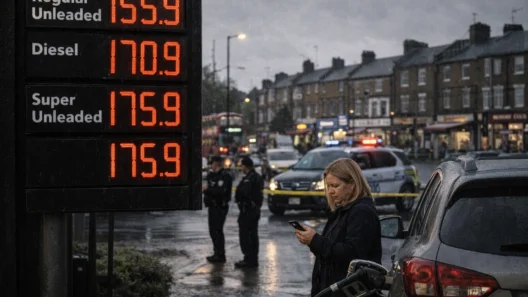
The group most affected by this decision is the "squeezed middle": households that earn too much to receive state help but not enough to ignore the skyrocketing cost of living. For these families, the 2026 energy crisis is becoming a defining economic event. With the Iran war disrupting supply lines, the typical annual energy bill is projected to rise well beyond the levels seen in the mid-2020s. Without a universal cap or rebate system, these households are looking at a winter of unprecedented financial strain.
Market analysts suggest that the lack of aid for middle-income earners will lead to a significant contraction in consumer spending. When a household's discretionary income is swallowed by utility providers, the wider economy suffers. High streets, already struggling with the transition to digital-only retail, are likely to see a further drop in footfall. This is the "energy blow" in its most literal sense: a strike to the solar plexus of the UK’s domestic economy.
The social implications are equally grim. Reports are already circulating of "middle-class fuel poverty," where professionals are skipping meals or turning off heating entirely to manage their outgoings. The Chancellor’s insistence that these households must "find efficiencies" has been met with derision on social media and in local constituencies. For many, there are no more efficiencies to find. The "gritty reality" of 2026 is a landscape where even a steady job and a respectable salary no longer guarantee a warm home during a geopolitical crisis.
There is also the question of the "benefit cliff-edge." By making support strictly means-tested, the government has created a scenario where earning a small pay rise could actually make a family worse off if it pushes them out of the eligibility bracket for energy aid. It is a disincentive to work harder in an economy that desperately needs productivity gains. Yet, the Treasury remains focused on the bottom line, arguing that universal payments were always an "inefficient use of taxpayers' money" that subsidised the wealthy alongside the poor.
War in the Middle East and the Energy Market Fallout
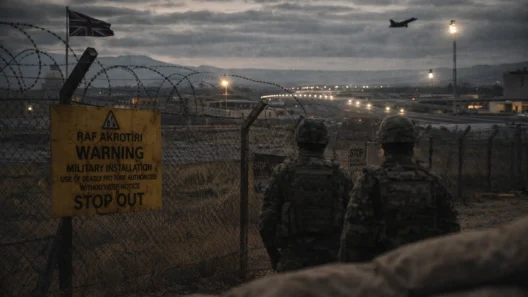
While the domestic policy shift is the immediate cause of the public outcry, the underlying catalyst remains thousands of miles away. The war with Iran has fundamentally altered the energy landscape of the 2020s. Every time a drone is spotted near a refinery or a tanker is diverted around the Cape of Good Hope, the price of gas in a suburb in Birmingham ticks upward. The UK’s reliance on international markets means that the British public is effectively paying a "war tax" every time they flick a light switch.
Reeves pointed to this global instability as the primary reason why the government must "hunker down." She suggested that with no end in sight to the hostilities, committing to universal aid would be like "signing a blank cheque to the global energy markets." The government’s strategy now appears to be one of endurance rather than intervention. They are preparing the public for a "new normal" where energy is a high-cost luxury rather than a basic utility.
The political gamble here is enormous. History shows that governments rarely survive prolonged periods of falling living standards combined with perceived indifference. By cutting off the middle class from support, the Labour government is risking the very coalition of voters that brought them to power. The opposition has been quick to seize on this, describing the move as a "callous abandonment of hard-working families." However, with the next election still some time away, Reeves seems content to take the hit now in the hopes that the global situation: and the Treasury’s balance sheet: improves by 2028.
As we move further into 2026, the disconnect between the cold statistics of the Treasury and the lived experience of the British public is widening. The "Energy Blow" dealt by Rachel Reeves today is not just a policy change; it is a signal that the protective shield of the state is being retracted. For the millions of people who fall into the gap between the wealthy and the state-supported, the coming months will be a test of resilience in a world that feels increasingly hostile. The Iran war may be a conflict of ideology and territory, but for the UK middle class, its primary front line is now the utility bill sitting on the kitchen table.