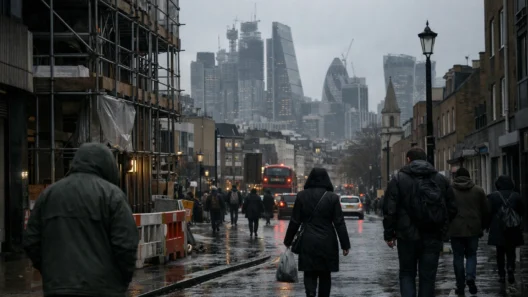






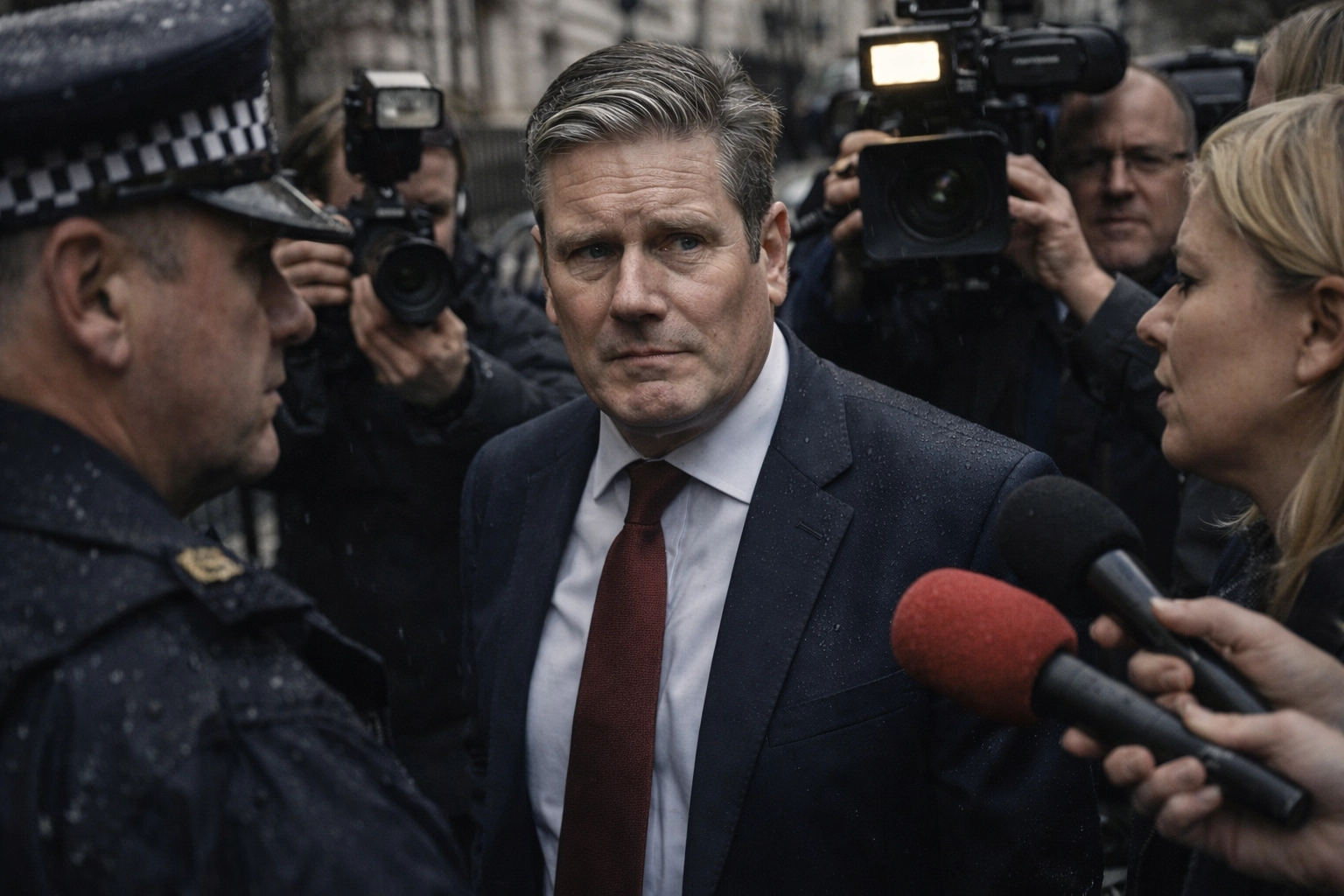
The political landscape in Westminster has reached a point of high-velocity friction as Prime Minister Keir Starmer faces a dual-fronted assault on his leadership. Domestic polling hits record lows while key allies within the Labour Party begin to publicly break ranks, creating a sense of terminal instability at Number 10. The atmosphere is described by insiders as "claustrophobic," with the Prime Minister increasingly isolated from both his traditional support base in Scotland and his essential diplomatic partners across the Atlantic.
The convergence of historical controversies and contemporary geopolitical failures has left the government reeling. For the first time since the 2024 election, the question among Westminster observers is no longer if a challenge will occur, but when the final catalyst will arrive. As of March 2026, the consensus suggests that the Labour Party’s iron grip on the parliamentary narrative has fundamentally shattered, leaving a vacuum that rivals and detractors are eager to fill.
The Scottish Rebellion: Sarwar’s Ultimatum on Integrity
The most significant blow to Starmer’s authority has come not from the opposition benches, but from within his own movement. Anas Sarwar, the leader of Scottish Labour, has reportedly issued a definitive ultimatum regarding the Prime Minister’s continued tenure. At the heart of this internal schism is the persistent and toxic association with Lord Peter Mandelson and his historical links to the disgraced financier Jeffrey Epstein. For Sarwar, whose political survival in Holyrood depends on a platform of perceived integrity and "clean" politics, the proximity of such figures to the centre of power has become an untenable liability.
Sarwar’s demand for Starmer’s resignation marks a historic departure from party discipline. Sources close to the Scottish leader suggest that the "Mandelson problem" is viewed as a symbolic rot that the Scottish electorate will not forgive. The links, which have been subject to renewed scrutiny in early 2026 following the release of further legal documents in the United States, have placed the Prime Minister in a defensive crouch. Despite Starmer’s attempts to distance his policy-making from Mandelson’s influence, the optics of continued consultation have provided his enemies with a potent weapon. Sarwar has reportedly told colleagues that the party cannot "preach moral superiority while harbouring the shadows of the past."
This internal rebellion is not merely a matter of optics; it reflects a deeper ideological divide. Scottish Labour has long attempted to maintain a distinct identity from the London-based leadership, often leaning more heavily into transparency and grassroots accountability. By directly calling for Starmer to step down over the Epstein-related associations, Sarwar has effectively decapitated the unified front Labour presented during its rise to power. The move has emboldened backbenchers in Westminster who were previously hesitant to voice their concerns, leading to a surge in private letters being submitted to the chair of the Parliamentary Labour Party.
The "gritty" reality of this conflict is visible in the corridors of power. There are no longer efforts to hide the animosity. Press briefings from the Scottish branch are now frequently at odds with the official Downing Street line. The demand for resignation is based on the premise that the Prime Minister’s judgement is permanently compromised by his refusal to fully purge the "New Labour" old guard. As Sarwar prepares for his own electoral challenges in Scotland, he has chosen to sacrifice the Prime Minister to save the party’s reputation north of the border.
The Washington Cold Shoulder: Trump’s Churchill Comparison
While domestic fires burn, the Prime Minister’s international standing has suffered a catastrophic devaluation. US President Donald Trump has transitioned from subtle critiques to open hostility, specifically targeting Starmer’s refusal to commit British military assets to the escalating conflict with Iran. In a recent Oval Office briefing, the rhetoric reached a new low for the "Special Relationship." Trump, gesturing to a bust of Winston Churchill, famously noted that Starmer "is not Winston Churchill," a phrase that has since echoed through every news outlet in the UK.
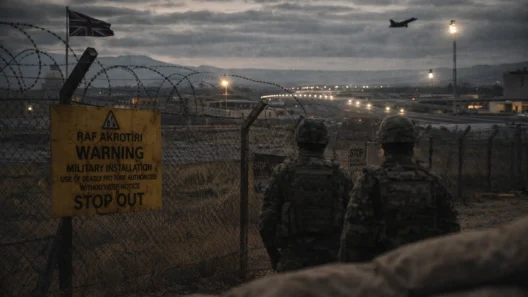
The friction stems from a fundamental disagreement over military deployment. Trump had demanded an immediate and significant British presence to support US-led naval operations in the Middle East. Starmer’s counter-offer: the deployment of two aircraft carriers only after the conclusion of the primary conflict: was viewed by Washington as an act of cowardice rather than strategy. Trump’s assessment that Starmer "doesn't produce" has effectively frozen the Prime Minister out of key NATO discussions and high-level intelligence sharing, leaving the UK in a diplomatic no-man’s-land.
This lack of international clout has direct domestic consequences. The Prime Minister’s inability to influence the White House has led to fears of economic repercussions, particularly regarding trade deals that were contingent on military and diplomatic alignment. For a Prime Minister who campaigned on "restoring Britain’s place in the world," the comparison to Churchill is a stinging indictment of his failure to project strength. The gritty photography of recent summits shows a Starmer who looks diminished, often positioned on the periphery of group photos, a visual metaphor for his waning influence.
The US President’s disappointment is not just personal but systemic. Trump’s struggle to rally NATO allies behind his Iran campaign has led him to seek a scapegoat, and Starmer’s Labour government, with its perceived hesitance and bureaucratic caution, fits the mould perfectly. The "very nice man" label applied by Trump is perhaps the most damaging of all: a patronising dismissal that suggests Starmer is a bystander in world history rather than a participant. This lack of respect from the world’s most powerful leader has further incentivised domestic rebels like Sarwar to accelerate their efforts to replace him.
A Premature Exit: The 2026 Resignation Speculation
As the pressure mounts, the data suggests that Starmer’s premiership may be entering its final act. Recent polling indicates an unprecedented weakness in Labour’s core support, with a majority of voters now expressing a preference for a change in leadership before the next general election. Labour MPs are described as "pretty distraught," witnessing poll ratings that suggest a total wipeout in formerly safe seats. The "two-party grip" that defined British politics for decades is loosening as voters look toward alternatives, frustrated by what they perceive as a government in constant crisis management mode.
Speculation regarding a 2026 resignation is no longer confined to the fringes of political commentary. It is being actively discussed by public affairs professionals and city analysts who are pricing in the likelihood of a leadership contest by autumn. The "big if" surrounding Starmer’s survival has turned into a "when." The focus has shifted to potential successors who can distance themselves from the Mandelson links and repair the fractured relationship with the United States. Names are already being circulated, and the movement of "shadow" leadership campaigns is becoming increasingly visible in the halls of Westminster.
The Prime Minister’s attempts to regain the initiative through policy announcements have largely fallen flat. Long-term challenges such as the housing crisis and economic stagnation remain unaddressed, overshadowed by the constant drip-feed of scandal and international embarrassment. There is a growing sense that the government has lost the ability to govern, spending all its political capital on simply staying afloat. The gritty, unvarnished truth for Keir Starmer is that he is presiding over a party that is beginning to see him as the primary obstacle to its own survival.
The end of 2026 is increasingly cited as the definitive deadline. If Starmer cannot purge the controversial figures from his inner circle and find a way to navigate the geopolitical demands of a second Trump term, his departure is viewed as inevitable. The demand from Anas Sarwar was the first crack in the dam; the polling data is the rising tide. As the Prime Minister chairs emergency meetings and navigates a hostile parliament, the weight of the "Under Fire" headline has never been more literal. The question remains whether he will choose the timing of his exit or if the party will choose it for him.