




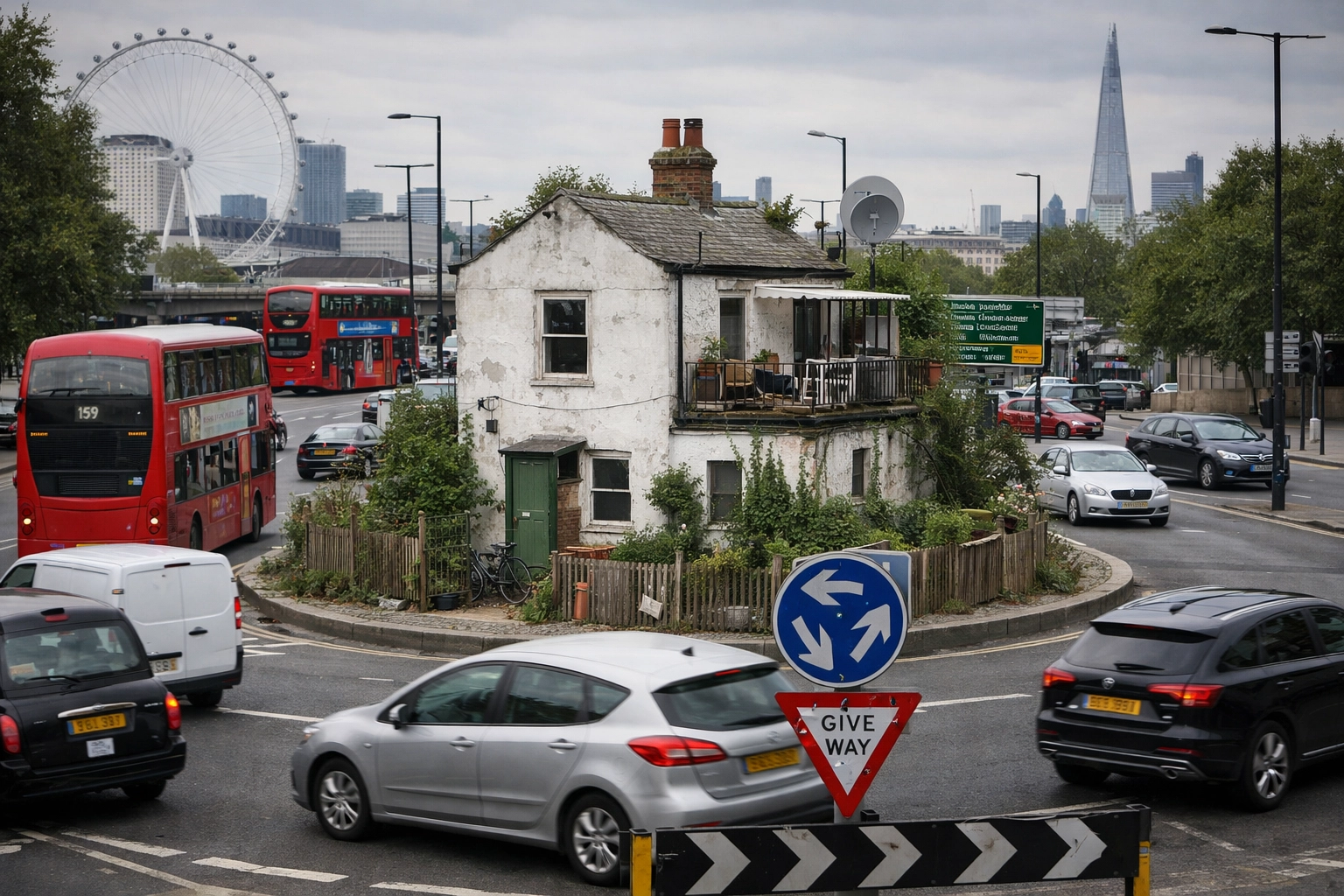
A man known as ‘Digger’ has established a permanent, self-sufficient dwelling on a central reservation of the A12 in East London, sparking a protracted legal dispute with transport authorities.
Situated amidst the constant roar of one of the capital's busiest arterial roads, the makeshift fortress stands as a stark contrast to the surrounding urban infrastructure. For several years, the occupant has maintained a presence on this patch of scrubland, situated near the Bow Interchange, defying multiple attempts by officials to clear the site.
The site has become a landmark for thousands of daily commuters navigating the link between the M11 and the Blackwall Tunnel. While many view the structure as a curiosity, for the occupant, it represents a necessary fortress of solitude in a city where traditional housing has become increasingly inaccessible.
The Architecture of Necessity on the A12
The dwelling is not a temporary encampment but a sophisticated example of improvised engineering. Constructed primarily from reclaimed timber, pallets, and recycled materials, the structure features a raised living area designed to withstand the elements and the vibrations of passing heavy goods vehicles.
To maintain a degree of self-sufficiency, the 'Roundabout Rebel' has installed a network of solar panels to provide basic electricity. Rainwater harvesting systems and a small-scale garden for vegetables have been integrated into the perimeter, showcasing a commitment to off-grid living within a highly industrialised environment.
Inside the perimeter, the space is meticulously organised, reflecting a permanent domestic arrangement rather than a transient shelter. Despite the lack of connection to the national grid or local water mains, the occupant has managed to sustain a lifestyle that bypasses the conventional costs associated with London residency.
Safety Protocols Versus Human Survival
Transport for London (TfL) has consistently argued that the presence of the dwelling poses a significant risk to both the occupant and the motoring public. Officials have issued numerous eviction notices, citing concerns over potential distractions to drivers and the lack of emergency access to the site.
Legal proceedings have reached the High Court on multiple occasions as authorities seek a final possession order for the land. TfL representatives maintain that the central reservation is not designated for human habitation and that the structural integrity of the dwelling cannot be guaranteed under existing safety regulations.
The occupant, however, has mounted a robust defence, often representing himself in court. He argues that the site was abandoned land and that his right to shelter should supersede administrative land-use policies. He has previously stated that the roundabout is his home and that he has nowhere else to go within the current social housing framework.
A Microcosm of the London Housing Crisis
The case of the Roundabout Rebel is viewed by many socio-economic analysts as a physical manifestation of London’s escalating housing emergency. With average rents in East London reaching record highs and social housing waiting lists stretching into decades, unconventional living arrangements are becoming more common.
Advocates for the homeless suggest that such extreme measures are the result of a systemic failure to provide affordable, secure accommodation. While the roundabout dwelling is an outlier in its location and permanence, it highlights the lengths to which individuals will go to secure a sense of place in a hostile economic climate.
As the legal battle continues, the structure remains occupied, serving as a daily reminder of the friction between municipal regulation and individual survival. The ultimate fate of the A12 dwelling remains uncertain, with further court hearings expected to determine whether the occupant can be lawfully removed from his island of resistance.