



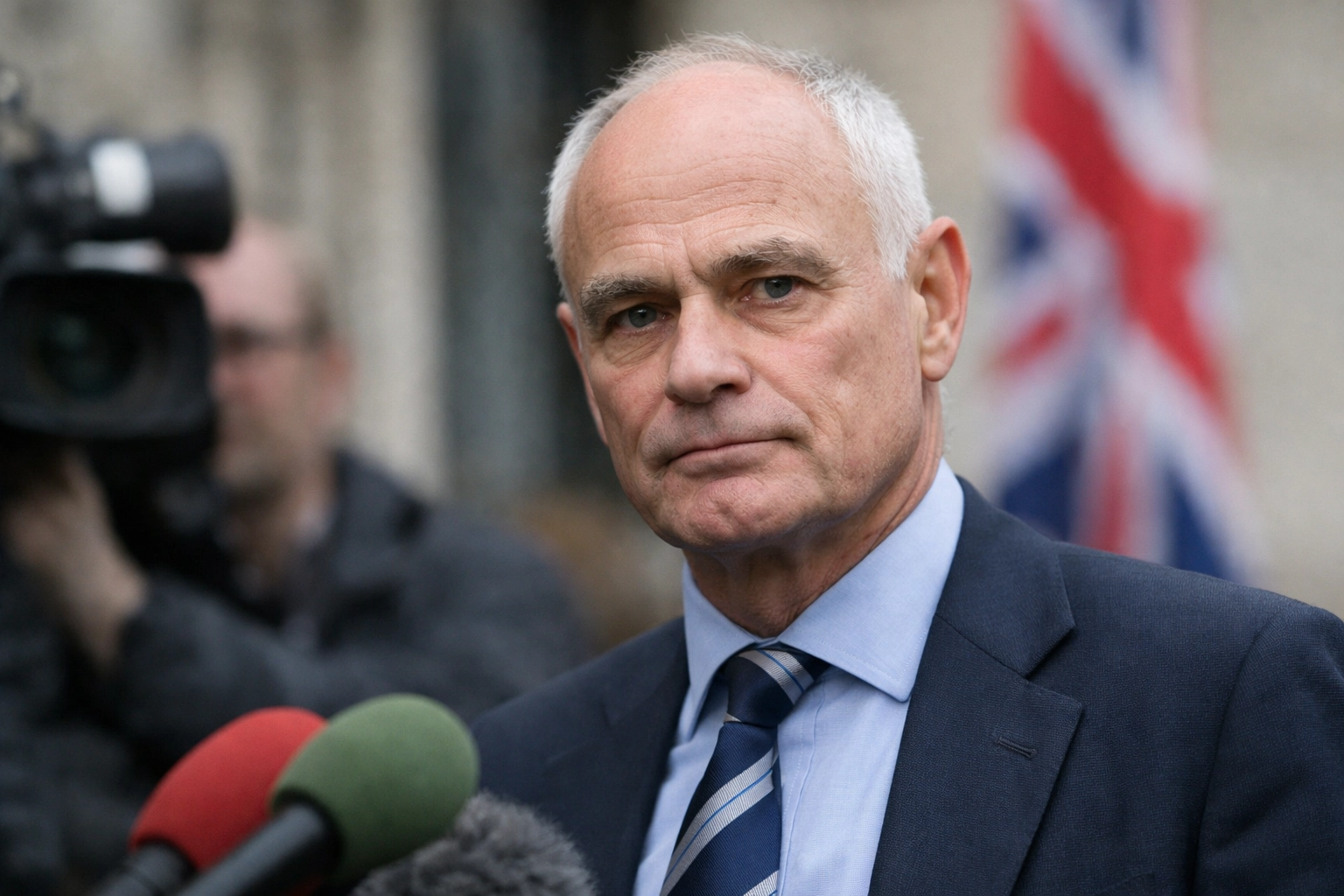
The image of a former Conservative minister standing in the dock at Westminster Magistrates’ Court is one that rarely fails to capture the public imagination. But the case of Crispin Blunt, the 65-year-old former Justice Minister, has added a layer of complexity that transcends the usual tabloid scandal. This was not just a story of a fall from grace; it was a calculated, if controversial, attempt to reframe illegal drug use as a form of professional immersion. Blunt, who represented Reigate for nearly three decades, pleaded guilty to four drug charges this month, marking the end of a long-running police investigation that began in the autumn of 2023.
The charges were specific and stark: possession of Class B and Class C drugs, including the sedative GBL, cannabis, and methylamphetamine. For a man who once helped oversee the very prison and probation systems that house drug offenders, the irony was not lost on the gallery. However, Blunt did not offer the standard, hushed apology often heard in these settings. Instead, he used his platform to deliver a 30-minute monologue that challenged the very foundations of the UK’s drug policy: a policy he claimed to have better understood through his participation in the secretive and often dangerous world of "chemsex" parties.
The raid on Blunt’s Surrey home in October 2023 was the catalyst for this legal showdown. While the initial investigation involved a more serious allegation of rape following a party in September 2023, Surrey Police eventually dropped that line of inquiry due to insufficient evidence. What remained were the substances: the chemical remnants of a lifestyle that Blunt now argues was "firsthand experience" designed to inform his work in Parliament. It is a defense that has divided opinion, raising questions about where public duty ends and private indulgence begins, and whether a lawmaker can truly claim to be a researcher while breaking the law.
The Courtroom Admission and the Shadow of Reform
Inside the wood-panelled walls of Westminster Magistrates’ Court, the atmosphere was clinical. Prosecutors laid out the inventory of the police raid: quantities of GBL, a substance often linked to the chemsex scene for its disinhibiting effects, alongside methamphetamine and cannabis. Blunt’s admission of guilt was a formality, but his explanation was anything but routine. He asserted that his interest in drug policy began in earnest when he was appointed as a Justice Minister in David Cameron’s coalition government. At that time, he was tasked with managing the consequences of drug addiction within the criminal justice system.
Blunt told the court that he saw "firsthand the harm caused by the government's drug policy." This was not a reference to the drugs themselves, but to the legal framework that criminalises users. According to the prosecution’s summary of his police interviews, Blunt began to take a "professional interest" in how these laws were implemented. He argued that by hosting and attending drug-fuelled parties at his home, he was gaining a unique perspective that no white paper or committee meeting could provide. He essentially framed his illegal activity as a form of participant observation, suggesting that his involvement in the chemsex scene allowed him to understand the nuances of harm reduction and the realities of drug use in the LGBTQ+ community.
The former MP’s argument hinges on the idea that the current prohibitionist stance of the UK government is failing. He suggested that his direct experience was "used to inform how policies could be implemented," particularly regarding the decriminalisation of certain substances. However, the legal system rarely looks kindly on the "research" defense when the researcher is also the consumer. For the families affected by the meth epidemic or the surge in GBL-related hospital admissions, the idea of a senior politician using his home as a laboratory for drug experimentation under the guise of policy reform is a difficult pill to swallow.
From Ministerial Benches to the Chemsex Scene
To understand how a former army officer and staunch Tory ended up in this position, one has to look at the intersection of Blunt’s public persona and his private life. Coming out as gay in 2010, Blunt became a prominent advocate for LGBTQ+ rights within the Conservative party. Over the years, he moved from the traditional wing of the party to a more libertarian stance, particularly on issues of personal freedom. This shift coincided with the rise of the "chemsex" phenomenon in London and the Home Counties: a subculture where drugs like crystal meth, mephedrone, and GBL are used to enhance sexual experiences.
The chemsex scene is not merely a party environment; it is a public health flashpoint. Health workers have long warned about the risks of overdose, the spread of STIs, and the psychological toll of long-term methamphetamine use. Blunt’s claim is that by entering this world, he was attempting to bridge the gap between the detached legislators in Westminster and the high-risk reality on the ground. He argued that the "lasting harm on society" he witnessed was a direct result of the clandestine nature of drug use, forced underground by the very laws he was once paid to uphold.
However, the hosting of these parties at his Surrey residence placed him in direct conflict with his former role. As a Justice Minister, Blunt was responsible for the Sentencing Council and the prison estate. The cognitive dissonance of a minister overseeing the incarceration of drug dealers while simultaneously possessing methamphetamine is what makes this case so damaging to the political establishment. Critics argue that if any other citizen had been found with the same cache of drugs, the "research" defense would have been laughed out of court. Blunt hinted at this himself, suggesting that first-time offenders typically receive out-of-court cautions, and that his prosecution was perhaps motivated by his controversial stances on other issues, such as transgender rights and his vocal support for Palestine.
The Legal Fallout and the Future of Drug Advocacy
The sentencing of Crispin Blunt marks a definitive end to his political career, which was already winding down after he announced he would not stand at the last general election. But the ripples of his case continue to be felt in the debate over drug reform. By pleading guilty, Blunt has become a convicted criminal, yet he remains unrepentant about his views. He insisted to the court that all drugs should be legal, arguing that the "war on drugs" is a lost cause that only serves to enrich organised crime and marginalise vulnerable users.
This stance puts him at odds with the current political climate in the UK. Both the Labour and Conservative leaderships have maintained a tough-on-drugs rhetoric, with the current Home Office doubling down on enforcement measures. Blunt’s case highlights the growing divide between the libertarian wing of politics, which advocates for total bodily autonomy, and the traditionalist wing, which views drug use as a moral and social failing. The fact that Blunt attempted to use his criminal proceedings as a platform for advocacy suggests that he sees himself as a martyr for the cause of reform, rather than a disgraced politician.
As we look toward the future of drug policy in a post-2024 political landscape, the Blunt case will likely be cited by both sides. For reformers, he is a man who saw the truth and was punished for it. For the "law and order" crowd, he is the ultimate example of parliamentary entitlement: a man who thought he was above the laws he helped write. The police investigation into the initial rape allegation has concluded with no further action, but the shadow of that night in Reigate remains. It serves as a stark reminder of the volatility of the chemsex scene and the high stakes involved when the lines between policy research and personal participation become blurred. The story of Crispin Blunt is not just about a politician and his drugs; it is about a country still struggling to decide whether drug use is a crime to be punished or a reality to be managed.