



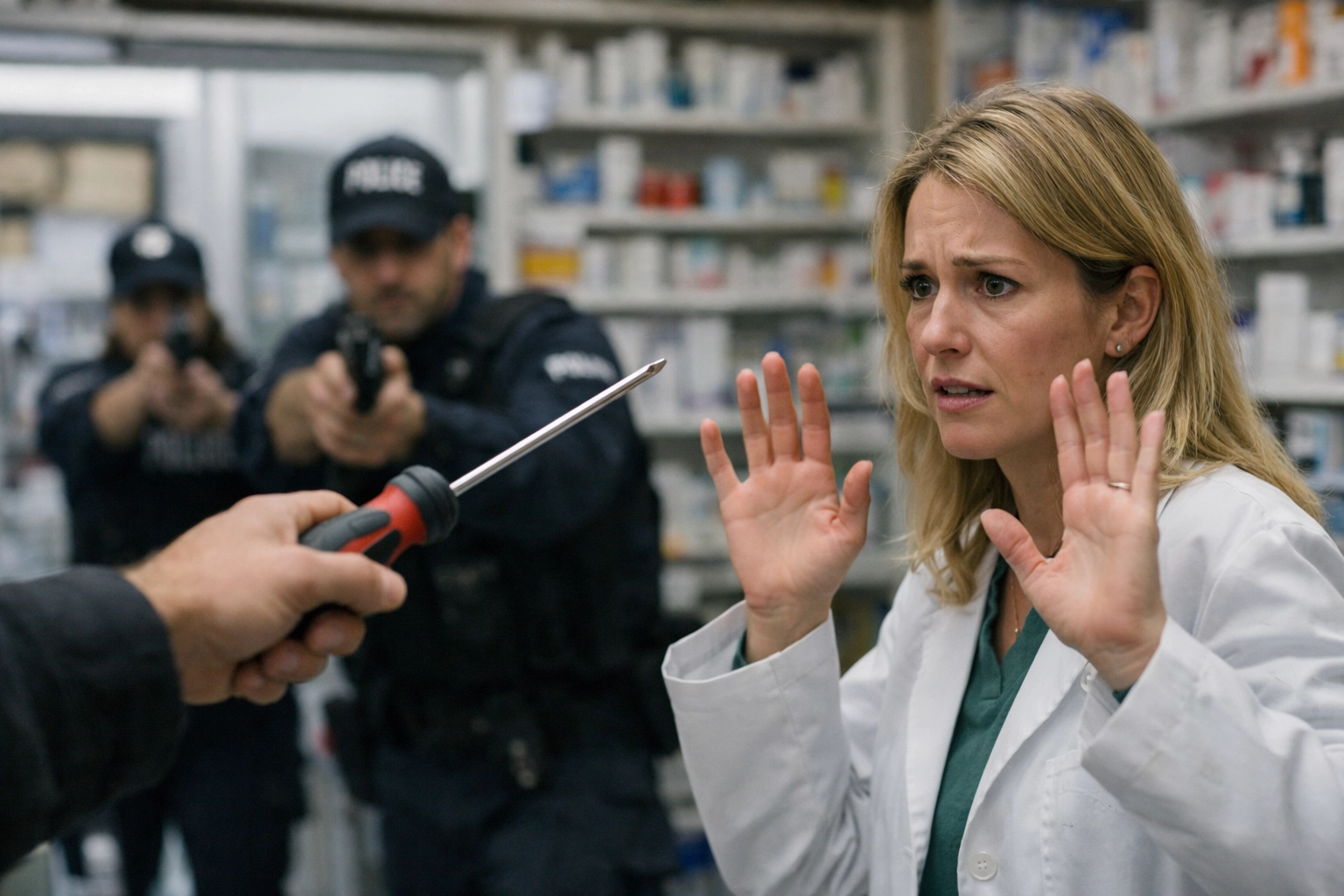
A community pharmacist in Saltdean faced a life-threatening encounter when a patient brandished a screwdriver during a dispute over a prescription. The incident highlights a sharp increase in violence directed at healthcare workers on the front line of British high streets.
Dervish Girol, the owner of Healthy You Pharmacy, described the moment a routine interaction turned into a confrontation involving a lethal weapon. The patient reportedly became aggressive when informed that medication could not be dispensed without a valid prescription. This encounter is not an isolated event but part of a broader trend of escalating hostility within the primary care sector.
Staff at the Saltdean branch have since reported further incidents, including being spat at by frustrated members of the public. These events occur against a backdrop of increasing pressure on the National Health Service, where pharmacies are often the first point of contact for patients unable to secure appointments elsewhere.
The psychological impact on staff is significant. Workers who once viewed their roles as purely clinical now find themselves acting as de facto security personnel. The proximity of the threat: a common household tool used as a weapon: underscores the vulnerability of local dispensaries that lack the robust security infrastructure found in larger hospitals.
The reality of the front line
The transition of community pharmacies into expanded clinical hubs has brought them closer to the heart of patient care. However, this increased responsibility has coincided with a decline in public patience. In many cases, the pharmacist is the only healthcare professional a patient sees when they are in pain or distress, making them a target for redirected frustration.
In Saltdean, the screwdriver threat served as a catalyst for a wider conversation regarding the safety of these essential workers. Girol’s experience reflects a growing sentiment that the "Pharmacy First" initiative, while beneficial for reducing GP wait times, has not been met with a corresponding increase in security or public awareness campaigns regarding the acceptable treatment of staff.
The physical layout of most community pharmacies often provides little more than a counter between a worker and a potentially violent individual. Unlike GP surgeries, which often have buzzer entry systems or glass partitions, pharmacies generally maintain an open-door policy to remain accessible. This accessibility is now being exploited by those seeking to intimidate staff into bypassing legal and clinical protocols.
Medication shortages have further exacerbated the problem. When a pharmacist informs a patient that a specific drug is out of stock across the country, the news is frequently met with disbelief or accusations of incompetence. In the Saltdean incident, the demand for medication without the proper legal framework led directly to the brandishing of the screwdriver, illustrating the dangerous intersection of healthcare policy and personal desperation.
The "untold story" here is the resilience required to keep these doors open. Many pharmacy technicians and dispensers are now considering leaving the profession, citing safety concerns as a primary motivator. The loss of these skilled workers would create a vacuum in local healthcare that the already overstretched NHS cannot afford to fill.
A rising tide of workplace violence
Data from Community Pharmacy England paints a sobering picture of the environment across the United Kingdom. A recent survey revealed that 55% of pharmacy owners reported their staff had suffered verbal abuse in the last six months alone. More concerning is the frequency of these attacks; approximately one in five pharmacies now deals with abusive incidents on a daily basis.
Physical assaults are also on the rise, with 6% of pharmacies reporting incidents of actual bodily harm. These figures are not limited to suburban areas like Saltdean. In Dublin, a similar pattern of weaponised violence has emerged. Two men brandishing screwdrivers recently targeted a pharmacy in the Donnybrook area, threatening staff before fleeing with cash, mobile phones, and controlled medications.
The use of screwdrivers in these crimes is a tactical choice. They are easily concealed, legal to carry for many tradespeople, and capable of inflicting fatal injuries. For pharmacy staff, the sight of a tool intended for repair being used as an instrument of terror has become a recurring nightmare. The Dublin robbery highlights the dual threat pharmacies face: the frustrated patient and the professional criminal looking for high-value pharmaceuticals.
Racist, xenophobic, and discriminatory abuse has also been highlighted in the findings. Pharmacy teams are among the most diverse cohorts in the healthcare sector, and they are increasingly being targeted with identity-based vitriol. This adds a layer of trauma to the already high-stress environment of dispensing medication and managing public health queries.
The economic cost of this violence is often overlooked. Beyond the immediate loss of stolen goods, pharmacies must invest in expensive CCTV upgrades, panic buttons, and sometimes private security guards. For independent pharmacies operating on thin margins, these necessary safety measures can be the difference between staying in business and being forced to close, leaving the local community without a vital resource.
Seeking protection in a fractured system
The response from authorities and the NHS has been criticised by industry leaders as inadequate. The National Pharmacy Association (NPA) has pointed out that while hospital staff and GP surgeries often receive specific government-backed protection schemes, community pharmacies are frequently left to fend for themselves.
Chief executives within the pharmacy sector have called for a "zero-tolerance" approach that is backed by action rather than just posters on a wall. There is a growing demand for police forces to categorise pharmacy-related crimes with higher priority, reflecting the essential nature of the service. In many reported cases of verbal abuse or low-level physical intimidation, police response times have been cited as a deterrent for staff to even report the incidents.
The disparity in support is a point of contention. If a doctor is threatened in a surgery, the incident is often followed by a formal review and potential removal of the patient from the list. In a pharmacy setting, the transient nature of "walk-in" customers makes such accountability difficult to enforce. There is no central register of abusive patients that pharmacies can access to warn staff of potential threats.
Furthermore, the legal system's handling of these cases is under scrutiny. When individuals are caught after threatening staff with weapons like screwdrivers, the sentences often do not reflect the severity of the psychological trauma inflicted on the victims. Pharmacy leadership is pushing for legislative changes that would make assaulting a pharmacy worker a specific aggravated offence, similar to protections afforded to emergency service workers.
As the 26th of March 2026 marks another year of heightening tensions, the message from the sector is clear. Without systemic change and a fundamental shift in how the public perceives and treats pharmacy staff, the "siege" will continue. The Saltdean incident was a warning; the next encounter may not end with only threats. The future of community healthcare depends on the safety of those behind the counter, who currently remain some of the most exposed professionals in the country.