



The United Nations has officially sounded the loudest possible alarm for the planet, issuing a "red alert" as Earth edges dangerously close to the 1.5C warming threshold. In a series of reports backed by the World Meteorological Organisation (WMO), experts are warning that we aren't just looking at a future problem anymore; we are living through a global emergency that is currently flashing red on every single dashboard. From record-breaking heatwaves to catastrophic flooding, the signals are impossible to ignore. UN Secretary-General António Guterres hasn't held back, stating clearly that the planet is being pushed to its limits by a cocktail of greenhouse gas emissions and a reliance on fossil fuels that is becoming increasingly difficult to justify.
As we move through 2026, the data coming in is more than a bit worrying. It’s not just about a few hot days in the summer; it’s about a fundamental shift in how our planet’s systems are functioning. We are seeing a massive energy imbalance where the Earth is trapping heat far faster than it can release it back into space. This isn't a slow crawl toward a warmer world; it’s an acceleration. For anyone who has been paying attention to the weather over the last year, this won't come as a huge surprise, but seeing the official figures laid out by the UN adds a layer of gravity to the situation that is hard to shake off.
Breaking Down the Global Heat Emergency
The headline figure that has everyone worried is the 1.5C threshold. For years, scientists have pointed to this number as a critical tipping point. Crossing it consistently would mean entering a world of unpredictable weather patterns and irreversible damage to ecosystems. According to the latest research, we are now practically standing on the doorstep of that limit. The last 11 years have officially been the hottest on record, a streak that shows no sign of cooling down. Greenhouse gas concentrations in our atmosphere are now higher than they have been for hundreds of thousands of years, creating a sort of thermal blanket around the globe that just won't let go.
This heat isn't distributed evenly, either. While some areas feel the bite of extreme summer temperatures, others are dealing with the fallout of that energy being dumped into the atmosphere. The "energy imbalance" mentioned by the WMO is a key part of this. Essentially, because we are pumping so much carbon dioxide and methane into the air, the Earth is keeping more solar energy than it should. This extra energy has to go somewhere, and right now, it’s being absorbed by our land and our oceans at an alarming rate. It’s like leaving a heater on in a room with no ventilation; eventually, everything inside starts to cook.
When we talk about record heat, we aren't just talking about a bit of discomfort. We’re talking about workers being pushed to their physical limits in outdoor jobs, elderly populations struggling to stay cool, and infrastructure that was never designed for these temperatures starting to fail. Roads are buckling, railway tracks are expanding, and power grids are being pushed to the brink as everyone tries to run air conditioning at the same time. The UN's red alert is a recognition that our current way of life is built for a climate that simply doesn't exist anymore.
Rising Tides and Warming Oceans
While we often focus on the air temperature, the real story might be happening underwater. Our oceans act as a massive heat sink, absorbing about 90% of the excess heat generated by global warming. But even the vastness of the sea has its limits. In 2025 and into early 2026, ocean temperatures have hit levels that have left marine biologists stunned. This warmer water acts as high-octane fuel for storms. It’s the reason we are seeing hurricanes and cyclones that intensify from minor storms to Category 5 monsters in a matter of hours. The sheer amount of energy available in the water makes these weather events more frequent, more powerful, and much more destructive.
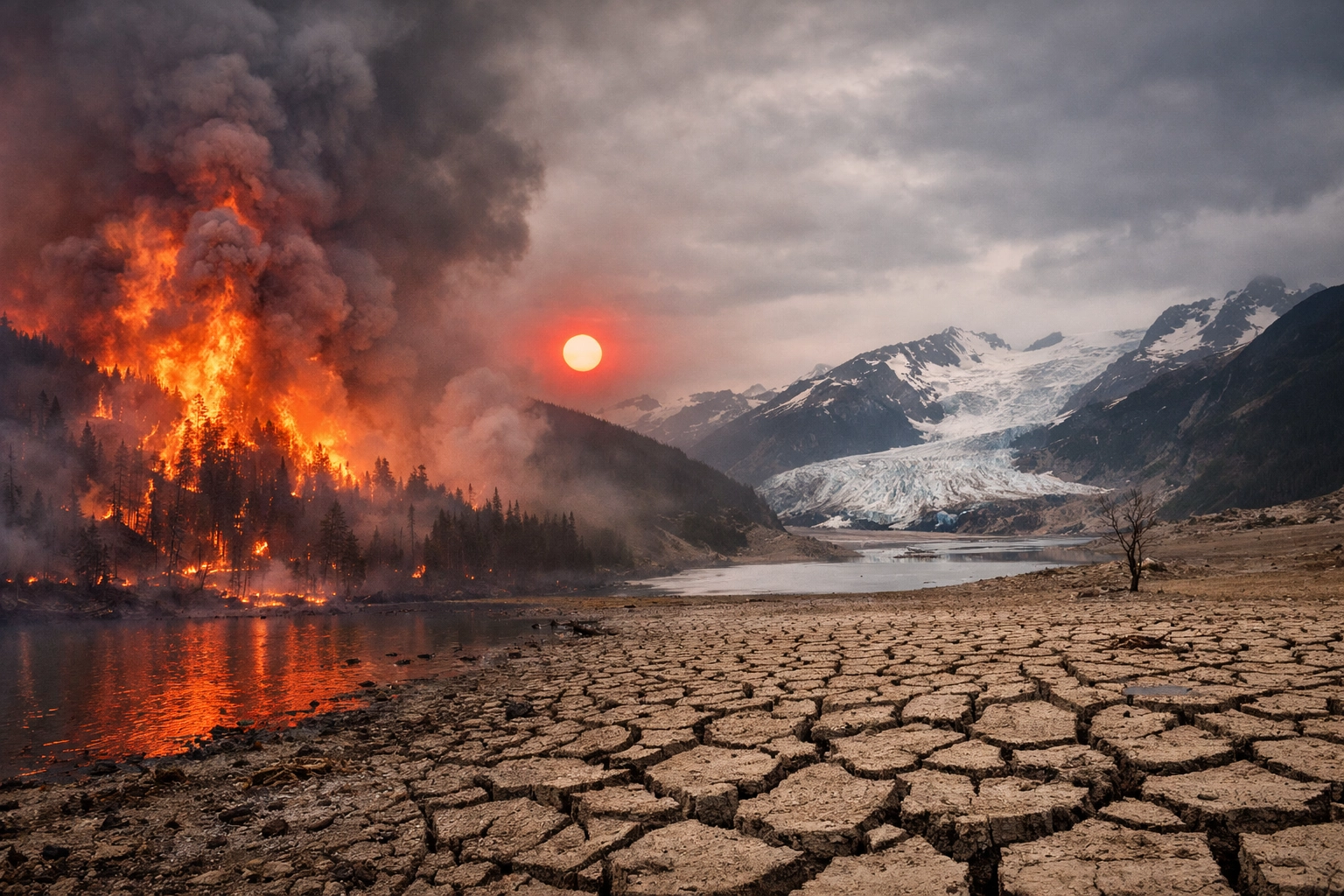
Then there’s the ice. Glaciers and sea ice are vanishing at a rate that is frankly terrifying. In the Arctic and Antarctic, the loss of reflective white ice means more dark water is exposed, which absorbs even more heat, creating a feedback loop that speeds up the warming process. As this land-based ice melts, it has nowhere to go but into the sea. Sea levels are rising relentlessly, threatening coastal communities from London to New York and everywhere in between. It’s a slow-motion disaster that is picking up speed, and for those living in low-lying areas, the "red alert" is something they can see rising at the end of their driveways.
The impact on marine life is just as severe. Coral reefs, which support a huge chunk of the world’s fish populations, are bleaching and dying off because they can’t handle the warm water. This isn't just a loss for nature lovers; it’s a direct hit to the global food chain. Millions of people rely on the ocean for their primary source of protein, and as these ecosystems collapse, the ripple effects will be felt in every supermarket and kitchen around the world. The UN report makes it clear: a warm ocean is a dangerous ocean, and right now, the seas are simmering.
Finding a Path Through the Chaos
So, what do we do with all this information? The UN hasn't just issued a warning; they’ve also laid out a call to action. The message is simple: the delay is over. We can no longer afford to treat the climate crisis as a "tomorrow" problem. The path forward, according to the science, requires a massive shift in how we power our lives. Moving away from fossil fuels is no longer just an environmental goal; it’s a matter of global security. As long as we are addicted to oil, gas, and coal, we are destabilising the very systems that keep us safe and fed.
A just transition to renewable energy: like wind, solar, and wave power: is being framed as the only real solution. Not only do these technologies help cool the planet, but they also provide energy security. If a country can produce its own power from the sun or the wind, it’s less vulnerable to global price hikes and supply chain issues. The UN is pushing for countries to have the "courage to act" and to listen to the scientists who have been predicting these exact scenarios for decades. It’s about more than just switching lightbulbs; it’s about rethinking our entire economy to work with the planet rather than against it.
In the short term, we have to deal with the consequences that are already here. Farmers are watching crops wither in droughts or get washed away in flash floods, which is driving up food prices for everyone. Communities need to build better defences against storms and rethink how we design our cities to handle extreme heat. The UN "red alert" is a wake-up call for governments, businesses, and individuals alike. It’s a reminder that while the situation is dire, it isn't yet hopeless: as long as we start moving in the right direction immediately. The science is clear, the warnings are out, and the next few years will likely define the future of life on Earth.