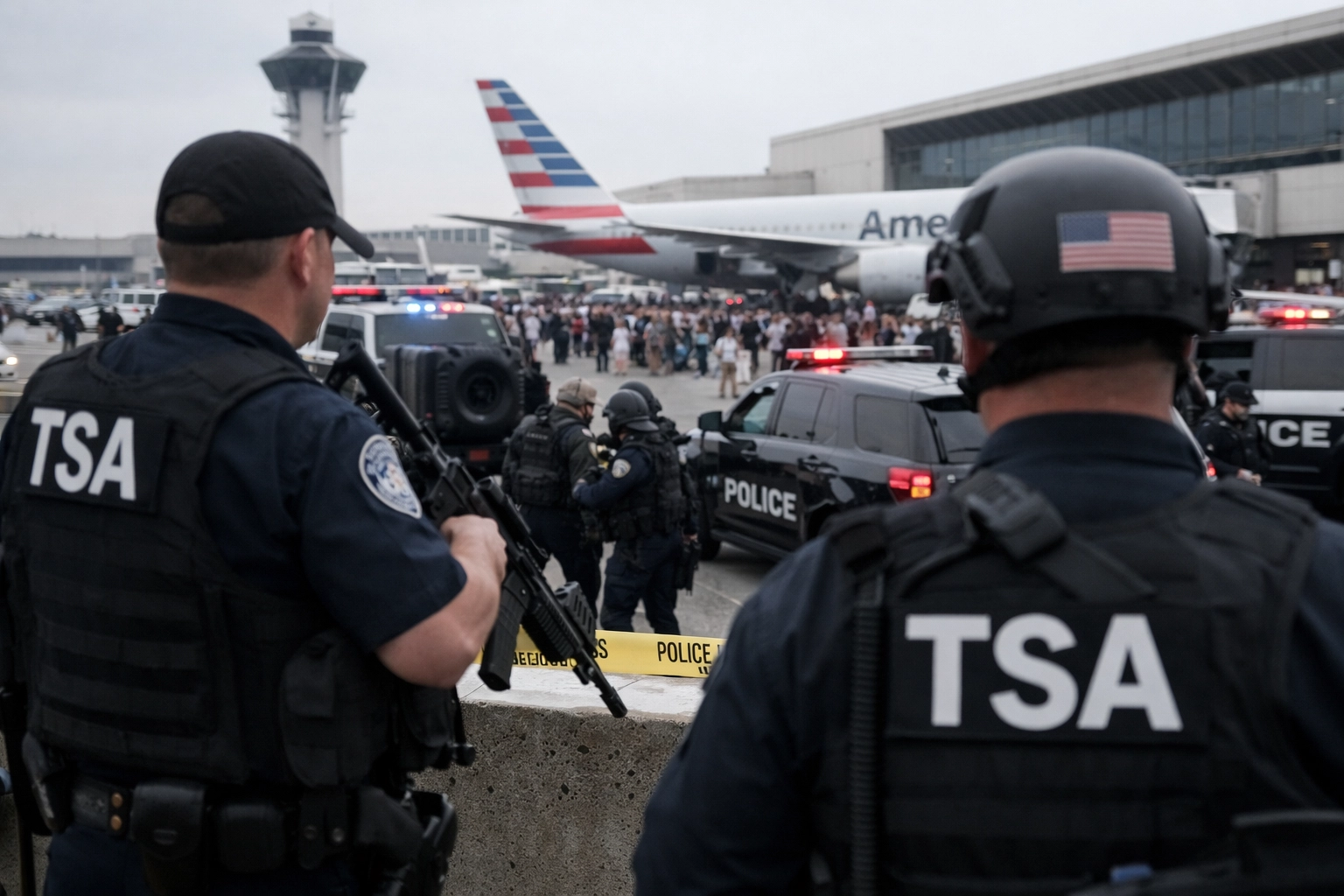
The United States aviation network is facing a systemic failure as a protracted partial government shutdown enters its second month, leaving the nation's primary security checkpoints understaffed and overwhelmed. Major international gateways, including New York’s John F. Kennedy and Atlanta’s Hartsfield-Jackson, are reporting unprecedented delays as thousands of Transport Security Administration (TSA) officers fail to report for duty. With the federal impasse showing no signs of resolution, the ripple effects are threatening to ground domestic travel and severely damage the American economy.
The crisis, which began on 14 February 2026, was triggered by a bitter deadlock in Washington over immigration enforcement reforms. While the political debate continues in the halls of Congress, the practical consequences are being felt on the tarmac. Security wait times at several Tier-1 hubs have now exceeded three hours, prompting airlines to advise passengers to arrive at terminals at least five hours before their scheduled departures. The situation has shifted from a logistical inconvenience to a genuine national security concern, as the thin line of defence at the border and boarding gates begins to fray.
As of Friday, 27 March 2026, the absence rate among TSA screeners has reached a historic peak. Data released by the Department of Homeland Security indicates that more than 3,500 officers failed to report for work in a single 24-hour period this week. This represents the highest callout rate in the agency’s history, surpassing the previous record set during the 2018-2019 shutdown. For the millions of travellers attempting to navigate the American airspace, the result is a landscape of shuttered security lanes, mounting piles of un-screened luggage, and a palpable sense of tension within terminal walls.
The Human Cost of the Federal Standoff
The core of the staffing crisis lies in the financial desperation of the TSA workforce. Unlike many federal employees who have been furloughed and sent home, TSA officers are classified as essential personnel, meaning they are required to work without pay for the duration of the shutdown. For a workforce where the average starting salary hovers around $37,000 (£29,000), the absence of a pay cheque for over six weeks has proved catastrophic. Reports have emerged of officers sleeping in their cars between shifts to save on fuel costs, while others have been forced to sell blood and plasma to purchase basic groceries.
In terminal breakrooms across the country, the atmosphere is one of exhaustion and resentment. The agency has confirmed that 366 screeners have officially resigned since the start of the month, citing an inability to sustain their households without a guaranteed income. This permanent loss of trained personnel is perhaps the most damaging aspect of the crisis; even if the shutdown were to end tomorrow, the time required to recruit, vet, and train new security officers means that the operational deficit will persist for months. The attrition is particularly high among younger officers who do not have the financial safety net to weather a prolonged period of non-payment.
Charitable organisations and local communities have attempted to fill the gap, setting up "pop-up" food banks inside airport staff quarters. In cities like Houston and Philadelphia, local businesses have offered free meals to federal workers, but these gestures provide only temporary relief against the mounting pressure of unpaid mortgages and utility bills. The psychological toll on those remaining at their posts is significant. Tasked with the high-stakes responsibility of detecting prohibited items and identifying potential threats, many officers are now working double shifts while distracted by their own financial ruin. Security experts warn that a fatigued and stressed workforce is more prone to errors, creating vulnerabilities that may be exploited.
Regional Paralysis and Operational Collapse
The impact of the shutdown is not distributed evenly across the United States, with certain regions facing a total operational collapse while others manage a skeletal service. Houston has emerged as the epicentre of the disruption. At William P. Hobby Airport, unscheduled absence rates have fluctuated between 30 and 55 per cent over the last seven days. The shortage was so severe on Tuesday that airport authorities were forced to consolidate all passenger traffic into a single security checkpoint, leading to a queue that extended out of the terminal doors and onto the pedestrian skywalks.
In Atlanta, the world’s busiest airport by passenger volume, the situation is equally dire. Hartsfield-Jackson International has seen an absence rate of 40 per cent among its screening staff. The facility, which serves as a primary hub for international connections, has had to close two of its domestic security zones, redirecting thousands of passengers through the remaining international terminal lanes. The congestion has resulted in hundreds of missed flight connections, forcing airlines to put up passengers in local hotels that are already reaching full capacity.
Smaller regional airports are facing an even bleaker outlook. TSA leadership has issued a formal warning that it may be forced to close smaller airfields entirely if callout rates continue to climb. These smaller locations often only have a handful of certified screeners; if two or three officers call in sick, the airport lacks the legal authority to process passengers. The closure of these regional hubs would effectively sever the air-link for dozens of rural communities, impacting everything from local commerce to the delivery of medical supplies. The economic cost of these delays and closures is estimated to be in the hundreds of millions of dollars per day, as business travel is cancelled and the tourism sector braces for a dismal spring season.
Extraordinary Measures and the Long Shadow of Reform
In an attempt to stave off a total shutdown of the aviation industry, the White House has authorised the deployment of Immigration and Customs Enforcement (ICE) agents to staff security lanes. This move, announced by President Trump on 22 March, has already seen agents deployed to 14 of the nation’s busiest airports, including Newark, New Orleans, and New York. While the administration argues that these agents possess the necessary federal background checks to work in secure areas, the move has been met with fierce criticism from aviation safety experts and civil liberties groups.
The primary concern involves the specialised nature of TSA work. Standard TSA officers undergo weeks of intensive training focused specifically on the operation of X-ray machinery, explosive trace detection, and the nuances of aviation security protocols. ICE agents, whose training is focused on immigration law and field enforcement, lack this specific expertise. Critics argue that placing untrained personnel at the primary line of defence for commercial aircraft is a gamble with passenger safety. Furthermore, the diversion of ICE resources away from the border and internal investigations to man airport checkpoints has only added to the political volatility surrounding the government shutdown.
Looking ahead, the stakes for a resolution are rising. The United States is scheduled to host several major international events in the coming months, including preparations for the World Cup and the America250 celebrations. The current state of the nation's airports suggests that the US may be unable to provide the security infrastructure required for such massive influxes of international visitors. If the deadlock on Capitol Hill persists, the damage to the reputation of the American aviation industry may be permanent. Airlines are already beginning to adjust their long-term schedules, with some international carriers considering reducing their frequencies to the US in favour of more stable markets. For now, the millions of people who rely on the American sky remain at the mercy of a political battle that shows no sign of ending, as the nation's security architecture continues to crumble under the weight of unpaid bills and empty chairs.