The United Kingdom is facing its most significant economic challenge in years as the fallout from the conflict in Iran begins to destabilise global energy markets. On Thursday, 26 March 2026, the Organisation for Economic Co-operation and Development (OECD) officially downgraded the UK’s growth forecast for the year to just 0.7 per cent. This adjustment places the British economy at the bottom of the G7 growth table, highlighting a unique vulnerability to Middle Eastern volatility compared to its international peers.
The crisis follows the commencement of "Operation Epic Fury" on 28 February 2026. This military action has sent shockwaves through the commodities sector, pushing the price of Brent crude oil past the $110-a-barrel threshold. For the UK, a nation increasingly reliant on energy imports, the consequences are immediate and severe. Economic analysts suggest the current situation represents the most significant energy-driven shock to the British system since the 2022 invasion of Ukraine, with the potential for even greater long-term disruption to domestic infrastructure.
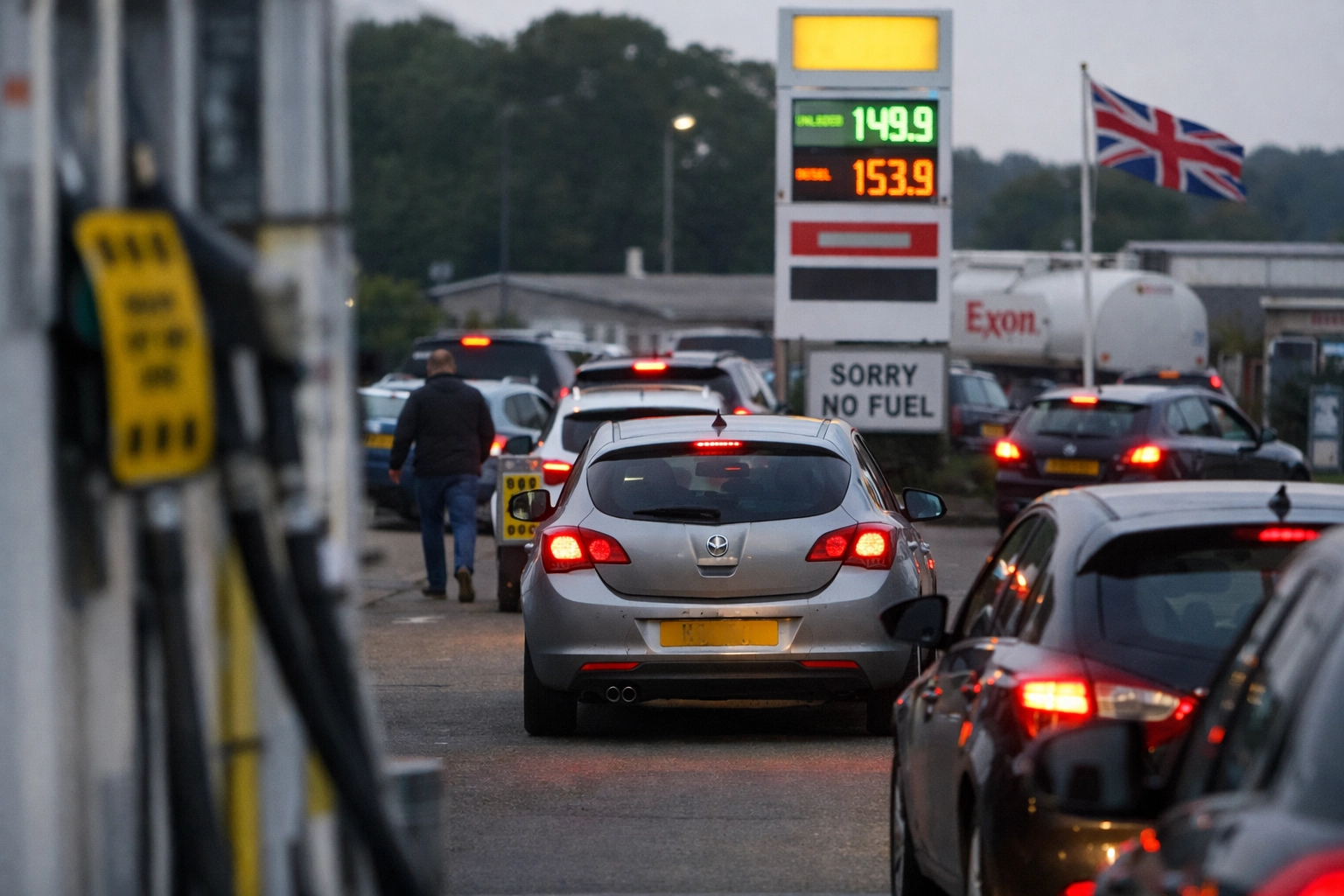
Government officials in Whitehall have spent the week attempting to calm public anxiety, yet the rhetoric from the private sector remains bleak. Widespread reports of petrol station queues have begun to surface in the South East and Midlands, as consumers anticipate a sharp rise in pump prices. While the Department for Energy Security and Net Zero maintains that national reserves are sufficient, the logistics of distribution remain under immense pressure from rising operational costs.
The Economic Cost of Global Volatility
The downgrading of the UK’s growth to 0.7 per cent reflects a broader cooling of the British economy under the weight of surging energy costs. The OECD's revised figures align with a similar correction from the Office for Budget Responsibility (OBR), which recently lowered its 2026 growth projection from 1.4 per cent to 1.1 per cent. The disparity between these figures suggests that international observers are even more pessimistic about Britain’s resilience than domestic forecasters.
Inflationary pressures are also mounting. The British Chambers of Commerce (BCC) now predicts that the Consumer Prices Index (CPI) will climb to 2.7 per cent by the end of the year. This is a significant jump from the 2.1 per cent forecast issued just months ago. For the average household, this means that the brief period of price stability experienced in early 2025 has come to an abrupt end. The increase is driven almost entirely by the rising cost of energy, which filters through into every sector of the economy, from food production to public transport.
Manufacturing and heavy industry are feeling the impact first. Factories across the North of England have reported a sharp uptick in overheads, leading some to scale back production shifts to save on electricity and fuel costs. The high cost of oil is also impacting the aviation and shipping sectors, with surcharges expected to be passed on to consumers within weeks. This creates a feedback loop where reduced consumer spending power further stifles the growth that the OECD has already warned is disappearing.
Unemployment figures are also expected to reflect this downturn. As businesses face a "double squeeze" of high interest rates and soaring energy bills, the OBR has warned that the labour market may begin to soften by the third quarter of 2026. While the UK has maintained relatively high employment levels since the pandemic, the current energy shock threatens the viability of small to medium-sized enterprises (SMEs) that lack the capital reserves to weather a sustained period of high operational costs.
Immediate Threats to National Fuel Supply
The most direct warning to the public came from the Chief Executive of Shell, who cautioned this week that the UK could face genuine fuel shortages within a matter of weeks if the situation in the Middle East does not stabilise. This assessment contradicts official government messaging, which has urged the public not to engage in "panic buying." However, the Shell CEO noted that the complexity of the global supply chain means that even a temporary blockage in the Strait of Hormuz has immediate repercussions for UK refineries.
Motorists are expected to see the impact at the pumps within the next ten to fourteen days. Industry experts predict that the price of petrol and diesel could rise by as much as 15p per litre in a single fortnight. This rapid escalation is particularly damaging for the logistics and haulage sectors, which underpin the UK’s retail supply chain. If fuel costs remain at these elevated levels, the cost of transporting goods will inevitably lead to higher prices on supermarket shelves.
The crisis is not limited to transport. Approximately 1.5 million households in the UK remain reliant on heating oil, particularly in rural areas of Scotland, Wales, and the South West. These households have seen the cost of a standard tank refill jump by hundreds of pounds in a matter of days. Unlike those on regulated gas and electricity tariffs, heating oil users are subject to the immediate fluctuations of the spot market, leaving them highly exposed to the current price spike as the transition into the spring months remains unseasonably cold.
The government has faced calls to intervene with a fresh energy support package, but the Treasury is reportedly hesitant. With public debt remains at historic highs and the tax burden already at its highest level since the Second World War, there is little fiscal "headroom" for the Chancellor to offer the same level of subsidies seen in 2022. The lack of a clear intervention strategy has added to the sense of uncertainty within the markets, further devaluing the pound against the dollar and making oil imports: which are priced in dollars: even more expensive.
Structural Vulnerability in the North Sea
Central to the UK's current predicament is the ongoing decline of its domestic energy production. Data for 2026 suggests that this may be the final year in which North Sea oil and gas production exceeds one million barrels per day. The sector is described by geologists as being in "terminal decline," with approximately 93 per cent of the UK’s total North Sea reserves already extracted. What remains is increasingly difficult and expensive to reach, requiring technology and investment that are currently lacking.
The decline is not just a matter of geology but also of fiscal policy. Upstream capital expenditure in the UK’s energy sector is projected to fall below $3.5 billion in 2026, the lowest level recorded since the 1970s. Industry bodies point to the high tax burden as the primary deterrent for investors. Between the 25 per cent windfall tax and existing levies, the total tax rate on energy production in the UK exceeds two-thirds of total income. This has led major global energy firms to redirect their investment capital to more "stable" markets in the Americas and West Africa.
This lack of investment has left the UK increasingly dependent on the global market. The UK now imports 55 per cent of its total gas supply, making the national grid highly sensitive to geopolitical events thousands of miles away. While there is an estimated 7.5 billion barrels of oil and gas still beneath the North Sea: which could theoretically provide £165 billion in economic value: the current political climate has prioritised a shift away from fossil fuels.
The debate over the UK’s energy future remains polarised. Advocates for increased domestic drilling argue that the current crisis proves the need for "energy sovereignty," suggesting that the UK should exploit its remaining resources to bridge the gap during the transition to renewables. Conversely, environmental groups and the current administration have doubled down on the commitment to green energy, arguing that further investment in the North Sea would be a "stranded asset" and would not bring prices down fast enough to help consumers in the current crisis.
As of late March 2026, the UK finds itself caught between a fading fossil fuel past and a renewable future that is not yet capable of providing total price stability. The immediate focus remains on the conflict in Iran and the potential for "Operation Epic Fury" to escalate further. For the British public, the coming weeks will be defined by rising costs at the pump, increased household bills, and an economy that is struggling to maintain its momentum in the face of a global energy shock. Whether the 0.7 per cent growth forecast proves accurate or overly optimistic will depend largely on the stability of the global oil market in the second quarter of the year.