Prime Minister Keir Starmer has issued a defiant message to the White House, insisting he will not "buckle" under mounting pressure to commit British forces to a full-scale military intervention in the Middle East.
The stand-off between Downing Street and the Oval Office reached a critical point this week as President Donald Trump publicly criticised the United Kingdom’s cautious approach to the escalating conflict with Iran.
Speaking from Number 10, the Prime Minister maintained that while the "special relationship" remains a cornerstone of British foreign policy, the UK will not be drawn into a conflict that lacks a clear legal mandate or defined strategic objectives.
The rift comes at a time of heightened regional instability, with Washington pushing for a more aggressive maritime presence and expanded air strike capabilities from British-controlled territories.
Tensions Peak as Washington Demands Greater UK Military Involvement
The diplomatic friction began to intensify following President Trump’s characterisation of the UK as a "disappointment" on the global stage.
In a series of pointed remarks, the US President suggested that Britain, once considered the "Rolls-Royce of allies," had failed to act with the necessary speed to counter threats in the Persian Gulf.
Starmer’s refusal to grant immediate and unconditional access to British sovereign bases for offensive operations remains the primary point of contention.
Initially, the Prime Minister denied the US military permission to launch strikes from bases in Cyprus and the joint facility at Diego Garcia, citing the necessity for military action to be "legal, proportionate, and well-planned."
This decision was backed by internal polling suggesting that 59 per cent of the British public opposes direct involvement in the Iran conflict, a statistic that has clearly influenced the Cabinet’s risk assessment.
In response to the UK’s hesitation, President Trump reportedly dismissed an offer from the Ministry of Defence to deploy the HMS Prince of Wales aircraft carrier to the region.
"We don't need them," the President stated during a televised briefing, adding a warning that the United States "will remember" which allies stood aside during the crisis.
The rejection of the Royal Navy’s flagship was seen by many in Westminster as a deliberate snub intended to marginalise British influence in Middle Eastern security architecture.
Despite the rhetoric, Starmer has made selective concessions, allowing "limited and defensive" use of bases for specific missions while remaining firm on the refusal to join a broader ground or air campaign.
Defence Committee Warns Against Over-Reliance on US Support
Parallel to the diplomatic row, a high-level report from the Commons Defence Select Committee has added further weight to the Prime Minister’s cautious stance.
The committee’s latest briefing warns that the UK must urgently reduce its strategic reliance on the United States military, describing the current level of dependency as a potential vulnerability.
Parliamentarians expressed concern that British foreign policy is increasingly being held hostage by the political shifts in Washington, urging a shift toward "strategic autonomy."
The report highlights that the Royal Navy’s ability to operate independently has been hampered by years of budget constraints, leaving the UK reliant on US logistical and intelligence support.
"We cannot have a situation where our defence posture is dictated by the electoral cycles of our allies," one committee member remarked during the report's launch.
The warning suggests that the UK should focus on building stronger security ties with European partners and Middle Eastern allies who share a preference for de-escalation rather than regime change.
Starmer has used this parliamentary backing to reinforce his "I won't buckle" narrative, framing his resistance to Trump as a matter of national sovereignty rather than a lack of commitment to international security.
The Prime Minister’s aides suggest that he is seeking to avoid the mistakes of previous administrations, specifically referencing the long-term consequences of the Iraq War on British public trust and military readiness.
This domestic support for a "Britain First" defence policy has provided Starmer with the political cover needed to withstand the barrage of criticism emanating from the US administration.
Navigating the Strait of Hormuz Amidst Diplomatic Friction
While the war of words continues, practical cooperation on the ground has taken a more nuanced and multilateral form.
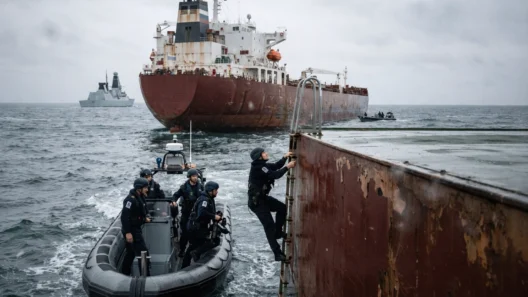
To bridge the gap between defiance and collaboration, Starmer has pivoted toward leading a 22-country coalition focused on maintaining freedom of navigation in the Strait of Hormuz.
This coalition aims to protect global shipping lanes without committing to the broader offensive objectives currently advocated by the White House.
NATO Secretary-General Mark Rutte has reportedly credited the British Prime Minister with finding a "third way" that keeps the UK engaged in regional security without triggering a domestic political backlash.
By focusing on "defensive escort duties," the Royal Navy is able to maintain a presence in the region while technically adhering to Starmer’s pledge to avoid unprovoked escalation.
However, the situation remains precarious, as any incident involving British vessels or personnel could force the Prime Minister's hand, making his current neutral stance difficult to sustain.
The use of the base at Diego Garcia remains a sensitive topic, with the US seeking expanded rights to use the island as a staging post for heavy bombers.
Starmer has so far limited this access to refuelling and reconnaissance missions, a compromise that has satisfied neither the anti-war wing of his party nor his critics in Washington.
As the conflict shows no signs of abating, the Prime Minister’s ability to maintain this balancing act will be tested by the dual pressures of an erratic US President and a wary British electorate.
For now, the message from Downing Street is clear: the UK remains a loyal ally, but it is no longer an automatic participant in American-led military ventures.
The coming weeks will determine whether this "defiance" leads to a permanent shift in the UK-US security dynamic or a temporary rupture in the historic alliance.