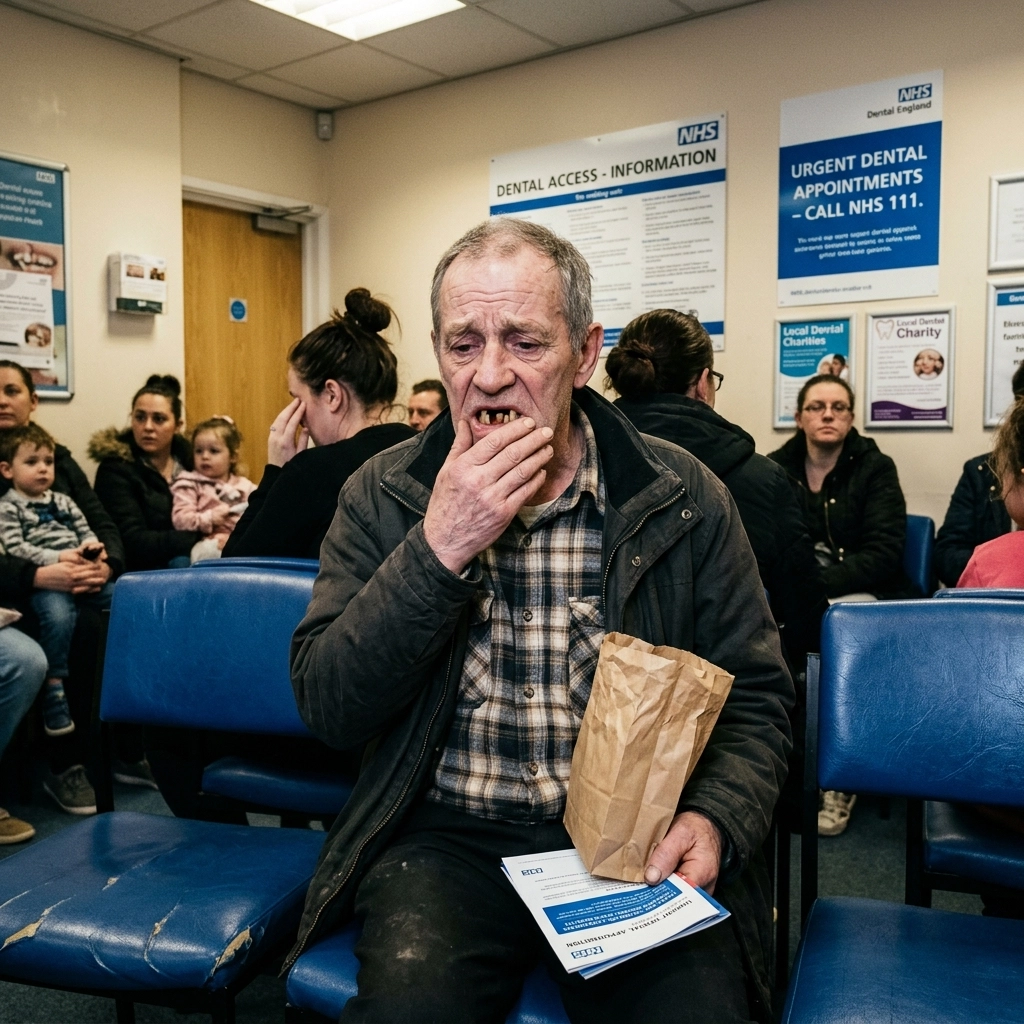
Britain is facing a silent public health emergency as the nation’s dental service reaches a breaking point, leaving millions of citizens without access to basic oral healthcare. What was once a cornerstone of the National Health Service is rapidly transforming into a luxury service, creating a two-tier system where those who cannot afford private fees are left to suffer in silence. The scale of the collapse is unprecedented, with "dental deserts" forming across vast swathes of the United Kingdom, leaving entire communities with no options for NHS treatment.
The crisis is no longer just a matter of long waiting lists; it has escalated into a human interest tragedy characterized by extreme pain and desperate measures. For many, the inability to find an NHS dentist has led to the return of "DIY dentistry," a practice more reminiscent of the Victorian era than a modern G7 economy. Patients have reported using pliers to extract their own teeth or purchasing temporary filling kits from pharmacies to patch up decaying molars that should have been treated by professionals months or years ago.
Independent news reports across the UK have highlighted a disturbing trend: the rise of oral health inequality that threatens to scar a generation. As the system buckles under the weight of outdated contracts and chronic underfunding, the most vulnerable members of society are the ones falling through the cracks. The human impact is profound, affecting not just physical health but mental well-being, employability, and the long-term development of children who are growing up without ever seeing a dentist.
The Collapse of Access and the Rise of DIY Dentistry
The statistical reality of the UK’s dental crisis is stark. Recent data suggests that four in five people have struggled to access NHS dentistry in the past eighteen months. In many parts of the country, the situation is even more dire, with 100% of dental practices refusing to take on new adult NHS patients. This total shutdown of access has forced patients into impossible situations. Some are forced to travel hundreds of miles for a single check-up, while others simply wait in pain until their condition becomes an emergency requiring hospital intervention.
Waiting times for routine appointments now regularly exceed two years in the worst-affected regions. This delay is not merely an inconvenience; it is a clinical risk. Minor cavities that could be fixed with a simple filling are being left to rot, eventually requiring complex root canals or total extractions. The burden has shifted heavily onto hospital A&E departments and GP surgeries, neither of which are equipped to provide definitive dental treatment. Doctors report an influx of patients seeking antibiotics for dental abscesses: a temporary fix for a structural problem that only surgery can resolve.
The desperation felt by the public has manifested in harrowing ways. Advocacy groups like Healthwatch England have documented cases of individuals performing their own extractions at home. The lack of professional intervention has led to a surge in preventable complications, including severe infections that can spread to the jaw or even the bloodstream. For those on lower incomes, the choice between paying for a private dentist: which can cost hundreds of pounds for a single tooth: and buying groceries is a non-starter. This financial barrier effectively exiles a significant portion of the population from the dental care system entirely.
The Financial Paradox of Returned Funding
At the heart of this crisis lies a baffling financial contradiction. While patients are crying out for care and practices claim they are overwhelmed, hundreds of millions of pounds in NHS dental funding are being handed back to the Treasury every year. In the last two fiscal years alone, more than £900 million in dental funding was returned. This suggests that the problem is not a simple lack of cash in the budget, but a catastrophic failure in the way that money is distributed and utilised through the current contractual framework.
The issue stems from the "Units of Dental Activity" (UDA) payment system, a contract model introduced nearly twenty years ago that has been widely condemned by the British Dental Association. Under this system, dentists are paid for the number of UDAs they complete, but the system fails to account for the complexity of the work. For example, a dentist receives the same payment for a patient requiring one simple filling as they do for a patient requiring ten complex ones. This creates a perverse financial incentive to avoid high-needs patients: those who have been out of the system for years and require the most help.
Furthermore, the "clawback" mechanism ensures that if a practice does not meet at least 96% of its agreed UDA targets, the government reclaims the funding. In the current climate, where dentists are struggling to recruit staff and deal with a massive backlog of high-needs cases, many practices are finding it impossible to hit these rigid targets. The result is a cycle of decline: practices lose funding, they cannot afford to hire more staff, they take on fewer NHS patients, and more money is returned to the government while the public's teeth continue to rot.
A Widening Health Gap and the Long-term Fallout
The long-term implications of the dental collapse extend far beyond toothache. We are witnessing the emergence of a permanent health gap between the wealthy and the working class. In affluent areas, private practices are thriving, but in post-industrial towns and coastal communities: the so-called "dental deserts": the infrastructure is vanishing. This geographic lottery determines whether a child will grow up with a healthy smile or a mouth full of decay.
Children’s oral health is perhaps the most tragic casualty of this systemic failure. Tooth decay remains the most common reason for hospital admissions among children aged five to nine in the UK. Thousands of children every year are undergoing multiple extractions under general anaesthesia: a procedure that is entirely preventable with routine check-ups and early intervention. The trauma of these early experiences can lead to a lifetime of dental anxiety, further perpetuating the cycle of poor oral health into adulthood.
Beyond the immediate physical pain, there is a significant socio-economic cost. Poor oral health is linked to a range of systemic issues, including cardiovascular disease and diabetes. Furthermore, the aesthetic impact of missing or decayed teeth can affect an individual's confidence and their prospects in the job market, effectively "marking" them as part of an underclass. As the gap widens, the NHS faces a future of increased costs as it deals with the secondary health complications of a generation that was denied basic preventative care. The crisis is ongoing, and without a radical overhaul of the dental contract and a massive reinvestment in the workforce, the "dental desert" map of Britain is only set to expand.