The British government has moved to disrupt the financial heart of the Islamic State by imposing rigorous sanctions on two key operatives responsible for the group’s revenue streams. The Foreign, Commonwealth & Development Office (FCDO) confirmed that Iraqi nationals Sami Jasim Muhammad Jaata al-Jaburi and Abd el Hamid Salim Ibrahim Brukan al-Khatouni have been designated under the UK’s autonomous sanctions regime.
This decision reflects an ongoing commitment to dismantle the economic infrastructure that allows terrorist organisations to recruit, plan, and execute attacks globally. By targeting the individuals who manage the "treasury" of the Islamic State, the UK and its international partners aim to starve the group of the resources necessary to maintain its remaining sleeper cells and regional influence.
The measures include an immediate asset freeze, a travel ban, and a comprehensive arms embargo. These sanctions are designed to isolate the individuals from the international financial system, preventing them from moving funds or travelling across borders to coordinate operations. The designations have been coordinated with international partners and are now reflected in the INTERPOL-UN Security Council Special Notice system.
The Financial Architecture of Global Terror
Sami Jasim Muhammad Jaata al-Jaburi has long been identified as a primary architect of the Islamic State’s financial sustainability. During the group’s height of territorial control, al-Jaburi served as a deputy to the former leader Abu Bakr al-Baghdadi and held the equivalent role of finance minister. Operating primarily out of southern Mosul, he was responsible for the management of the group’s diverse revenue-generating activities, which transformed the Islamic State into one of the wealthiest terrorist organisations in history.
His oversight extended across the extraction and sale of natural resources, including oil and gas, which were frequently smuggled across borders to fund military campaigns. Beyond energy, al-Jaburi managed the systematic looting and sale of antiquities and minerals, effectively monetising the cultural heritage of the regions under the group’s control. His role was not merely administrative; he was a strategic figure in the Islamic State’s leadership council, ensuring that the group’s ideological goals were supported by a robust and diversified economic base.
The removal of such a high-level figure from the legitimate financial grid is a critical step in preventing the resurgence of the group’s territorial ambitions. Even after the loss of its "caliphate" in 2019, the Islamic State has attempted to maintain a shadow economy through hidden reserves and illicit investments. Al-Jaburi’s expertise in navigating these complex financial webs made him a high-priority target for international security services. By freezing his assets, the UK government ensures that any funds held within British jurisdictions are rendered inaccessible, effectively cutting off a vital artery of terror funding.
Smuggling Operations and Revenue Streams
While al-Jaburi focused on the strategic oversight of the group's wealth, Abd el Hamid Salim Ibrahim Brukan al-Khatouni played a pivotal role in the logistical movement of capital. Since at least 2016, al-Khatouni has functioned as a central financial officer, facilitating the transfer of funds between operative hubs in Iraq, Syria, and Turkey. His role was essential for the day-to-day survival of the organisation, bridging the gap between revenue collection and operational expenditure.
Al-Khatouni’s network was instrumental in recruitment efforts, providing the financial incentives and logistical support required to bring foreign fighters into the group’s remaining strongholds. His operations often utilised the "hawala" system: an informal method of transferring money based on trust and a network of brokers: which traditionally operates outside the direct oversight of conventional banking regulators. This allowed the group to bypass standard anti-money laundering controls, making the current sanctions and the accompanying INTERPOL notices even more significant.
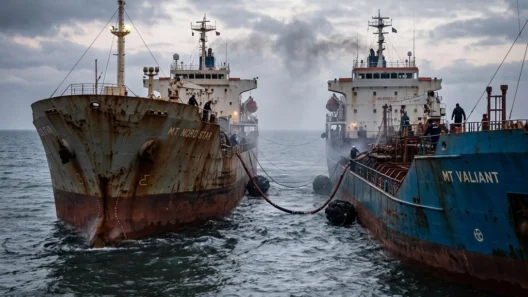
The focus on Turkey and the border regions highlights the persistent challenge of monitoring porous frontiers where illicit trade thrives. Al-Khatouni’s ability to move money across these borders was directly linked to the Islamic State’s ability to procure weaponry and equipment. The arms embargo included in the UK’s sanctions specifically targets this capability, making it a criminal offence for any UK citizen or business to provide technical assistance, financial services, or military hardware to these individuals. This multi-layered approach aims to squeeze the operational space available to facilitators who have historically found safety in the complexity of regional conflicts.
International Enforcement and Legal Frameworks
The imposition of these sanctions is part of a broader, synchronised effort involving the United Nations Security Council. By listing al-Jaburi and al-Khatouni on the INTERPOL-UN Security Council Special Notice system, the UK has ensured that the alert is shared with 195 member countries. This international visibility is a powerful tool for law enforcement agencies worldwide, as it obligates UN member states to enforce the travel bans and asset freezes within their own jurisdictions. It creates a global perimeter that limits the movement of these operatives, significantly increasing the risk of their apprehension if they attempt to cross international borders.
The legal framework for these actions is grounded in the UK’s Sanctions and Anti-Money Laundering Act 2018. This legislation allows the government to act independently or in concert with international allies to address threats to national security and international peace. The use of such powers demonstrates a shift toward targeted, individual-based sanctions rather than broad, country-wide measures that can often have unintended humanitarian consequences. By focusing on the specific "money men" of the Islamic State, the UK is applying pressure where it is most effective: at the point of financial distribution.
Looking forward, the crackdown on terror funding remains a dynamic challenge as extremist groups increasingly turn to digital assets and cryptocurrencies to hide their tracks. However, the traditional pillars of their wealth: oil smuggling and regional financial networks: remain vulnerable to traditional sanctioning methods. The Foreign, Commonwealth & Development Office has signalled that these designations are not isolated incidents but part of a sustained campaign to monitor and disrupt the evolving financial strategies of extremist organisations. The message from Whitehall is clear: the UK will continue to use every legal and financial tool at its disposal to ensure that those who fund terror have nowhere to hide their wealth.