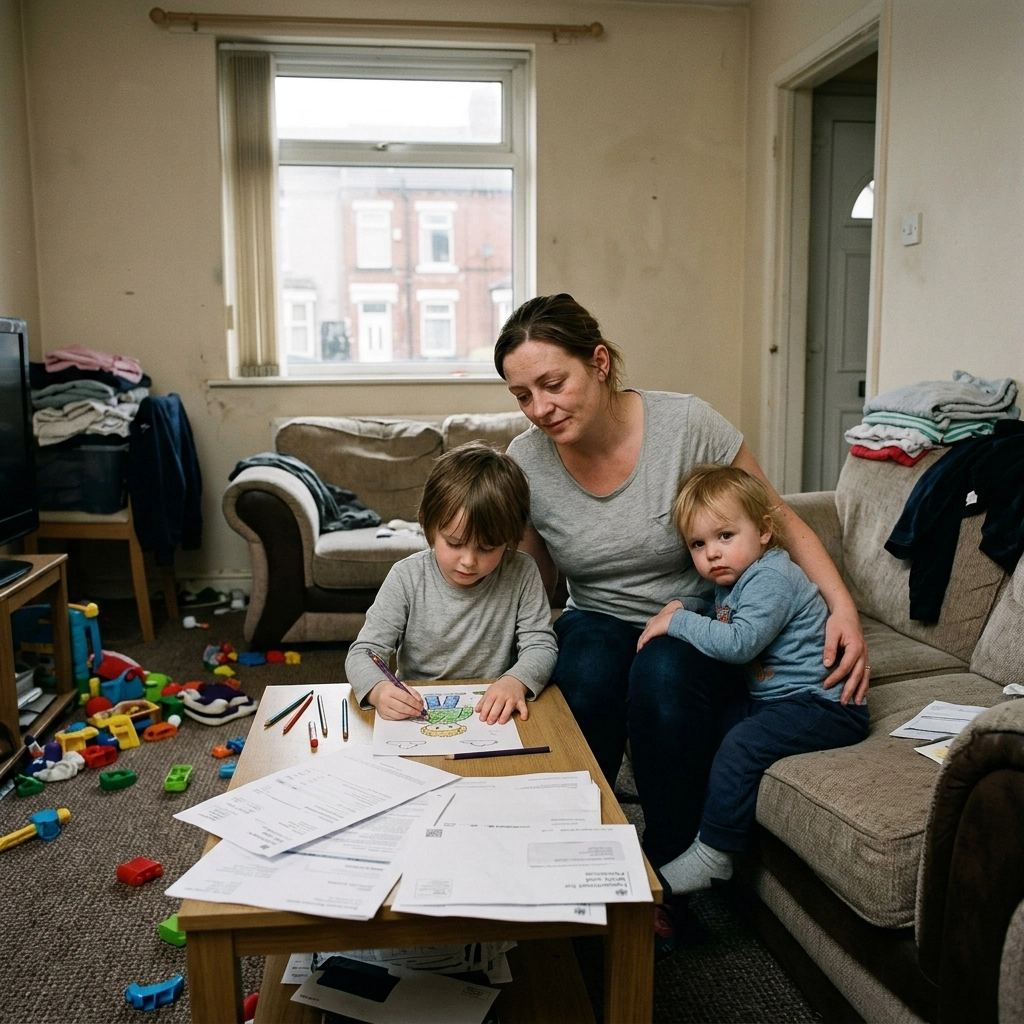
The British middle class is currently navigating a complex financial landscape where rising wages are increasingly met with a punitive tax mechanism known as the Child Benefit Trap. While the government recently adjusted the thresholds for the High Income Child Benefit Charge (HICBC), thousands of households remain caught in a system that critics argue penalises aspiration and creates a significant "cliff edge" for working parents. These untold stories of financial struggle highlight a growing disparity in how the UK state supports families across different income brackets.
The charge essentially functions as a tapered withdrawal of state support. For every £200 of "adjusted net income" earned above a specific threshold, a parent must pay back 1% of their Child Benefit through the self-assessment tax system. Since its inception in 2013, the policy has been a point of contention for being administratively burdensome and structurally biased against single-earner households. For many, the reality of "real life stories news" involves receiving a benefit in one hand only to have the Revenue and Customs (HMRC) claw it back with the other.
As of the 2024/25 tax year, the threshold at which the charge begins was increased from £50,000 to £60,000. While this move was welcomed as a necessary correction to years of stagnant limits, the underlying mechanics of the system continue to create scenarios where families are left worse off despite earning more. The full repayment of the benefit now occurs once an individual’s income reaches £80,000. For a family with two children, this equates to a loss of approximately £2,074.80 per year.
The Structural Imbalance of the High Income Charge
The most significant criticism of the High Income Child Benefit Charge remains its perceived lack of fairness regarding household versus individual income. Under the current rules, a household where two parents each earn £59,000: a combined income of £118,000: receives the full Child Benefit without any tax penalty. In contrast, a household where one parent earns £61,000 and the other stays at home or earns very little is immediately hit by the charge. This creates a situation where a family with significantly less total income pays more in tax than a wealthier dual-income household.
This structural quirk has long been a source of frustration for single-income families and those where one partner has seen a moderate career progression. The system does not account for the total household pot, leading to what many describe as a "marriage penalty" or a "single-earner tax." Despite the 2024 adjustments, the fundamental logic of the charge remains tied to individual earnings, which fails to reflect the lived reality of family expenses and resource pooling.
Furthermore, the administrative burden of the HICBC is substantial. Many parents are unaware they even owe the charge until they receive a letter from HMRC, often accompanied by fines for late filing. The requirement to register for Self Assessment simply to pay back a benefit has deterred thousands of families from claiming the support they are entitled to. This "opt-out" culture has unintended consequences that stretch far beyond the immediate monthly budget, affecting long-term state pension entitlements.
Fiscal Drag and the Erosion of Middle-Class Disposable Income
The concept of "fiscal drag" has played a primary role in the expansion of the Child Benefit Trap. Between 2013 and early 2024, the £50,000 threshold remained frozen despite significant inflation and nominal wage growth. This meant that each year, more teachers, nurses, and mid-level professionals were pulled into a tax bracket originally intended for "high earners." Although the move to a £60,000 starting point provided some relief, the cost-of-living crisis has largely swallowed the gains for the average family.
For families with multiple children, the impact is even more pronounced. The weekly rate for the first child is currently set at £26.05, with subsequent children bringing in £17.15 each. For a parent of three, the total annual benefit exceeds £3,000. When that parent crosses the £60,000 mark, the effective marginal tax rate increases sharply. When combined with Income Tax and National Insurance contributions, some parents find themselves in a "tax trap" where they keep less than 40p of every extra pound they earn.
The financial pressure is compounded when other middle-class benefits are factored in. Parents earning over £100,000 face an even steeper cliff edge, losing access to Tax-Free Childcare and the 30 free hours of childcare for toddlers. Analysis suggests that a family with two children could lose nearly £30,000 in total value if their income increases from £99,999 to £100,001. While this article focuses on the £60,000–£80,000 bracket, it highlights a broader trend where the UK's tax and benefit system is increasingly uncoordinated, leaving middle-earners in a precarious financial position.
Real life stories news frequently features parents who have turned down promotions or requested shorter hours specifically to avoid these tax thresholds. This "productivity trap" suggests that the current benefit structure may be inadvertently discouraging workforce participation among skilled professionals. The psychological impact of seeing a hard-earned pay rise disappear into tax repayments and lost benefits is a recurring theme in the untold stories of Britain's working families.
Beyond the Tax Bill: National Insurance and Future Reform
A critical and often overlooked aspect of the Child Benefit Trap is the link to the State Pension. When a parent decides to opt out of Child Benefit to avoid the High Income Charge, they may inadvertently stop receiving National Insurance (NI) credits. These credits are vital for individuals who take time out of the workforce to raise children, as 35 qualifying years of NI contributions are required for a full State Pension. One year of NI credits via Child Benefit is equivalent to a year of paid work in the eyes of the pension system.
Government data shows that thousands of mothers, in particular, have missed out on these credits because their partners are high earners and the family chose not to claim the benefit at all. While it is possible to fill out the claim form and "opt out" of the actual payment while still receiving the NI credits, the complexity of the process means many simply walk away. This creates a secondary trap: avoiding a tax charge today at the cost of pension poverty in the future.
There is, however, a glimmer of hope on the horizon for those seeking a more equitable system. The government has announced plans to move toward a household-based income assessment for Child Benefit, currently slated for implementation in April 2026. This would theoretically end the disparity between single-earner and dual-earner households, ensuring that the total family income is the deciding factor for the charge.
Until these reforms are enacted, parents are encouraged to use legitimate methods to lower their "adjusted net income." Increasing pension contributions or making charitable donations via Gift Aid can reduce the income figure HMRC uses to calculate the charge. For a parent earning £62,000, a £2,000 contribution to a workplace pension could potentially bring them back under the threshold, protecting their Child Benefit while simultaneously boosting their retirement savings.
The Child Benefit Trap remains a significant hurdle for UK families trying to manage the balance between career progression and the costs of raising a child. As the 2026 reform date approaches, the pressure remains on policymakers to ensure that the "untold stories" of middle-class struggle are addressed through a system that is fair, transparent, and fit for the modern economy. The story of Britain's welfare state is currently one of transition, with the next two years proving crucial for millions of households caught in the middle.