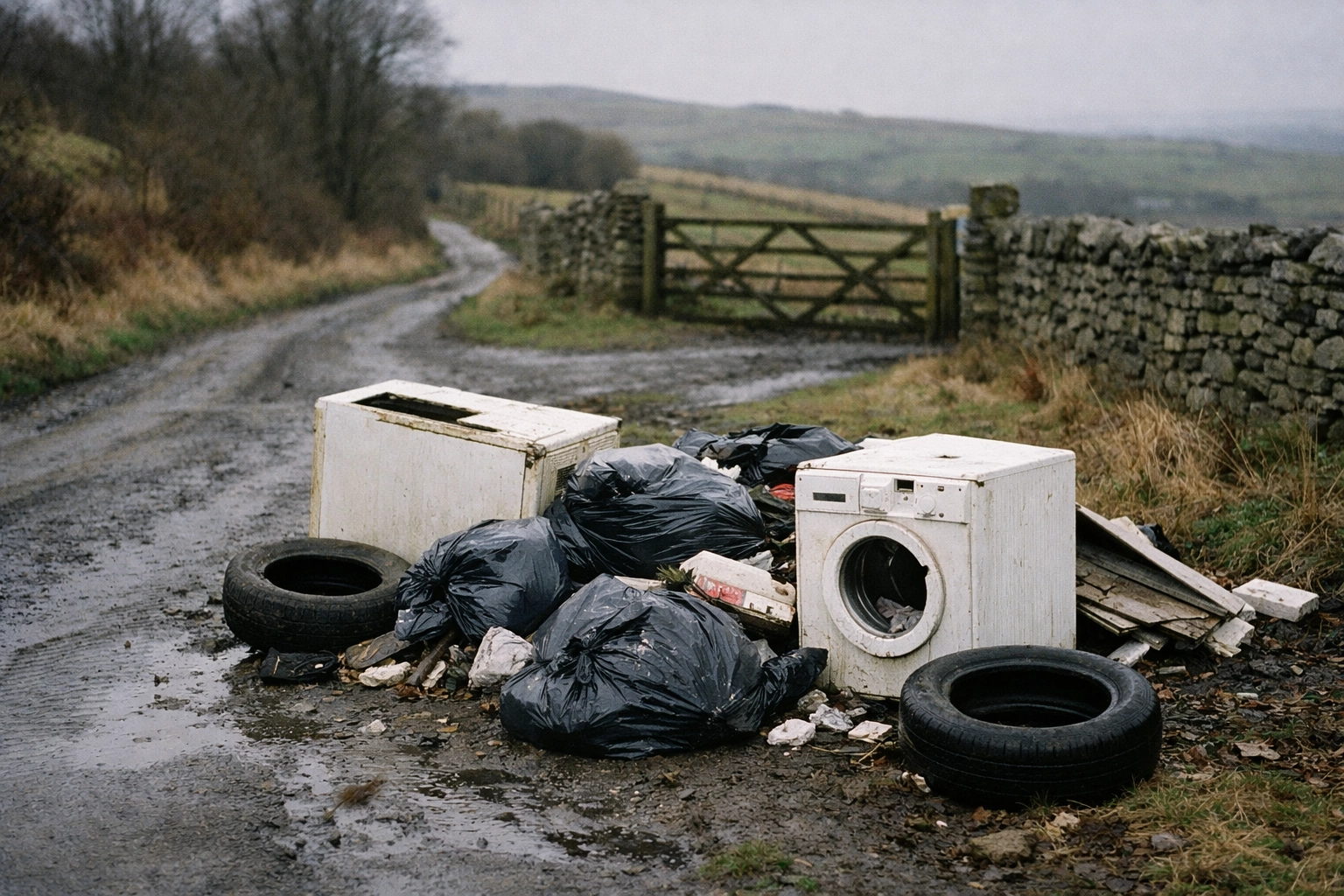
Northern England’s illegal dumping problem is getting a £9 million response, with councils set to use clean-up teams and new tech to tackle what’s been dubbed the “Northern Wastelands”.
Across the Pennines and backroads in places like County Durham, the same scene keeps popping up: old tyres, broken appliances and black bags dumped where they don’t belong. Local authorities say the volume has jumped over the past two years, and the bill for clearing it up keeps landing on communities.
This is exactly the kind of local mess that can get missed unless independent news uk outlets keep pushing it into the open. It’s also where investigative journalism uk helps join the dots between repeat dumping sites, organised operators and the money behind it.
The government-backed fund, reported in March 2026, is aimed at the worst-hit northern areas. It’s not just a tidy-up; it’s an attempt to make dumping harder to do and easier to prove, so these untold stories don’t stay stuck on back lanes and farmland.
Cleaning Up the Great Northern Landscapes
Northern beauty spots have become regular targets for fly-tipping operations, and it’s often not “someone dropped a bag on the way home” stuff. Councils and landowners report loads that look industrial in scale: construction waste, bulky household items and, in some cases, materials that raise concerns about contamination.
The £9 million pot is being shared across ten of the hardest-hit local authorities. The plan is straightforward: clear known dumping sites, then make it harder for offenders to come back. That includes practical “deterrence architecture” like barriers and better lighting in repeat hotspots.
A big part of the challenge is geography. Remote tracks, wide-open countryside and private farmland are hard to watch all the time, and farmers can end up stuck with the cost and hassle. The fund is meant to ease that pressure, while still focusing on prevention as much as clean-up.
Drones in the Sky: A New Era of Enforcement
The tech angle is where this gets interesting. The 2026 package includes drone surveillance, with higher-end UAVs used to scan rural routes during the hours when dumping tends to happen.
With thermal imaging and AI-assisted tracking, drones can spot vehicles stopping in odd places, then capture footage and number plates even in low light. That material can be passed on to police and environmental enforcement teams, and early pilots have already resulted in fines and vehicle seizures.
There’s also a bigger reason this has started getting national attention now. For years, fly-tipping was treated like a local nuisance, not something with deeper roots. But investigative journalism uk has repeatedly highlighted links between illegal waste disposal and wider criminal activity, including fraud and tax evasion, helping move the issue up the agenda.
Untold Stories of Our Rural Landscape
For people living near these routes, the impact is everyday and not always obvious from the roadside. A single dumping run can block access tracks, spook livestock, and leave landowners dealing with waste they didn’t create.
Local councils say reporting has improved, but follow-through still depends on evidence, staffing and whether offenders can be identified quickly. The hope is the new funding, paired with smarter surveillance, helps close that gap.
For independent news uk readers, it’s a reminder that these aren’t just scruffy lay-bys: they’re community and environmental problems that can spill into water, soil and public budgets. The clean-up is happening now, but the real test is whether enforcement and deterrence stop the same sites turning back into wastelands — one of those untold stories that’s still unfolding.