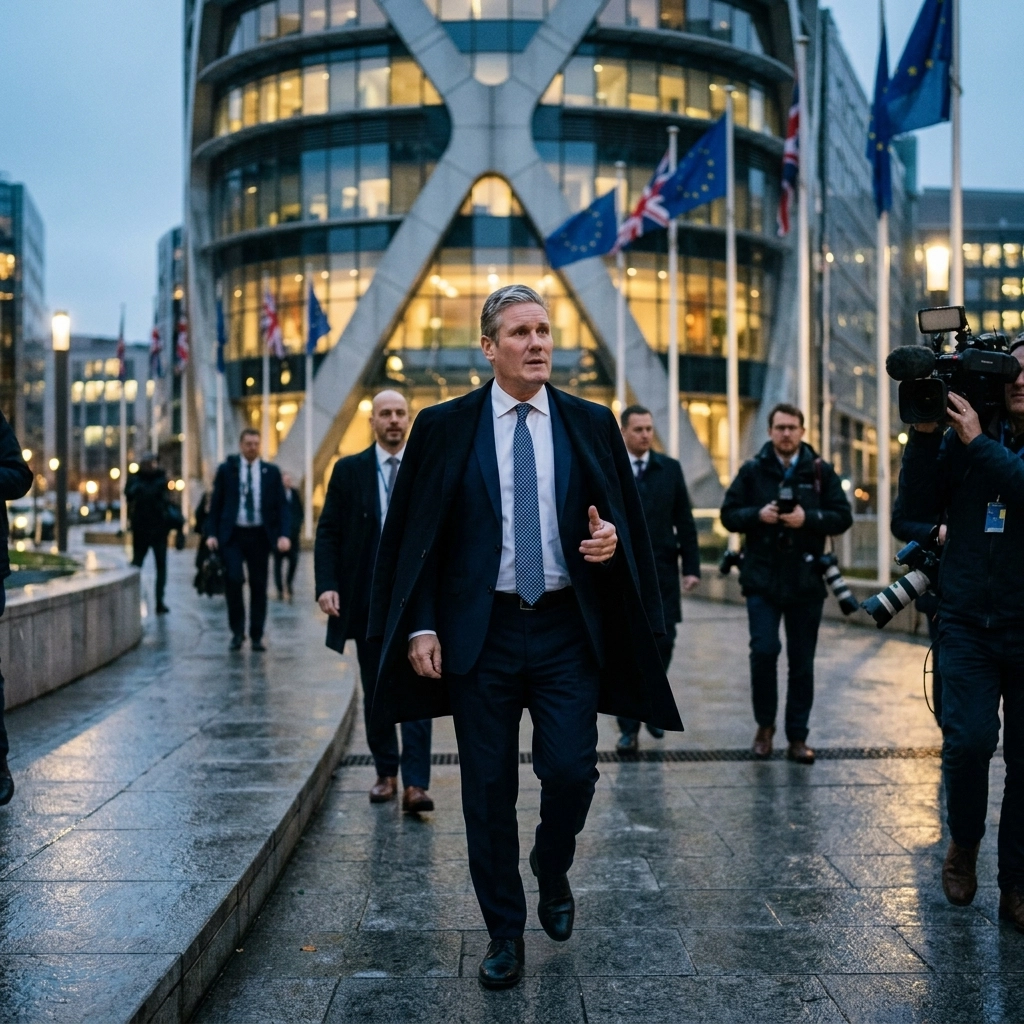
The landscape of British foreign policy is undergoing a significant transformation. As the conflict in Iran continues to destabilise global markets and traditional alliances, Prime Minister Keir Starmer has signalled a decisive shift in the UK’s approach to its nearest neighbours. Speaking from Downing Street, the Prime Minister articulated a vision where Britain’s long-term national interests are inextricably linked to a "reset" with the European Union. This move comes at a time when the world feels increasingly volatile, and the certainties of the last decade are being tested by warfare and shifting political tides across the Atlantic.
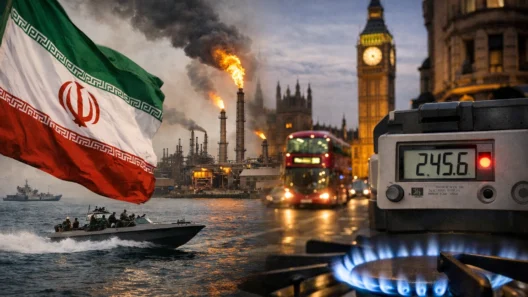
For Starmer, the urgency of this pivot is driven by the stark realities of modern geopolitics. The Iran war is not merely a distant conflict; its ripples are felt in the rising cost of energy, the disruption of vital shipping lanes, and the heightening of security threats that do not respect national borders. The Prime Minister’s recent rhetoric suggests that the UK can no longer afford to stand in isolation or rely solely on historical alliances that are currently under strain. Instead, a pragmatic, security-focused partnership with Europe is being positioned as the primary safeguard for the nation’s future.
A Strategic Pivot in a Volatile World
The cornerstone of Starmer’s new strategy is the recognition that the global order is shifting. The conflict in Iran has served as a catalyst for this realisation. According to the Prime Minister, the consequences of this war will "define us for a generation," creating economic and social pressures comparable to the energy shocks of the 1970s. In this context, the logic of a "Global Britain" that operates independently of European frameworks is being reassessed. The focus is now on collective resilience.
Relations with the United States have added another layer of complexity to this decision. Under the current administration, President Donald Trump has been vocal in his criticism of the UK's refusal to engage directly in military operations against Iran. This public friction, characterised by insults directed at the British government and critiques of the UK's military capacity, has left a vacuum in the UK’s traditional security architecture. By turning towards Europe, Starmer is not just seeking economic benefits but is also looking to establish a more stable security consensus with allies like France and Germany, who share a more cautious approach to the Middle Eastern conflict.
This pivot is expected to culminate in a major EU summit planned for the summer. The summit will likely serve as the formal platform for this "ambitious" reset. While the Prime Minister has been careful to manage expectations domestically, the intent is clear: to move beyond the post-Brexit era of friction and enter a period of structured, reliable cooperation. This is not about revisiting the debates of 2016, but about acknowledging that the world of 2026 requires a different kind of regional solidarity.
Addressing the Economic Legacy of Brexit
While security is the immediate driver, the economic imperative for closer EU ties remains a central theme of Starmer’s agenda. The Prime Minister has been uncharacteristically blunt about the state of the UK's current economic arrangements. He described the 2020 Brexit deal as having caused "deep damage" to the national economy, pointing to barriers that have hindered growth and complicated trade. The goal of the proposed reset is to "undo" some of this damage through a renewed partnership that prioritises economic stability over ideological purity.
However, this economic realignment comes with strict self-imposed boundaries. Starmer has explicitly ruled out a return to the EU’s customs union or the single market. This creates a challenging diplomatic balancing act: the UK seeks the benefits of closer integration and reduced trade friction without re-entering the institutional frameworks that defined its previous membership. The focus, therefore, is on specific, high-value areas of cooperation, such as professional qualifications, veterinary standards, and digital trade, which could ease the burden on businesses without crossing the government’s stated "red lines."
The economic shocks of the Iran war have made this mission even more urgent. With inflation and energy prices remaining sensitive to global events, the government is looking to Europe to help create a more insulated regional economy. By harmonising certain standards and improving supply chain logistics with EU partners, the UK hopes to mitigate the volatility that has plagued the domestic market since the start of the conflict. It is a strategy based on the idea that economic sovereignty is best protected through cooperation rather than isolation.
Securing the Future of Energy and Trade
The practical application of this closer partnership is already visible in the UK’s response to the crisis in the Strait of Hormuz. As a vital artery for global energy supplies, the blocking of the Strait has posed a direct threat to the UK’s energy security. In response, the government has led international efforts to coordinate a maritime security strategy. Foreign Minister Yvette Cooper recently hosted a virtual meeting involving 35 countries, including major European powers like France and Germany, alongside Japan and Australia.
This multilateral approach contrasts sharply with the "America First" posture currently seen in Washington. By leading these discussions, the UK is positioning itself as a bridge between European interests and global stability. The coordination involves not just military monitoring but also long-term planning for energy diversification. The Iran war has accelerated the transition to clean energy, not just as a climate necessity, but as a core component of national security. Starmer’s government is pushing for a G7-wide acceleration of the clean energy shift, arguing that reducing dependence on volatile oil and gas regions is the only way to ensure long-term price stability.
Furthermore, the "Return to Chagos" decision, where island bans were recently overturned, reflects a broader shift in the UK's international standing. It signals a move towards upholding international law and fostering goodwill with the international community, which aligns with the values typically championed by the EU. This "new diplomacy" is intended to show that the UK is a reliable, law-abiding partner that shares the strategic goals of its European neighbours. The aim is to build a foundation of trust that can support more complex negotiations on trade and security in the months to come.
The road ahead for the UK and the European Union remains complex. The scars of the Brexit process have not entirely healed, and the political climate within many EU member states is itself in a state of flux. However, the external pressures of the Iran war and the changing nature of the transatlantic relationship have created a unique window of opportunity. The Prime Minister’s gamble is that a more integrated European policy will provide the stability that the British economy and security apparatus desperately need.
As the summer summit approaches, the focus will remain on how much common ground can be found without re-opening old political wounds. For now, the message from Downing Street is one of pragmatism. In a world defined by global unrest, the UK is choosing to look towards its closest allies to navigate the challenges of the 21st century. Whether this reset can deliver the economic growth and security it promises will be the defining test of Keir Starmer’s premiership.