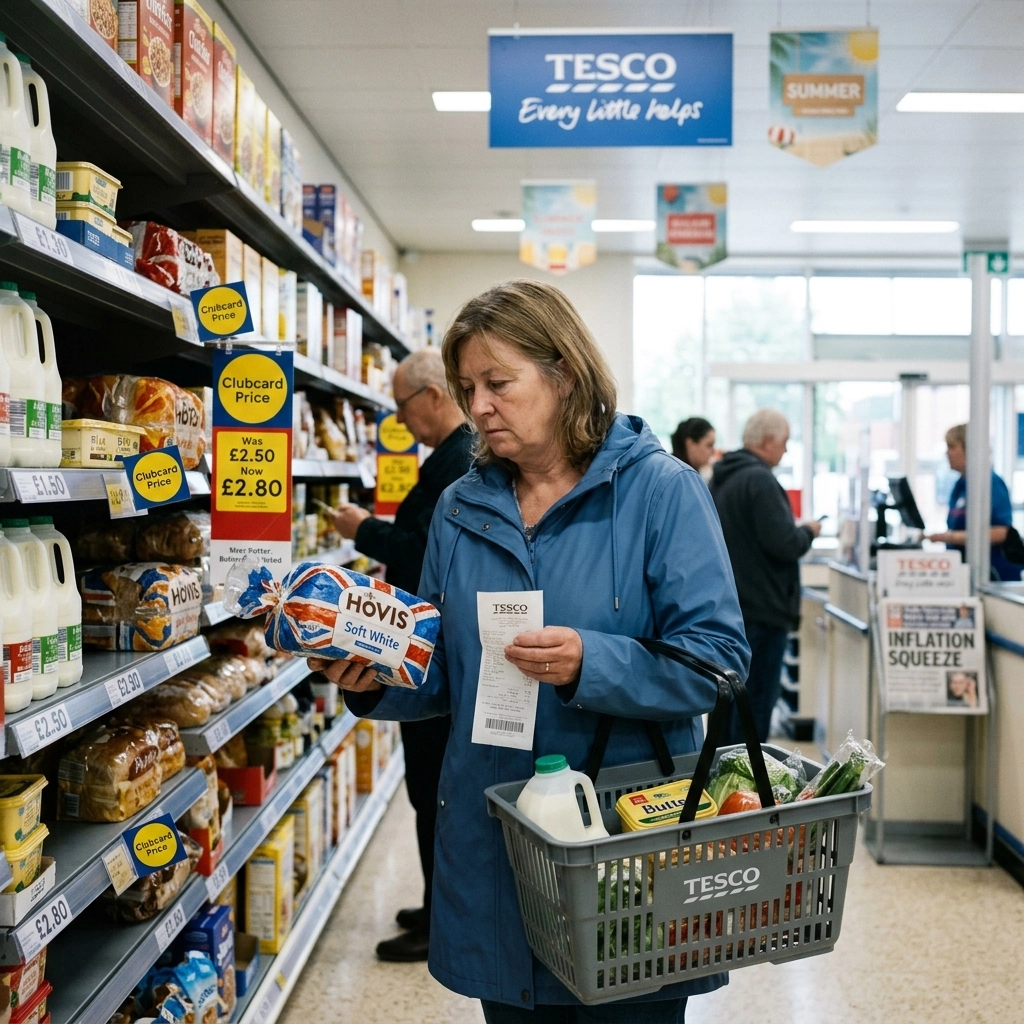
The British public is once again facing a tightening of the belt as new economic forecasts suggest a significant spike in grocery costs over the coming months. After a period of relative stabilisation in food prices, analysts are warning that the average household could see their annual shopping bill increase by approximately £150. This surge is largely attributed to external shocks that are beginning to filter through the complex global supply chain, eventually landing at the checkout of UK supermarkets.
Recent data suggests that grocery inflation, which had been trending towards more manageable levels, is expected to accelerate sharply. Projections from the Institute of Grocery Distribution (IGD) indicate that the rate of inflation in the food sector could climb to over 8% by June 2026. This would represent a doubling of the current rate, which currently sits around 3.6%. While many families have become accustomed to fluctuating prices, the scale of this predicted rise poses a renewed challenge to household finances across the country.
The economic landscape in 2026 remains sensitive to global events. The primary driver behind these revised forecasts is a potential energy shock. When energy prices rise, the cost of everything from farm machinery and greenhouse heating to refrigerated transport and shelf lighting increases. For the food industry, which operates on thin margins, these additional overheads are almost inevitably passed on to the consumer.
The Geopolitical Factors Behind Rising Food Costs
The current volatility in the energy market is closely linked to ongoing geopolitical tensions, particularly the conflict involving Iran. Geopolitically sensitive regions play a crucial role in the global distribution of oil and gas. Any disruption to these supplies, or even the threat of disruption, can send shockwaves through the commodities market. For the UK, which relies on a mix of domestic production and international imports, these global price spikes have a direct and immediate impact on the cost of production for food manufacturers.
It is not just the cost of fuel for delivery lorries that is at stake. The production of fertiliser, which is an energy-intensive process, is highly susceptible to gas price increases. When fertiliser becomes more expensive, farmers face higher costs for growing crops and feeding livestock. This creates a domino effect: if the cost of grain rises, the cost of bread, pasta, and meat follows suit. The IGD’s "severe energy shock" scenario assumes that these costs will continue to escalate, forcing retailers to adjust their pricing strategies to maintain viability.
Furthermore, international shipping routes remain under pressure. Disruptions in key maritime corridors can lead to longer journey times and higher insurance premiums for cargo. For a nation like the UK, which imports a significant portion of its fresh produce, particularly during the shoulder seasons, these logistics costs are a major component of the final price on the sticker. The combination of high energy costs at home and increased transport costs from abroad creates a perfect storm for grocery inflation.
Breaking Down the £150 Annual Increase
For the average UK household, an additional £150 a year on groceries may not sound catastrophic in isolation, but when viewed alongside rising housing costs and utility bills, it represents a meaningful erosion of disposable income. This figure is an average, meaning that larger families or those who rely on specific dietary staples could see even higher increases. The 8% inflation forecast for mid-2026 suggests that the period of "cheap food" is unlikely to return in the near future.
The impact is expected to be felt most acutely in categories that require significant processing or temperature-controlled logistics. Dairy products, frozen foods, and fresh meats are often the first to reflect rising energy prices. Conversely, seasonal UK-grown vegetables might see less volatility, though they are still subject to the costs of harvesting and distribution. The cumulative effect of these small price hikes across a weekly shop adds up quickly, leading to the projected £150 annual hike.
Economists are also monitoring the "secondary effects" of this inflation. As grocery prices rise, consumers often have less money to spend in other areas of the economy, such as leisure, clothing, or home improvements. This can lead to a cooling of the wider economy. However, for most people, the immediate concern is the weekly budget. The IGD notes that while some of the pressures are external, the UK's internal market dynamics: including labour shortages in the agricultural sector and increased regulatory costs: are also playing a role in keeping prices high.
The Changing Face of the British Supermarket
In response to these inflationary pressures, the way Britons shop is undergoing a fundamental shift. The "Big Four" supermarkets are facing intense competition from discount retailers, who have managed to capture a larger share of the market by focusing on lean supply chains and private-label products. As the £150 increase looms, more consumers are expected to "trade down," switching from premium brands to supermarket-own versions or moving their entire shop to lower-cost outlets.
Supermarkets themselves are caught in a difficult position. On one hand, they need to pass on costs to remain profitable; on the other, they are engaged in a fierce price war to retain customer loyalty. Many have introduced "price match" schemes or expanded their budget ranges to keep shoppers from defecting. However, there is a limit to how much a retailer can absorb. If the cost of raw materials and energy continues to rise as predicted, even the most efficient discounters will be forced to raise their prices.
We are also seeing a rise in "loyalty pricing," where the best deals are reserved for customers signed up to digital apps or membership cards. This data-driven approach allows supermarkets to offer targeted discounts, but it also highlights the growing divide between tech-savvy shoppers and those who may not have access to such tools. As we move into the summer of 2026, the focus for many will be on navigating these various schemes to mitigate the impact of the rising cost of living.
The forecast for the summer remains cautious. While the UK has shown resilience in the face of previous economic shocks, the sustained nature of food price inflation is a concern for policymakers and households alike. The IGD’s warnings serve as a reminder that the global economy is deeply interconnected, and events far beyond the UK’s borders can have a very real impact on the kitchen table.
Looking ahead, the trajectory of grocery inflation will depend heavily on the stability of global energy markets and the ability of the food industry to find efficiencies. For now, the message for the British public is one of preparation. As the projected £150 increase begins to manifest, the importance of savvy shopping and household budgeting has never been more apparent. The summer of 2026 may be a challenging one for the UK’s food economy, but it is a challenge that both retailers and consumers are already beginning to adapt to.