The eyes of the world turned toward the Florida coast on 1 April 2026, as NASA’s Artemis II mission successfully roared into the skies. This historic launch from the Kennedy Space Centre marks the first time in more than half a century that humans have departed Earth’s orbit with the intention of visiting the Moon. While the Apollo era established the initial footprint of human lunar exploration, Artemis II represents a new chapter defined by international collaboration, advanced technology, and a commitment to long-term discovery.
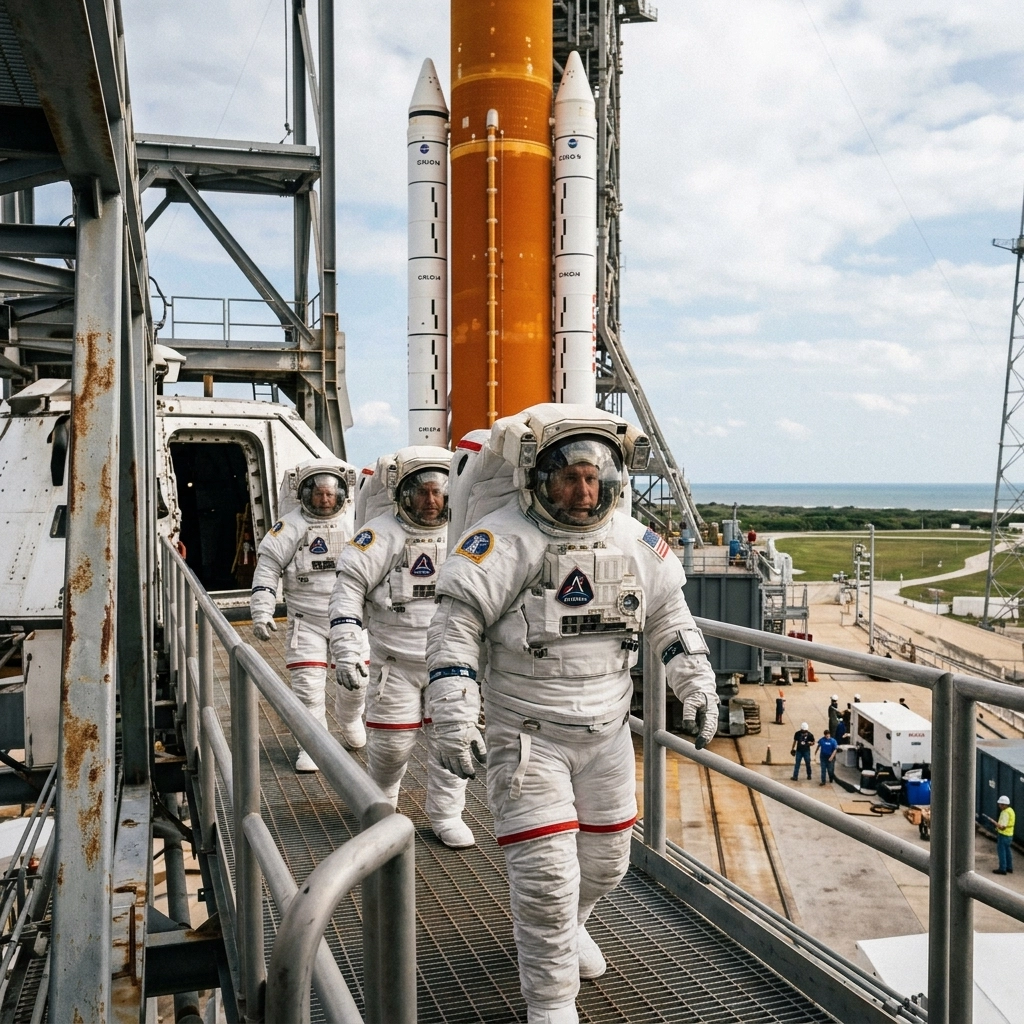
The Space Launch System (SLS) rocket, the most powerful vehicle ever built by NASA, performed flawlessly as it climbed away from Launch Complex 39B. This is the same ground that supported the Apollo and Space Shuttle programmes, and the resonance of history was felt by everyone watching. The roar of the engines signalled not just a departure, but a promise kept to return humanity to deep space. This 10-day mission is designed to test every critical system of the Orion spacecraft while carrying a crew of four brave explorers further into the cosmos than anyone in the 21st century.
The Crew Breaking Barriers in Deep Space
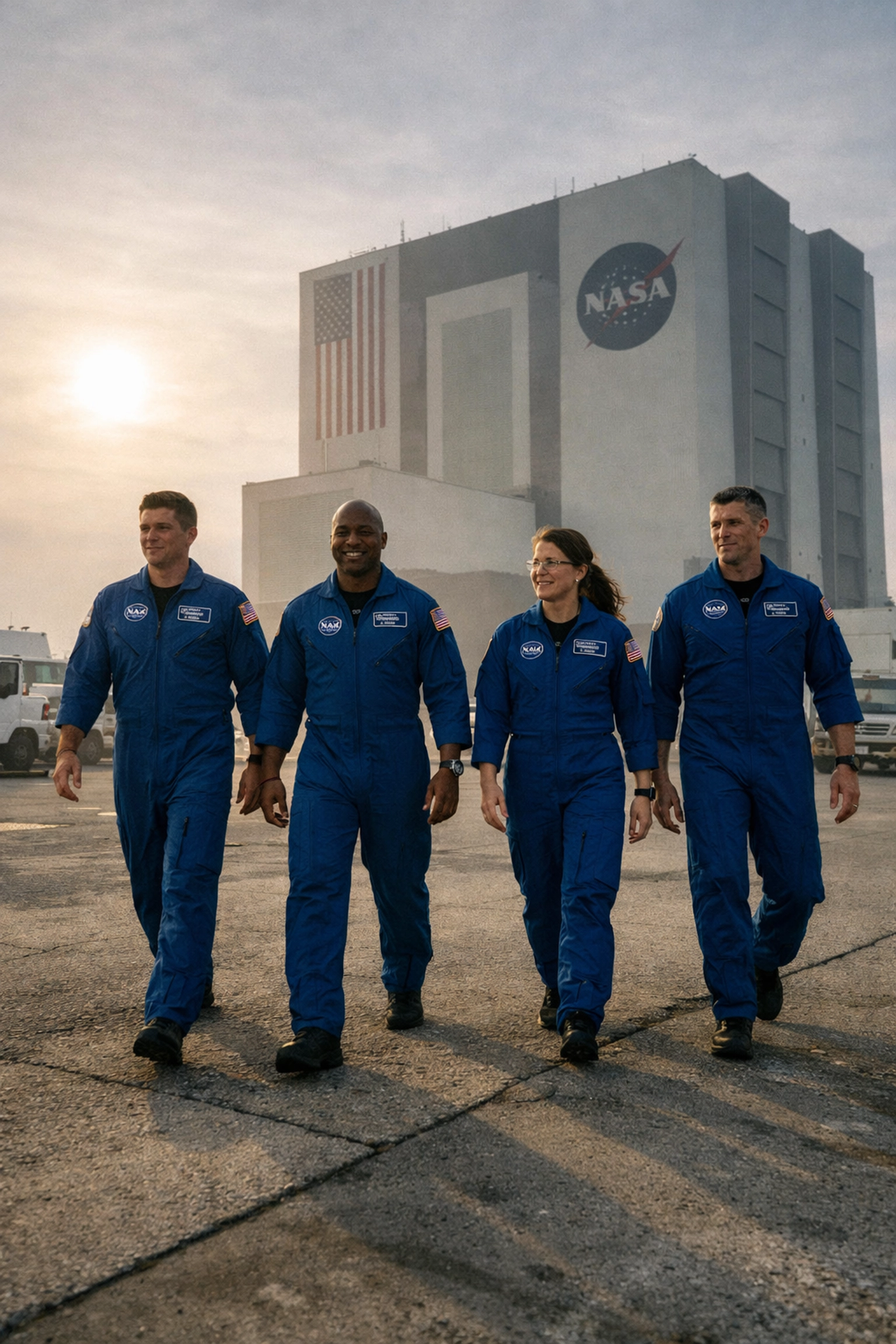
The quartet of astronauts currently orbiting the Earth is perhaps the most diverse group to ever leave our planet. Led by Commander Reid Wiseman, the mission includes Pilot Victor Glover and Mission Specialists Christina Koch and Jeremy Hansen. Each individual brings a wealth of experience and represents a significant milestone in the history of human spaceflight.
Victor Glover is set to become the first person of colour to travel beyond low Earth orbit, while Christina Koch will be the first woman to do so. Their inclusion is a testament to NASA's modern approach to exploration, ensuring that the faces of those who explore the stars reflect the diversity of the world they leave behind. Furthermore, Jeremy Hansen’s presence marks a historic moment for the Canadian Space Agency, as he becomes the first non-U.S. citizen to journey to the lunar vicinity.
The crew spent years preparing for this specific flight, undergoing rigorous training in simulators and survival environments. Their role over the next week and a half is to act as the ultimate testers. While Artemis I proved that the SLS and Orion could work together without a crew, Artemis II is about the human element. The astronauts are monitoring life-support systems, communication arrays, and the manual piloting capabilities of the spacecraft. If humans are to eventually live and work on the Moon, the systems being tested right now must be beyond reproach.
(https://cdn.marblism.com/yt46X8lzkPo.webp)
Testing the Systems for a Lunar Future
As the Orion spacecraft travels toward the Moon, the crew is tasked with a series of complex manoeuvres. The flight profile is a "free-return trajectory," a safety-conscious path that uses the Moon’s gravity to naturally pull the spacecraft back toward Earth. Before they reach the lunar far side, the crew must ensure that the Orion’s environmental control and life-support systems are maintaining a habitable atmosphere. Unlike the International Space Station, which orbits just a few hundred miles above us, there is no quick return to Earth if something goes wrong in deep space.
During the mission, the crew will reach a point approximately 4,700 miles beyond the far side of the Moon. From this vantage point, they will see lunar landscapes that have never been viewed by human eyes in person. These observations are not merely for the sake of wonder; the crew is performing geological assessments that will help scientists prepare for future landings. They are also participating in the AVATAR project, an innovative study using "organ-on-a-chip" devices to see how radiation and microgravity affect human cells in real-time.
The technical specifications of the Orion are a marvel of modern engineering. It is designed to sustain a crew for weeks in deep space while providing more living room than the Apollo capsules of the 1960s. However, the true test will come at the end of the 10-day journey. When the Orion hits the Earth’s atmosphere at roughly 25,000 miles per hour, the heat shield will be subjected to temperatures nearly half as hot as the surface of the sun. The successful deployment of the parachute system and a soft splashdown in the Pacific Ocean will be the final proof that the vehicle is ready for even more ambitious missions.
The Road to Artemis III and Beyond
While the primary goal of Artemis II is a safe return, the data gathered during these ten days is the foundation for everything that follows. NASA and its international partners are already looking ahead to Artemis III, which is currently scheduled for 2028. That mission aims to place the first woman and the next man on the lunar surface, specifically at the lunar South Pole. This region is of immense interest because of the presence of water ice in permanently shadowed craters, which could potentially be harvested for life support and rocket fuel.
The Artemis programme is about more than just flags and footprints. It is about establishing the Lunar Gateway, a small space station that will orbit the Moon and serve as a communication hub and staging point for lunar landings. By the time Artemis II splashes down, the global space community will have a much clearer understanding of how to manage the logistical hurdles of deep-space missions. This includes everything from shielding astronauts from solar radiation to managing the psychological effects of being so far from home.
The success of this mission also bolsters the commercial space sector. Companies across the United Kingdom and Europe are providing components, software, and research that contribute to the Artemis ecosystem. This collaborative spirit is essential for the eventual goal of sending humans to Mars. The Moon is the ultimate proving ground; if we can learn to survive and thrive on our nearest celestial neighbour, the path to the Red Planet becomes significantly more attainable.
The Artemis II mission is a reminder of what can be achieved when international talent and scientific ambition align. As the crew continues their journey around the Moon, the world watches with a renewed sense of optimism. This is not just a return to the past, but a bold step into a future where space travel becomes a sustainable and inclusive endeavour. The lessons learned over these ten days will echo through the next several decades of exploration, ensuring that when we finally step back onto the lunar dust, we do so to stay.
The safe splashdown of Reid Wiseman, Victor Glover, Christina Koch, and Jeremy Hansen will be a moment of global celebration. It will signify that the Orion spacecraft is a reliable vessel for the most difficult journeys and that the human spirit of exploration is as vibrant as ever. As the mission concludes and the data is analysed, the focus will shift immediately to the lunar surface, where the next generation of explorers will soon make their mark.