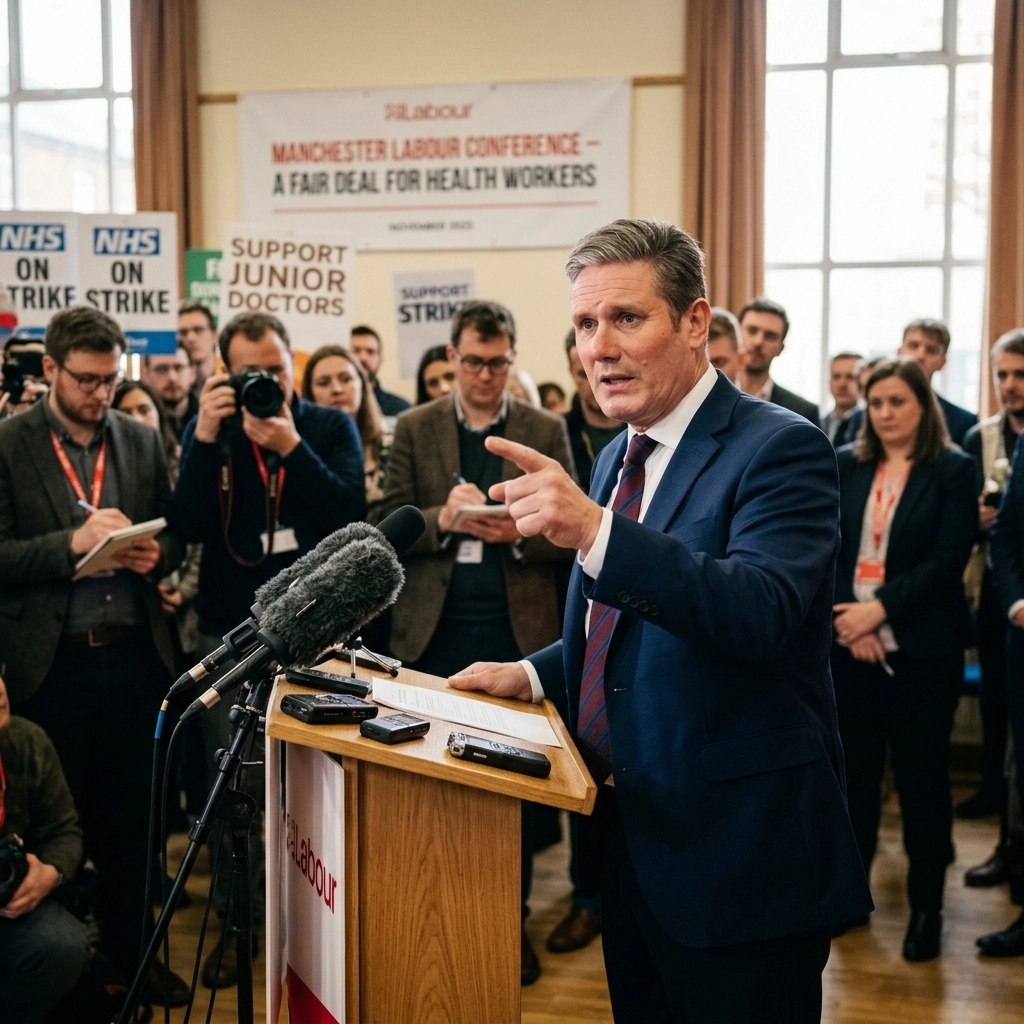
The long-standing dispute between the British government and the nation’s resident doctors has reached a critical boiling point. Prime Minister Keir Starmer has issued what he describes as a final 48-hour ultimatum to the British Medical Association (BMA), demanding the immediate cancellation of planned industrial action. If the strikes proceed, the Prime Minister warned that a comprehensive pay and training package currently on the table will be withdrawn in its entirety.
This move marks a significant hardening of the government’s position. For months, negotiations have fluctuated between cautious optimism and stalemate. However, with a six-day strike scheduled to begin on 7 April and run through to 13 April, the Downing Street administration appears to have run out of patience. The Prime Minister’s intervention is an attempt to break the deadlock by placing the responsibility for the outcome squarely on the shoulders of union leadership.
Writing in the national press, Starmer described the BMA’s refusal to put the latest offer to a vote as "reckless." He argued that the government has gone as far as it possibly can within the current fiscal constraints. The tension is palpable across the health sector, as both sides prepare for what could be the most disruptive period of industrial action in the history of the NHS.
The Terms of the Proposed Agreement
The package that Starmer is threatening to withdraw is multifaceted, aiming to address not just immediate pay concerns but also the long-term career progression of resident doctors. At the heart of the deal is a 7.1% pay rise for the current year. When viewed as part of a multi-year strategy, some government sources suggest this equates to a 35% increase over three years for those moving through the grades.
Beyond the headline salary figures, the deal includes several "sweeteners" designed to improve the daily working lives of clinicians. These include reforms to pay progression, ensuring that doctors are rewarded more quickly as they gain expertise. There is also a commitment to reimburse the often-exorbitant costs associated with Royal College exams, which many doctors currently pay out of their own pockets.
Perhaps the most significant component of the offer is the promise of 4,500 additional NHS specialty training posts over the next three years. Of these, 1,000 positions were set to open for applications as early as this month. For many resident doctors, the "bottleneck" in training: where they are qualified but unable to find a vacancy to specialise: is a major source of career frustration. By threatening to pull these posts, Starmer is targeting a key pain point for the profession.
The Prime Minister’s logic is that the government cannot justify investing in these long-term structural improvements if the workforce remains committed to disruptive strikes. He has made it clear that if the 48-hour deadline passes without a cancellation of the April strikes, the doctors will be left with only the standard pay award, losing out on the additional reforms and the expanded training opportunities.
Why the BMA Refused the Offer
Despite the government’s characterisation of the deal as generous, the BMA’s resident doctors committee has remained steadfast. Dr Jack Fletcher, the committee’s chairman, has been vocal about why the offer was rejected without being put to a membership vote. According to the union, the government made "very late changes" to the proposal, which effectively reduced the total investment and stretched the funding over a much longer period than originally discussed.
The core of the BMA’s argument remains "full pay restoration." The union contends that when adjusted for inflation, the pay of resident doctors has fallen by more than a quarter since 2008. To bridge this gap, they are seeking an increase of approximately 26%. From the perspective of many frontline doctors, the government’s 7.1% offer: while an improvement: still represents a real-terms pay cut compared to the historic value of their roles.
There is also a deep-seated feeling of mistrust. Many doctors feel that the government is focusing on "headline figures" that do not reflect the reality of their workload or the cost-of-living crisis. The BMA argues that by not addressing the fundamental issue of pay erosion, the NHS will continue to lose talented staff to countries like Australia and New Zealand, where salaries and working conditions are often perceived as superior.
The refusal to put the deal to a vote has been a particular point of contention. The government views this as a failure of leadership, while the BMA views it as a necessary step to protect its members from a deal they believe is inadequate. This "clash of wills" has transformed the dispute from a purely economic negotiation into a political battleground, with both sides accusing the other of being ideologically driven.
Legislative Pressure and the Path Ahead
As the 48-hour clock ticks down, the prospect of legislative action looms large. Keir Starmer has hinted that if the ultimatum is ignored, the government may look towards more formal methods of ensuring NHS stability. While the specifics of such "legislative action" have not been fully detailed, it suggests a move towards tougher minimum service level agreements or other constraints on the ability of medical professionals to strike.
The timing of the scheduled strike, from 7 April to 13 April, is particularly sensitive. This period often sees high demand for NHS services following the Easter break, and a six-day walkout would lead to the cancellation of tens of thousands of elective surgeries and outpatient appointments. The government is acutely aware that every day of industrial action adds to the already staggering NHS waiting lists, which remain a key metric of political success for the Labour administration.
Public opinion remains divided but increasingly weary. While there is still significant sympathy for the plight of healthcare workers, the repeated nature of the strikes is testing the patience of patients whose treatments are being delayed. The Prime Minister is betting that the public will see the government’s offer as a "fair compromise" and view the union’s rejection as an unnecessary escalation.
The outcome of this ultimatum will likely define the relationship between the Starmer government and the public sector for the remainder of this parliament. If the BMA stands firm and the strikes go ahead, the NHS faces a chaotic spring. If the union blinks, it may mark the end of an era of intense industrial unrest within the health service. For now, the medical community and the general public can only wait to see which side will yield first.
In the coming days, the focus will shift to the hospitals themselves. Clinicians are weighing the potential loss of training posts against their commitment to the principle of pay restoration. Regardless of the outcome, the rift between the government and the medical profession appears deeper than ever, and repairing that trust will take far longer than a 48-hour deadline allows.
The government has stated that its door remains open for "meaningful" discussion, but only if the threat of strikes is removed. The BMA, conversely, says it is ready to talk, but only if the government returns with a deal that recognises the true value of their work. With neither side currently willing to compromise on their core demands, the 48-hour ultimatum represents a high-stakes gamble that could either save or further cripple the health service this month.