In the quiet, leafy streets of London, it is easy to forget that the city has often served as the backdrop for some of the world’s most high-stakes geopolitical dramas. Perhaps no event in recent history captures the chilling intersection of international politics and personal tragedy quite like the Litvinenko poisoning. This was not a scene from a cold war thriller, but a real-life medical mystery that unfolded in real-time, captivating the British public and sending shockwaves through the corridors of power in Westminster. As we revisit these untold stories, we find a narrative that remains as relevant today as it was in the winter of 2006, highlighting the complexities of Russian espionage and the search for truth in an increasingly opaque world.
Alexander Litvinenko was a man of many layers. A former officer of the Russian Federal Security Service (FSB), he had once been a part of the very system he would eventually come to critique. His journey from an insider to a vocal dissident is a central pillar of this story. After fleeing Russia and seeking asylum in the United Kingdom, Litvinenko became a figure of intense interest for those following independent news uk. He wasn’t just a former spy; he was a man who claimed to have seen the rot within the state he once served. His collaboration with British intelligence and his work exposing the links between the Russian state and organised crime made him a marked man, though few could have predicted the sheer audacity of the method chosen for his removal.
The whistleblower who crossed the Kremlin
To understand the weight of the Litvinenko poisoning, one must first understand the man behind the headlines. Alexander, often known as Sasha to his friends and family, was a specialist in organised crime. In 1998, he made a public stand that would change his life forever. Alongside several other masked officers, he held a press conference in Moscow, accusing his superiors at the FSB of ordering the assassination of the tycoon Boris Berezovsky. It was an unprecedented act of defiance. For the Russian state, this was more than just a breach of contract; it was a betrayal of the highest order.
Following a stint in prison and facing mounting pressure, Litvinenko fled to London with his wife, Marina, and their young son. In the UK, he reinvented himself as a consultant and a journalist, frequently writing about the inner workings of the Kremlin and the rise of Vladimir Putin. He became a British citizen, a status he took great pride in, and integrated himself into the local community. However, his past was never far behind. He continued to investigate the Russian mafia’s activities in Europe, sharing his findings with Spanish and British authorities. It was this continued activism that many believe led to the fatal meeting at the Millennium Hotel.
The nature of his work meant that Litvinenko was always aware of the risks. He lived in a state of heightened caution, yet he remained accessible to those he believed could provide information. It was this accessibility that his killers exploited. On the 1st of November 2006, Litvinenko met with two former Russian security officers, Andrey Lugovoy and Dmitry Kovtun. They sat in the Pine Bar of the Millennium Hotel in Mayfair, a quintessentially British setting for a most un-British crime. Over a pot of green tea, the final act of this tragedy began.
A forensic trail of radioactive proportions
The poisoning of Alexander Litvinenko was unique because of the weapon used: Polonium-210. A rare and highly radioactive isotope, Polonium-210 is virtually impossible to detect unless one knows exactly what to look for. It emits alpha particles which, while they cannot penetrate the skin, cause catastrophic damage to internal organs if ingested. This is precisely what happened to Litvinenko. Within hours of the meeting, he began to feel violently ill. What was initially thought to be a severe case of food poisoning or a standard stomach bug soon revealed itself as something far more sinister.
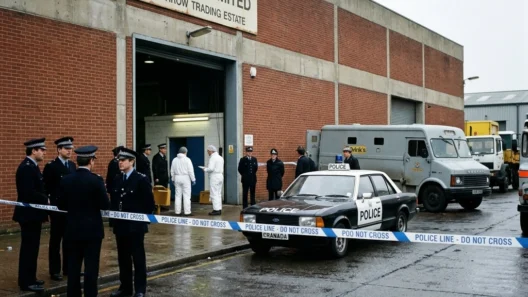
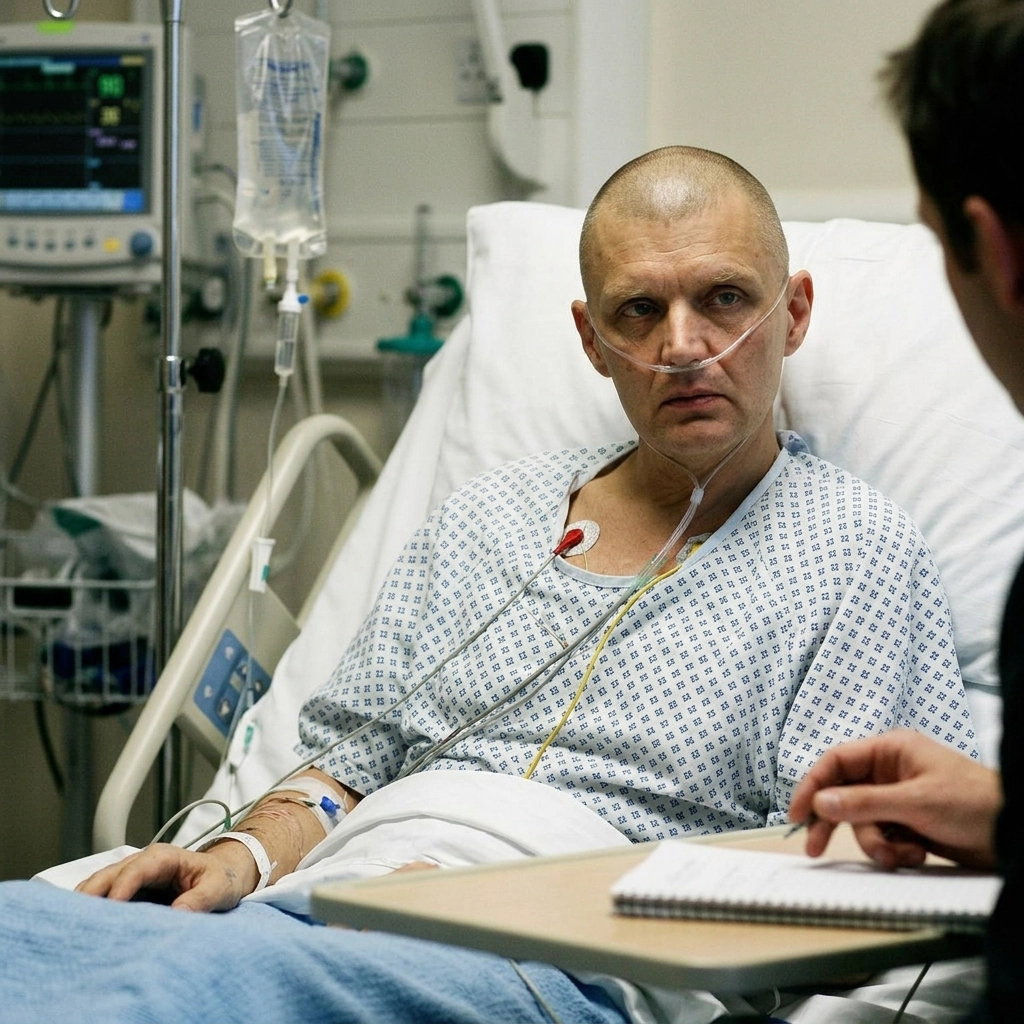
As Litvinenko’s health rapidly declined, doctors at University College Hospital were baffled. His hair fell out, his immune system collapsed, and his organs began to fail one by one. It was only in the final hours of his life that specialists at the Atomic Weapons Establishment identified the presence of Polonium-210 in his system. This discovery transformed a medical emergency into a major national security crisis. The search for the source of the radiation led the Metropolitan Police on a sprawling hunt across London, revealing a trail of contamination that was staggering in its scope.
Investigators found traces of Polonium-210 in approximately 40 locations. This included the hotel bar where the tea was served, the offices of Boris Berezovsky, various restaurants, and even on the aircraft that Lugovoy and Kovtun had used to travel between Moscow and London. The killers had moved through the city with a chilling lack of regard for public safety, leaving a radioactive footprint that spoke volumes about their confidence: or perhaps their recklessness. This was Russian espionage in its most blatant form, executed on the streets of a foreign capital with a weapon that could only have been sourced from a state-controlled nuclear reactor. The sheer scale of the contamination highlighted the audacity of the operation, turning a private assassination into a public health concern for thousands of Londoners.
The quest for justice in an age of shadows
Alexander Litvinenko passed away on the 23rd of November 2006. From his deathbed, he issued a final statement, directly accusing the Russian President of being responsible for his murder. While the Kremlin dismissed these claims as the "ravings of a dying man," the subsequent UK public inquiry told a different story. Sir Robert Owen, who led the inquiry, concluded in 2016 that the operation to kill Litvinenko was "probably approved" by the head of the FSB and President Putin himself. The inquiry provided a level of detail that confirmed what many had long suspected: this was a state-sponsored hit.
The aftermath of the case has had a lasting impact on UK-Russia relations. It forced a reassessment of how the UK handles foreign agents and dissidents on its soil. For those interested in independent news uk, the case serves as a grim reminder of the lengths to which some regimes will go to silence their critics. Despite the findings of the inquiry and the European Court of Human Rights, the primary suspects, Lugovoy and Kovtun, remained in Russia, protected by a state that refused to extradite them. Lugovoy even went on to become a member of the Russian parliament, a move seen by many as a calculated gesture of defiance by the Kremlin.
The legacy of Alexander Litvinenko is not just one of tragedy, but also of the resilience of the truth. His death sparked a conversation about the safety of political refugees and the ethics of international diplomacy. It highlighted the importance of investigative journalism and the need for a transparent legal process in the face of state-sponsored violence. While the physical trail of Polonium has long since been cleaned, the metaphorical shadow of the event still looms large over the relationship between London and Moscow. As we continue to uncover untold stories from this era, the Litvinenko case stands as a definitive moment where the hidden world of spies collided with the reality of the 21st century.
The story of Alexander Litvinenko serves as a sobering testament to the dangers faced by those who choose to speak truth to power. The case of the poisoned tea in Mayfair remains one of the most significant instances of foreign interference in British history. It exposed the vulnerabilities of a globalised city and the ruthless efficiency of modern espionage. Even decades later, the details of the investigation continue to fascinate and horrify, reminding us that the search for justice is often a long and arduous journey, especially when the suspects are shielded by the highest levels of government. Through the lens of this case, we gain a clearer understanding of the stakes involved in the global struggle for accountability and the enduring importance of protecting those who risk everything to reveal what is hidden in the dark.