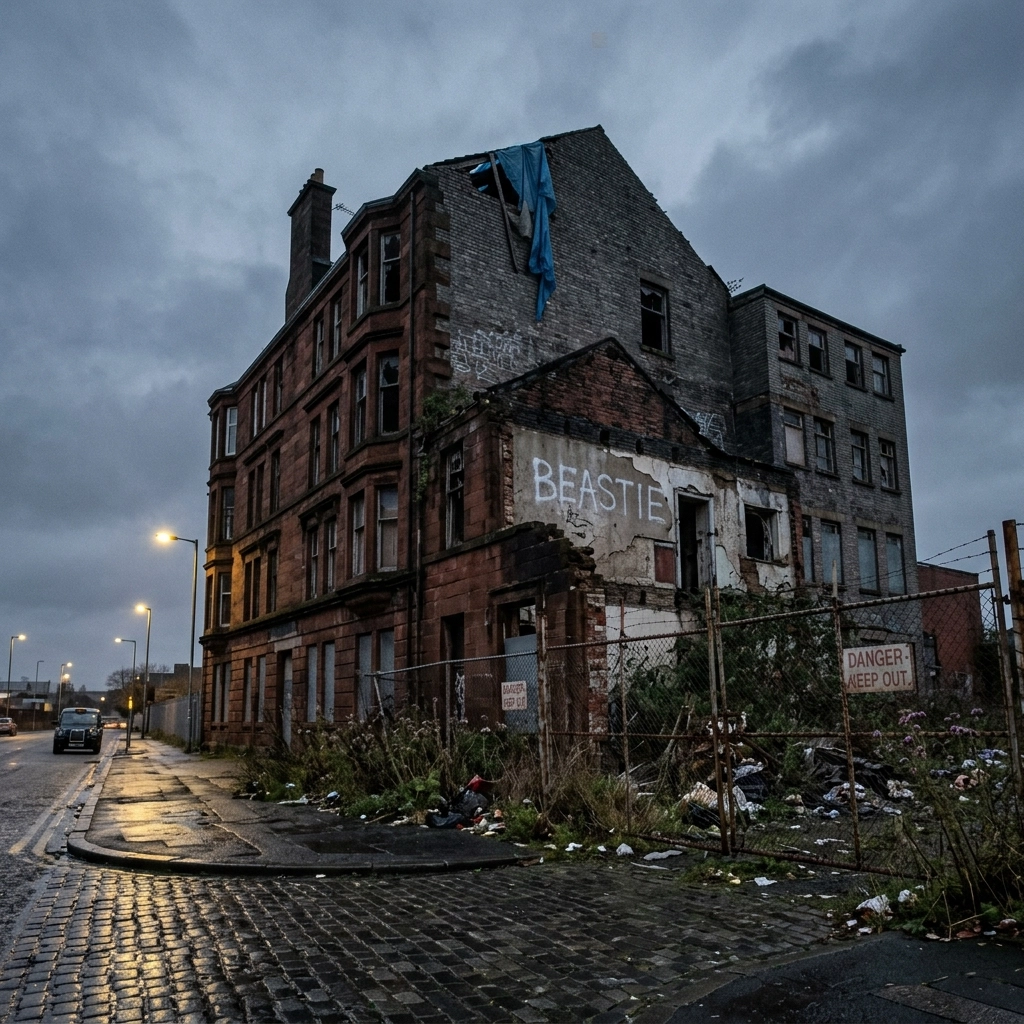
For many people, Glasgow is a city of incredible culture, vibrant streets, and a deep sense of community. But like any major city, it also has realities that stay hidden until the damage is impossible to ignore. The case of the so-called "Beastie House" is one of those moments that forces a society to stop and ask how things were allowed to go so badly wrong. This is not only a story about serious criminal abuse. It is also a story about the systems people rely on to protect vulnerable children, and how those systems failed over years.
When we talk about child protection, we often imagine a safety net that steps in before children fall through the cracks. In this case, that net simply did not hold. For seven years, a horrific abuse ring operated from a flat in the city while multiple agencies were, at least on paper, involved. It is the kind of case that makes you think about how many untold stories still sit in the shadows, unnoticed or unchallenged. At NowPWR, we believe independent news uk has a responsibility to keep asking difficult questions and to push for meaningful change rather than empty promises.
The chilling reality behind closed doors
The details of what happened inside the Beastie House are deeply distressing. In an ordinary residential setting, the flat became a base for organised abuse carried out by adults caught up in severe drug misuse and violence. Between 2012 and 2020, children were subjected to repeated sexual abuse, physical harm, and neglect on a scale that is hard to take in. The property was described as filthy and unsafe, yet it became the main environment for children who should have been somewhere secure, cared for, and protected.
What makes this case especially chilling is how long it went on. This was not a single incident hidden over a weekend. It was a prolonged pattern of abuse that lasted years. During that time, the children were seen in public and described by witnesses as visibly unwell and neglected. They were not hidden from view, yet the place they returned to remained one of fear and danger.
The name "Beastie House" also points to something else: this property had a reputation. In many communities, people know when a particular address is associated with risk or chaos. But when those involved are living on the margins, that reputation can too easily become background noise rather than a trigger for urgent action. That is one reason untold stories matter so much. They reveal what gets ignored, who gets overlooked, and why independent news uk must keep examining the spaces where institutional failure does the most harm.
A timeline of missed signals and systemic gaps
One of the most upsetting parts of the Beastie House case is that the children were not unknown to the authorities. They were already within systems that were meant to monitor risk. Social workers were visiting. Agencies had safeguarding responsibilities. Most strikingly, the children were placed on the child protection register in 2018. Even with that formal recognition of danger, the abuse continued for two more years.
That raises serious questions about how effective those safeguarding processes really were. If a child can be identified as at risk and still remain in a deeply unsafe environment, then the process is clearly not enough on its own. It suggests a system where forms can be completed and visits can be recorded without the full reality of a child’s situation being acted on. On paper, intervention existed. In practice, it did not go far enough.
There were also warnings from outside official channels. Reports indicate that at least one witness alerted police in 2018 with concerns linked to child abuse. Yet the response did not match the seriousness of the information. That gap between a warning and meaningful action is where safeguarding failures become devastating. It is also why untold stories need sustained attention rather than a brief spike of outrage.
The wider failure was not just one missed step. It was a chain of missed signals, weak communication, and poor judgment across different parts of the system. Police, social services, and other agencies all had opportunities to intervene more effectively. The fact that the abuse continued until 2020 is a stark reminder that recognising risk is not the same as removing children from it.
Demanding a future built on genuine accountability
In the aftermath of the trial and the public reaction that followed, Scottish authorities have had to confront some uncomfortable truths. Officials have acknowledged that these children were failed at multiple levels. An independent learning review has been commissioned to examine how those breakdowns happened and what needs to change to stop anything similar from happening again. Reviews matter, but there is understandable frustration when they do not lead to firm action.
At the heart of that frustration is accountability. Across the UK, recommendations from learning reviews do not always come with clear legal force. That means serious failings can be identified in detail, yet implementation can still be uneven or delayed. It creates a cycle that feels all too familiar: lessons are listed, concern is expressed, and then meaningful structural change moves far too slowly.
Genuine accountability has to mean more than acknowledging that mistakes were made. It should mean clear legal duties, stronger safeguarding responses, and transparent handling of reports from witnesses and frontline professionals. It should also mean giving overstretched services the staffing and support they need, while still being honest that resourcing alone cannot excuse what happened here.
The Beastie House case remains a painful example of what happens when warning signs are seen but not acted on decisively. As the review continues, the focus should stay on what practical safeguards, legal reforms, and institutional changes are needed to prevent another prolonged failure of this kind. That is the standard a serious child protection system should be expected to meet.