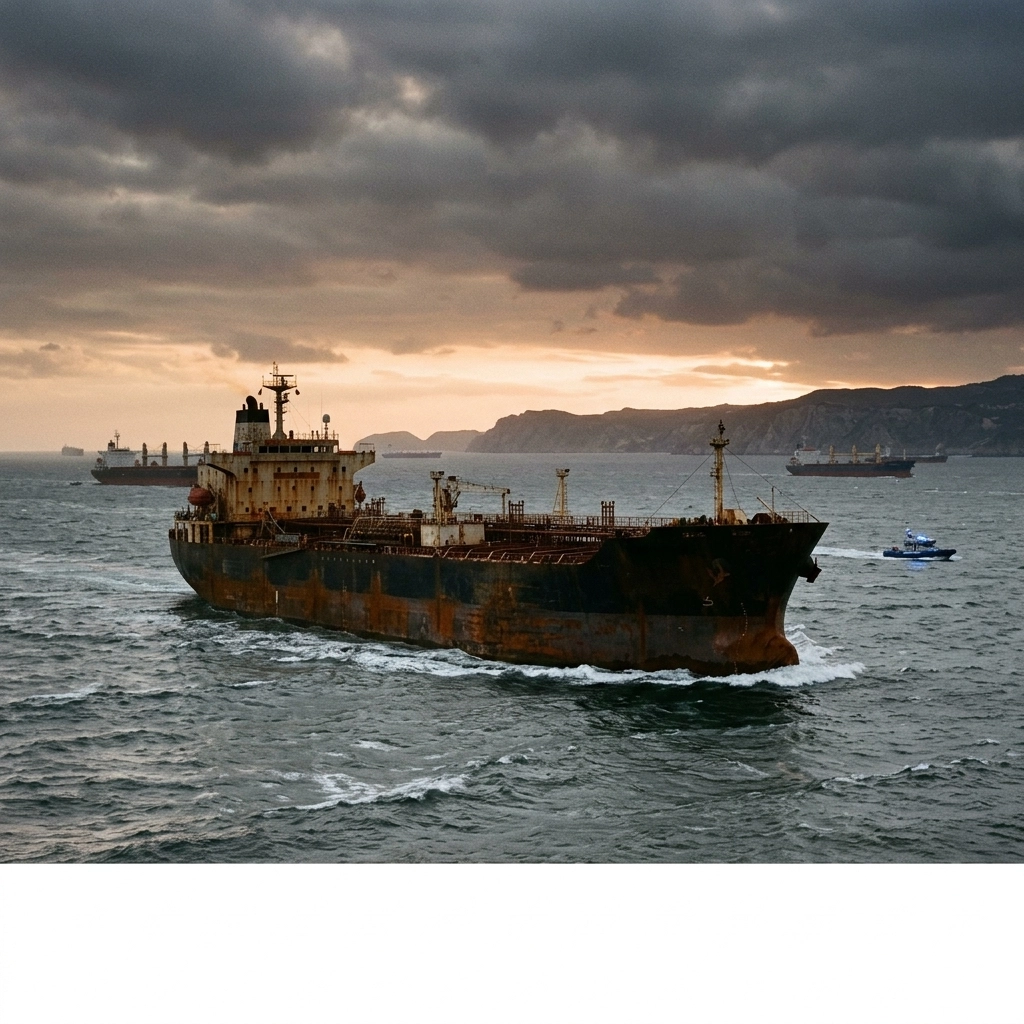
The English Channel is often described as the world’s busiest shipping lane. Every day, hundreds of vessels navigate its narrow waters, carrying everything from consumer electronics to grain. But recently, a new and much more dangerous type of traffic has become a permanent fixture in our coastal backyard. This is the "shadow fleet": a clandestine network of aging, poorly maintained, and often uninsured oil tankers used by Russia to bypass international sanctions. At NowPWR, we believe in providing independent news uk readers can rely on to understand the hidden risks lurking just off our shores. This is one of the most pressing untold stories of our time, representing a convergence of geopolitical tension and potential environmental catastrophe.
These vessels, often referred to as "dark tankers," operate in a legal grey zone. They frequently turn off their transponders to avoid detection, engage in risky ship-to-ship transfers of oil in open water, and fly "flags of convenience" from nations with little to no maritime oversight. While the world’s attention is often focused on the front lines of conflict, the economic and environmental frontline is moving through the Dover Strait. Through the lens of global business analysis, the existence of this fleet is a direct response to the G7-led price cap on Russian oil, but the cost of this economic cat-and-mouse game might eventually be paid by the British coastline.
The Human Cost and the Ghost of the Prestige
Behind the high-stakes world of international sanctions and energy markets lies a very real human cost that often goes unrecorded. The shadow fleet isn't just a collection of old ships; it is a workplace for thousands of sailors who are often forced to operate in sub-standard conditions. One of the most tragic examples of this reality is the story of Giorgi Tsilosani. A Georgian sailor working aboard one of these shadow vessels, Tsilosani lost his life in an incident that highlights the utter lack of safety standards within this unregulated fleet. When a crew member dies or is injured on a vessel that officially "doesn't exist" in the eyes of many international regulators, seeking justice or even returning the body home becomes a bureaucratic nightmare.
The ships themselves are frequently past their sell-by date. In the legitimate shipping industry, tankers are usually sent to the scrap yard after 15 to 20 years of service. However, the shadow fleet is composed of vessels that are often 25 years old or older. These are ships that have been pulled from the brink of retirement, bought through shell companies, and sent back into some of the most difficult sailing conditions on earth. They lack the sophisticated maintenance schedules of the major energy companies, and their structural integrity is a constant concern. We are essentially watching a parade of "rust buckets" carry millions of barrels of highly flammable cargo through one of the most sensitive ecological areas in Europe.
The ghost of past maritime disasters hangs heavy over the Channel. Veterans of the shipping industry still remember the Prestige oil spill off the coast of Spain in 2002, which caused one of the worst environmental disasters in European history. The Prestige was also an aging tanker that suffered structural failure. The shadow fleet currently operating in the Channel is comprised of hundreds of ships in similar or worse condition. The difference today is that many of these vessels lack legitimate Western insurance, meaning that if a spill were to occur, there would be no clear entity to hold financially responsible for the billions of pounds in cleanup costs.
A Catastrophe Waiting to Happen in British Waters
The scale of the risk is staggering. Estimates suggest that as many as 800 shadow tankers have passed through the English Channel since the escalation of the conflict in Ukraine. Many of these vessels carry up to 300,000 tonnes of crude oil. If just one of these ships were to lose power or suffer a hull breach in the narrowest parts of the Dover Strait, the resulting spill would be impossible to contain. The prevailing winds and tides would likely push the oil onto the shores of Kent, Sussex, and the northern coast of France within hours.
What makes the situation even more volatile is the practice of "spoofing" and "dark activity." To avoid sanctions, these ships often manipulate their Automatic Identification System (AIS) signals to broadcast false locations. In a crowded shipping lane like the Channel, where precise navigation is vital to avoid collisions, having "ghost ships" appearing and disappearing on radar is a recipe for disaster. The UK Maritime and Coastguard Agency is tasked with monitoring these waters, but the sheer volume of shadow traffic makes it an uphill battle. When these ships operate outside the bounds of international maritime law, they aren't just bypassing sanctions; they are bypassing the safety protocols that have kept the Channel relatively safe for decades.
Furthermore, the environmental risk extends beyond just the oil cargo. Because these ships are so old and poorly maintained, they are also prone to leaking fuel oil and discharging contaminated ballast water. The English Channel is home to diverse marine life and vital fishing grounds that support local economies. A major incident wouldn't just be a headline for a week; it would be a generational disaster that could destroy the livelihoods of thousands of people along the coast. The lack of accountability is the most terrifying aspect. Under current maritime rules, vessels are granted "innocent passage," allowing them to transit through territorial waters as long as they don't pose a direct threat. However, the definition of "innocent" is being stretched to its absolute breaking point by a fleet that is fundamentally designed to hide its tracks.
The Geopolitical Game of Cat and Mouse
The presence of the shadow fleet has recently taken an even more ominous turn. For the first time, we are seeing the Russian Navy provide direct escorts for these tankers. In June, the Russian corvette Boykiy was spotted accompanying shadow tankers through the Channel. This move is a clear signal to the UK and its allies that any attempt to board or seize these vessels will be met with military resistance. It transforms a trade and environmental issue into a potential military flashpoint. The Russian Ambassador to the UK has already issued warnings that any interference with these ships could lead to "militarised confrontation at sea."
This escalation places the UK government in an incredibly difficult position. On one hand, there is a clear mandate to enforce sanctions and protect the environment. On the other, the risk of a direct naval confrontation in the Channel is something every diplomat wants to avoid. Allied enforcement efforts have seen some success, with the French Navy recently boarding a sanctioned tanker with the help of British intelligence. However, for every ship that is stopped, dozens more slip through. The shadow fleet is a hydra; as soon as one vessel is blacklisted, its owners simply change its name, register it in a new country, and send it back out under a different flag.
From a global business analysis perspective, the shadow fleet represents a massive distortion of the global energy market. It allows a sanctioned state to maintain its revenue streams while offloading all the physical and environmental risks onto the countries whose shores they pass. The UK and its European neighbours are essentially providing a free, high-risk transit corridor for Russian oil. As long as the demand for discounted oil remains high in certain parts of the world, the incentive to keep these aging tankers running will outweigh the fear of sanctions.
The situation in the English Channel is a stark reminder that the consequences of global conflict are never confined to the battlefield. They wash up on our shores in the form of rust, oil, and the constant threat of a man-made disaster. Addressing the shadow fleet will require more than just new sanctions; it will require a complete overhaul of how maritime law handles vessels that intentionally operate in the shadows. Until then, the "ticking bomb" continues to sail past our white cliffs, one aging tanker at a time.
In conclusion, the shadow fleet is a complex issue that combines maritime safety, environmental protection, and international security. The death of sailors like Giorgi Tsilosani serves as a grim reminder of the human cost involved in keeping this fleet afloat. As these ships continue to navigate the English Channel, the risk of a catastrophic spill remains a constant threat to the UK’s coastline and marine ecosystems. The militarisation of these shipping routes only adds another layer of danger to an already volatile situation. Monitoring this ongoing crisis is essential for anyone interested in the intersection of global politics and local safety.