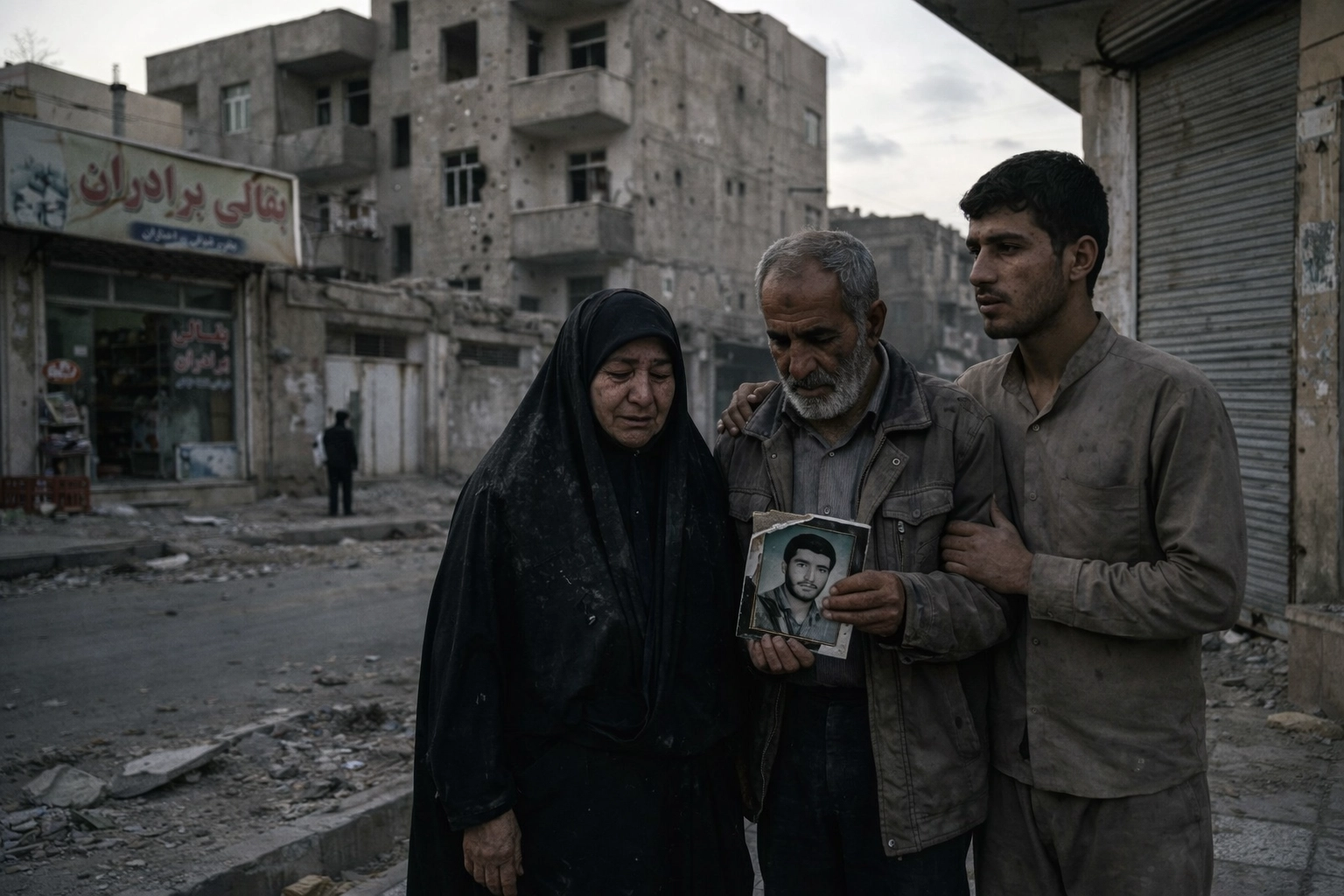
The landscape of modern warfare has shifted dramatically in recent years, but the tragedy of conflict remains a constant weight on the global conscience. As we move through 2026, the situation in Iran has become a focal point for anyone concerned with human rights and the protection of civilian life. It is easy to get pulled into high-level political messaging and military updates, but the real story is always about the people caught in the middle. When we look closely at the reporting emerging from the region, it becomes clear that civilians are carrying a burden that is too often obscured by the fog of war.
The conflict, which took a sharp and devastating turn toward the end of February 2026, has left deep scars across several provinces. While military updates focus on tactical gains or losses, the reality for families is far more harrowing. This is the kind of story that shows why independent news uk reporting matters. Without persistent scrutiny, the true cost of these real problems can disappear behind official statements and carefully managed narratives.
The Human Cost Behind the Headlines
When we talk about casualties in this conflict, we are not just discussing numbers. We are talking about lives interrupted, families shattered and futures cut short. Recent documentation suggests that in the first three weeks of the intensified conflict alone, at least 1,407 civilians lost their lives. That figure is stark enough on its own, but it becomes even harder to absorb when the demographics come into view. Among those killed were at least 214 children. These are young people who should have been in classrooms or out with friends, not trapped inside a crisis they had no part in creating.
Regional health officials have echoed these grim findings, noting that more than 1,500 people under the age of 18 have been injured. Many of those injuries are life-changing, placing even more strain on a healthcare system already under extreme pressure. In provinces such as Tehran, which has accounted for nearly 39 per cent of the recorded attacks, sirens and smoke have become an exhausting part of daily life. Hormozgan, along the Persian Gulf coast, has also seen serious impact, underlining how widely the violence has spread.
Beyond the confirmed deaths, there is also a troubling number of people, estimated at more than 650, whose status remains undetermined. In the chaos of an active conflict zone, identifying whether someone was a combatant or a civilian is a slow and painful process. That uncertainty leaves families in limbo, waiting for news of loved ones who disappeared in the wreckage of their neighbourhoods. Bringing these untold stories into the open is difficult work, but it matters if the memory of those lost is to be treated with care and honesty.
Crumbling Infrastructure and Everyday Life
One of the most alarming parts of the current situation is the scale of damage to civilian infrastructure. Under international law, schools and hospitals should be protected spaces, yet the reported figures point in the opposite direction. At least 20 schools and 10 hospitals have reportedly been hit by bombing raids across Iran. When a school is destroyed, it is not only a building that is lost. It is also a community space, a sense of routine and a piece of the future. One of the most devastating incidents was reported in the southern city of Mino, where an attack on a girls' school killed more than 165 children and staff.
The impact of these incidents spreads far beyond the immediate scene. In another case, an attack on a sports centre reportedly killed 18 young people during a volleyball game. Ordinary moments that should have felt safe have instead become sources of fear. The health ministry has said that roughly 300 health and emergency facilities have been damaged or destroyed since the fighting escalated. That creates a double crisis: more people need urgent treatment just as the places meant to provide it are being knocked out of service.
The destruction has also triggered large-scale displacement. More than 100,000 people have been forced from their homes, often leaving with only a few belongings. These internally displaced people now face a second struggle built around shelter, clean water and food. As roads are blocked and communication networks break down, humanitarian support becomes harder to deliver. For many families, the conflict is no longer only about immediate survival, but about trying to hold together some sense of normal life in the middle of sustained upheaval.
The Challenge of Seeking the Truth
Investigating civilian harm in a restricted environment is one of the hardest jobs in modern journalism. The true toll of the conflict in Iran is likely higher than the figures currently available. Ongoing hostilities make it extremely difficult for independent observers to reach the worst-affected areas. Communication disruptions, whether caused by damage or blackouts, mean that information can take days or weeks to emerge. That gap is often filled by confusion, misinformation or competing political narratives.
Independent news uk platforms and international human rights groups are working to verify each report with care. That means checking witness testimony against satellite imagery, medical records and other available evidence to build a clearer picture of events on the ground. It is painstaking work, but it is one of the few ways to make sure the real problems facing civilians are documented properly. It also helps keep attention on the untold stories that can otherwise vanish behind broad statistics and official briefings.
The difficulty of reporting in Iran today cannot be overstated. Journalists and researchers often work in conditions that are dangerous, unstable and emotionally draining. Their work matters because accountability depends on evidence, and evidence depends on careful documentation. The situation remains a sobering reminder of the fragility of peace and the high price civilians pay when diplomacy breaks down. A clear view of the conflict starts with acknowledging the scale of the loss and treating those affected with seriousness and respect.