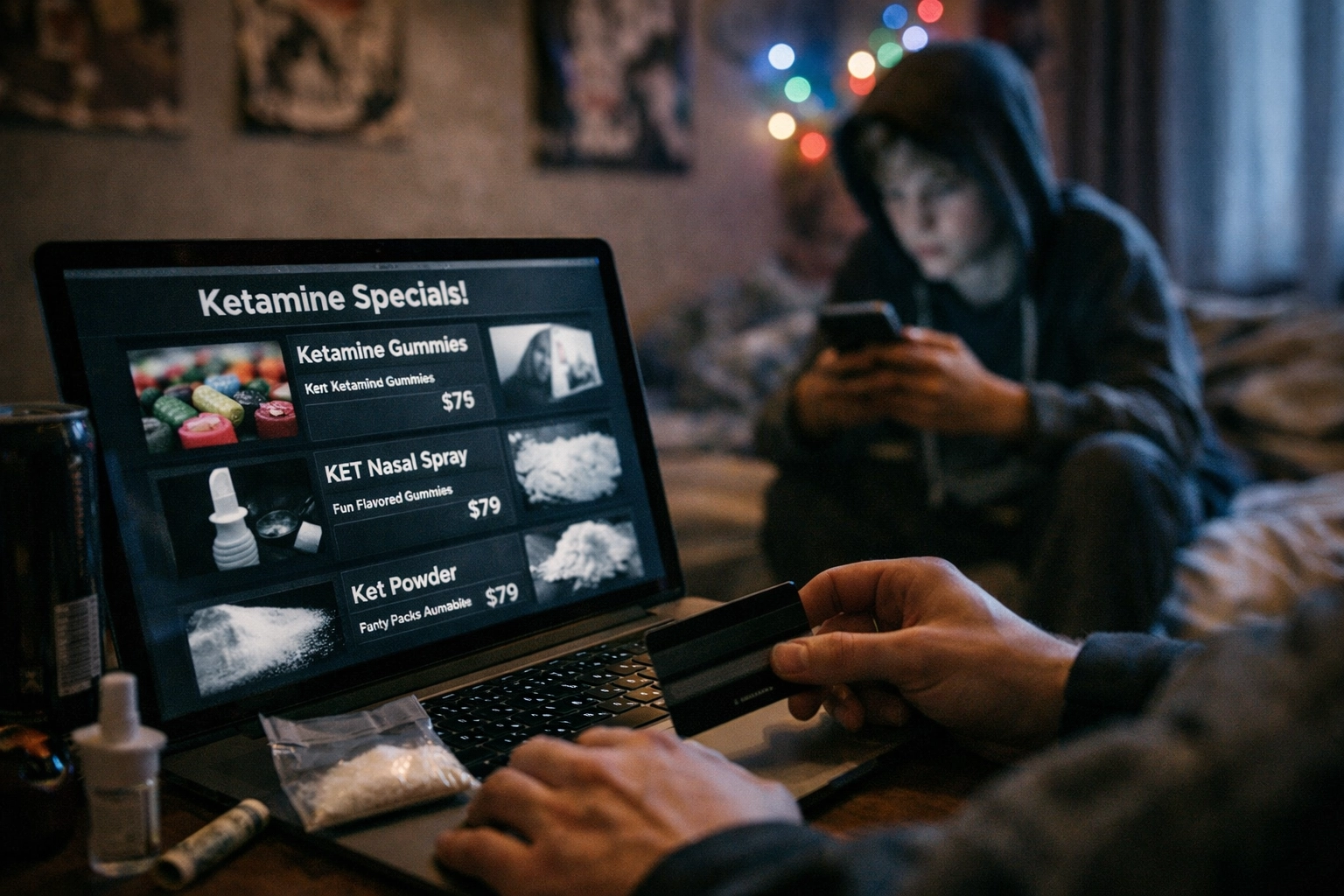
The digital landscape is changing faster than most of us can keep up with, and unfortunately, it isn't always for the better. While we use our phones to order coffee, book taxis, and stay in touch with friends, a darker marketplace has set up shop right alongside our everyday apps. We are currently facing a ketamine crisis that is hitting the UK’s youth harder than many realise. At NowPWR, we believe in bringing you the untold stories that mainstream outlets might overlook, providing independent news UK readers can rely on to understand the reality of our streets and our screens.
The accessibility of drugs has shifted from shadowy alleyways to high-resolution "menus" on social media. This isn't just about teenagers experimenting; we are seeing reports of children as young as ten and twelve getting caught up in a cycle of use and supply. The professionalisation of drug dealing through encrypted messaging apps and ephemeral social media posts has created a retail-like experience that masks the devastating physical and social consequences of the substance itself.
The Digital High Street: How Social Media Menus Work
The way ketamine is being sold today looks remarkably like a legitimate e-commerce business. If you were to look at a dealer’s "story" or a dedicated Telegram channel, you wouldn't see a grainy, suspicious image. Instead, you would find high-quality graphics, clearly formatted lists, and even branding. These "menus" are designed to be user-friendly, mimicking the interface of popular food delivery apps. They list different "strains" or purities, offer bulk discounts, and sometimes even include customer reviews to build a false sense of trust.
This level of sophistication is a deliberate tactic to normalise the purchase. For a young person who has grown up in the age of Amazon and Uber Eats, ordering a gram of ketamine feels disturbingly similar to ordering a pizza. Dealers use platforms like Snapchat and Telegram because of their disappearing messages and end-to-end encryption, which provide a layer of protection from law enforcement. They often use bots to automate the process, providing instant responses to inquiries about pricing and delivery slots.
The marketing doesn't stop at the menu. Many dealers offer "loyalty perks" or "refer-a-friend" schemes, incentivising kids to bring their peers into the fold. It turns the act of drug dealing into a gamified social experience. By using emojis, trending music in the background of promotional videos, and casual language, dealers strip away the perceived danger of the drug. They frame it as a lifestyle accessory rather than a powerful anaesthetic with the potential to cause lifelong internal damage. This digital storefront is open 24/7, right in the pocket of every child with a smartphone.
A Generation at Risk: The Cost of a Packet of Crisps
One of the most alarming aspects of this crisis is the price point. Ketamine has become incredibly cheap, sometimes retailing for as little as £5 to £10 for a small amount. In many UK towns, it is literally cheaper for a student to buy a bag of "K" than it is to buy a decent meal deal or a cinema ticket. This low barrier to entry is why we are hearing accounts from teachers and police of children buying drugs with their lunch money. When a substance is this affordable, it loses its "hard drug" stigma and becomes viewed as a casual, recreational pastime.
The age of those involved is dropping at a terrifying rate. We are no longer just talking about university students at raves. Police reports in areas like Greater Manchester and Cheshire have highlighted cases involving 10-year-olds using the drug and 13-year-olds acting as "runners" or dealers within their school gates. The ease of the "online menu" model means that a child doesn't need to know a "dodgy character" in person; they just need a phone and a bit of digital savvy.
The physical toll on these young bodies is catastrophic. Ketamine is a dissociative anaesthetic, and while its immediate effects might involve a feeling of detachment or euphoria, its long-term impact on the bladder is often irreversible. Medical professionals are seeing an influx of teenagers with "K-bladder", a condition where the bladder lining becomes so inflamed and scarred that it can no longer hold urine. In some extreme cases, young people in their late teens are having to undergo major surgery to have their bladders removed and replaced with a bag. This is a reality that doesn't show up on the flashy Instagram menus, and it is why focusing on wellness and health education is more critical now than ever.
Beyond the Screen: Seeking Solutions in a Digital Age
Addressing this crisis requires a multi-faceted approach that goes beyond traditional policing. While law enforcement agencies are working hard to track down the individuals behind these accounts, the "whack-a-mole" nature of social media means that as soon as one account is banned, three more pop up in its place. There is a growing call for tech giants to take more responsibility for the content hosted on their platforms. The algorithms that suggest "friends" or "content you might like" can sometimes inadvertently lead curious youngsters directly into the path of these digital dealers.
Education also needs a massive overhaul. Standard "just say no" campaigns often fall flat when they aren't grounded in the modern reality of how drugs are marketed. We need to empower young people with the digital literacy to recognise predatory marketing tactics. They need to understand that the person behind the "friendly" Snapchat menu is a businessperson who views them as a profit margin, not a friend. Schools and parents need to be aware of the signs of ketamine use, which can be subtler than other drugs in the early stages, often presenting as general lethargy or frequent trips to the bathroom.
As we continue to cover these untold stories, it becomes clear that the ketamine crisis is a symptom of broader social and digital issues. From the lack of youth services to the unregulated corners of the internet, there are many factors at play. By providing a platform for independent news UK, we hope to keep these conversations at the forefront of the public consciousness. It is only by shining a light on the sophisticated methods used to target children that we can begin to build a safer environment for the next generation.
The rise of online drug menus is a stark reminder of how quickly the world is changing. What was once a street-level problem has migrated into the digital palms of our children, packaged with the same slick marketing as their favourite clothing brands. Recognising the scale of the problem is the first step toward intervention. While the convenience of the digital age has brought many benefits, the ease with which harmful substances can reach the most vulnerable members of society is a challenge that demands our immediate and sustained attention.
To maintain the highest standards of reporting on these sensitive issues, we adhere strictly to our editorial standards and ethics policy, ensuring that our coverage remains factual, balanced, and focused on the safety of the community. The stories we tell are often difficult, but they are essential for understanding the true state of the nation in 2026.
The ketamine crisis among the youth is a complex issue involving technology, economics, and public health. The transition of drug dealing to sophisticated online menus has made ketamine more accessible and normalised for children as young as primary school age. Addressing this requires coordinated efforts from social media platforms, law enforcement, educators, and parents to dismantle these digital marketplaces and provide better support for those at risk. Continued awareness and independent reporting are vital to ensuring this issue receives the attention it requires from policymakers and the public alike.