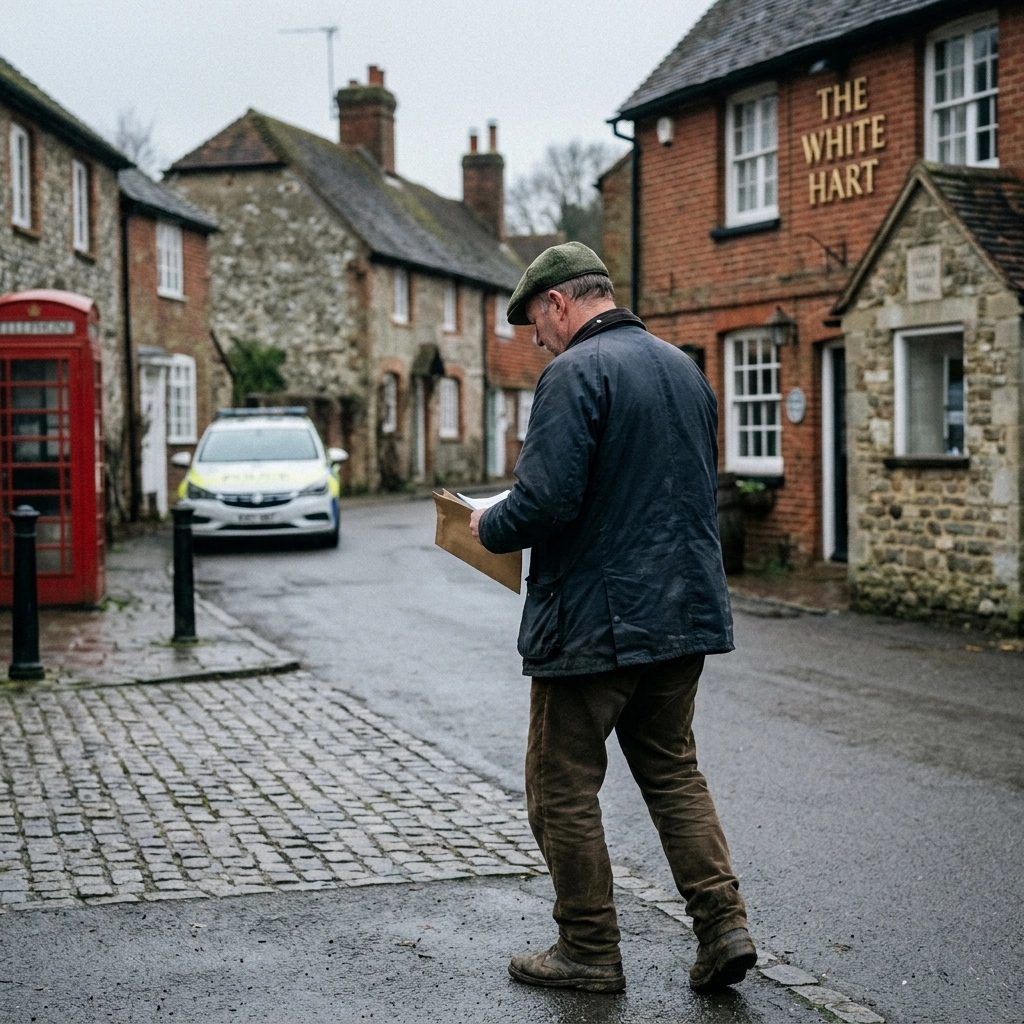
Kent is often referred to as the Garden of England. It is a place of rolling hills, ancient orchards, and sleepy villages where everybody seems to know their neighbour. There is a sense of safety and community that is hard to find in the bustling streets of London. However, that very trust is exactly what Paul Davis, a man who later reinvented himself as Ethan Hunt, decided to exploit. This isn't just a story about a single theft; it is a look into how the quiet corners of the UK can become the perfect playground for a sophisticated con artist.
At NowPWR, we believe in bringing you untold stories that highlight the realities of life in Britain today. As part of our commitment to independent news uk, we have been looking into the trail of destruction left behind by Davis. His story is a chilling reminder that sometimes the most dangerous people aren't the ones hiding in the shadows, but the ones moving into the house next door with a friendly smile and a folder full of forged documents.
The story of the Kent conman is one of calculated deception. It wasn't just about the money, though the sums involved were life-changing for many. It was about the systematic erosion of trust within small communities. Davis didn't just rob people; he lived among them, shared their space, and used the legal system as a shield to keep his victims at bay while he drained their bank accounts.
The art of the disguise in the garden of England
Paul Davis was a master of reinvention. When he decided to change his name to Ethan Hunt, yes, the same name as the protagonist in the Mission Impossible films: it wasn't just a whim. It was a tactical move to distance himself from a past that was already catching up with him. By the time people in Kent started hearing the name Ethan Hunt, Davis had already established a pattern of behaviour that would see him targeting some of the most vulnerable and trusting members of society.
His methods were surprisingly sophisticated. He didn't just ask for money; he created elaborate scenarios that made his requests seem legitimate. One of his primary tactics involved the rental market. Davis would target private landlords in rural Kent villages, people who perhaps weren't as cynical as corporate letting agents in the city. He would present himself as a professional, someone with a stable background and the means to pay.
To seal the deal, he didn't just rely on a firm handshake. He used forged court documents to bypass the usual background checks. Imagine being a landlord and seeing a document that looks like it has been stamped by the high court; you would naturally assume everything was above board. Davis used these fake papers to move into high-end properties, only to stop paying rent almost immediately. Because of the complexities of UK tenant laws, it would then take months of expensive legal battles for the rightful owners to get him out. In the meantime, he lived rent-free in luxury, often while simultaneously plotting his next move.
His charm was his greatest weapon. He wasn't a shadowy figure; he was a neighbour. He would spend time at local pubs, chat with residents, and build a persona of a successful businessman who had perhaps hit a bit of a bureaucratic snag. This social engineering allowed him to get close to people who would otherwise be wary of a stranger. By the time the mask slipped, the damage was already done, and Davis was usually already looking for his next village to "settle" in.
The devastating human cost of village fraud
While the legal system often views fraud as a financial crime, the reality for the victims is far more personal. Take the case of Katherine Campbell. She wasn't just a landlord; she was a person who had worked hard to maintain her property, only to have Davis move in using a fraudulent court document. The financial loss was significant, but the emotional toll of having someone occupy your home through lies is something that stays with you forever.
Then there are the stories that don't always make the front pages: the untold stories of individuals whose lives were derailed by his presence. We have heard accounts of a retired Army veteran and cancer survivor who was allegedly conned out of $18,000. For someone in that position, that money isn't just a number in a bank account; it’s security, it’s peace of mind, and it’s the fruit of a lifetime of service and survival. To have that taken away by a "friend" is a betrayal that cuts deeper than any physical theft.
Davis didn't just target wealth; he targeted vulnerability. He looked for people who were going through transitions or those who had a natural inclination to help others. In small Kent villages, where the social fabric is tightly woven, a conman like Davis acts like a moth in a wool sweater. By the time you notice the hole, the integrity of the whole garment is compromised.
The victims often speak of the "gaslighting" they experienced. When they began to question why payments hadn't arrived or why certain documents didn't seem quite right, Davis would use his calculated charm to make them feel like they were being unreasonable. He would pivot, provide more excuses, and sometimes even turn the situation around to make it look like he was the one being inconvenienced. This psychological manipulation meant that many victims didn't go to the police until months after they first suspected something was wrong, giving Davis more time to cover his tracks and move his assets.
Breaking down the gaps in the British justice system
One of the most frustrating aspects of the Paul Davis case is how long it took for the justice system to catch up with him. Despite a trail of victims and clear evidence of forgery, the process of bringing him to account was agonizingly slow. This highlights a significant gap in how the UK handles white-collar crime and fraud, particularly when it occurs on a local, village level.
For many victims, the police response initially felt inadequate. Fraud is often dismissed as a "civil matter" when it involves rental agreements or personal loans, even when there is clear evidence of criminal intent and forgery. This leaves victims in a precarious position where they have to spend their own money on private legal fees to fight someone who is already using stolen funds to defend themselves. In the case of Davis, it took a concentrated effort and a significant number of victims coming forward before the weight of the law finally shifted.
There is also the issue of name changes. The ease with which someone can change their identity in the UK is a double-edged sword. While it serves a legitimate purpose for many, for a fraudster like Davis, it is a simple way to hit the "reset" button on their reputation. Without a centralised system that effectively tracks these changes in relation to criminal history or credit scores, con artists can continue to operate under the radar for years.
The eventual conviction of Paul Davis (or Ethan Hunt) was a victory, but for many in the Kent fraud rings, it felt like a case of too little, too late. He pleaded guilty after a thorough investigation, but the thousands of pounds lost and the broken trust in these communities cannot be easily repaired. The gaps in the system allowed him to move from one victim to the next with relatively little friction, exploiting the very laws designed to protect the innocent.
As an independent news uk outlet, we believe it is vital to keep talking about these cases. The more we understand the methods used by people like Davis, the better equipped our communities will be to spot the red flags. It isn't about becoming cynical or untrusting of our neighbours; it's about demanding a justice system that is proactive rather than reactive. We need a system that recognises the devastating impact of fraud on individual lives and small communities, ensuring that the "Garden of England" remains a place of safety, not a hunting ground for the next conman.
The case of Paul Davis serves as a stark reminder that the modern fraudster doesn't need a computer or a masked face. Sometimes, all they need is a name from a movie, a convincing folder of papers, and a quiet village where people still believe that a man's word is his bond. While Davis is now facing the consequences of his actions, the conversation about how we protect our rural communities from such predators is only just beginning.
The legal proceedings against Paul Davis have concluded with his guilty plea, providing some semblance of closure for the individuals involved. However, the broader implications for community trust and the necessity for more robust fraud prevention measures remain a primary concern for residents across Kent. The resilience of the victims in coming forward has been instrumental in ensuring that this particular chapter of village fraud has come to an end.