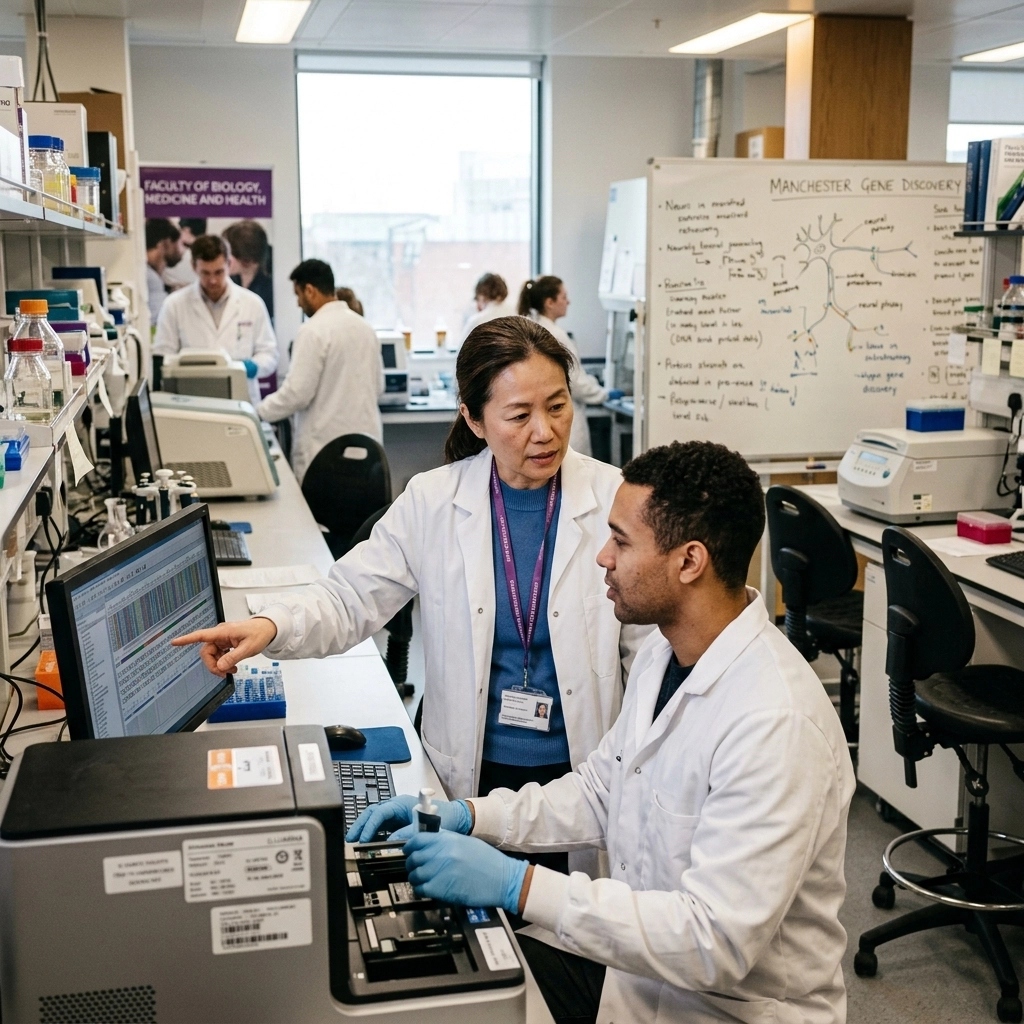
Manchester is famous for a lot of things. Splitting the atom, the first stored-program computer, a couple of half-decent football teams, and arguably the best music scene in the Northern Hemisphere. But while the world was looking at the Gallagher brothers or the latest score at Old Trafford, a team of scientists in the city was quietly unravelling a mystery hidden deep inside our genetic code. It’s the kind of story that usually stays buried in academic journals, but here at NowPWR, we’re all about those untold stories that actually change the world. This isn't just about microscopes and lab coats; it's about rewriting the manual on what makes a human being function, and what happens when one tiny, overlooked letter in that manual goes missing.
For decades, geneticists have been obsessed with proteins. It made sense. Proteins are the building blocks, the heavy lifters, the structural engineers of the body. The parts of our DNA that didn't code for proteins were dismissively labelled "junk DNA." It was the genomic equivalent of that drawer in your kitchen filled with old batteries, takeout menus, and mystery keys, stuff that’s just there but doesn't seem to serve a purpose. Well, as it turns out, the University of Manchester has just proved that one man's junk is another man’s medical breakthrough. They’ve discovered a new genetic condition, RNU2-2, which is responsible for severe childhood epilepsy. And the kicker? It was hiding in the dark matter of our genome all along.
This isn’t just a niche discovery for the science crowd. This is a massive shift in how we understand neurodevelopmental conditions. By looking into the parts of the brain that we previously thought were silent, researchers have found the volume dial. For the thousands of families dealing with unexplained seizures and developmental delays, this is the "independent news uk" readers have been waiting for: a definitive answer to a question they’ve been asking for years.
The End of the Junk DNA Myth
To understand why this is such a big deal, you have to understand the scale of the hunt. The researchers, backed by the NIHR Manchester Biomedical Research Centre, weren’t just looking for a needle in a haystack; they were looking for a specific piece of straw in a field of haystacks. They utilised data from the 100,000 Genomes Project, a massive undertaking that has transformed the UK into a global hub for education and genomic research.
The focus of the study was a gene called RNU2-2. Unlike the "famous" genes you might hear about on a biology podcast, RNU2-2 doesn’t make a protein. It’s a non-coding RNA gene. For a long time, these were ignored because they were deemed too small or too "boring" to cause serious disease. But the Manchester team, showing that bold northern grit, decided to look anyway. What they found was that mutations in this tiny gene cause Recessive RNU2-2-related neurodevelopmental disorder.
The science here is fascinatingly complex. These mutations form something called R-loops: strange, triple-stranded structures of DNA and RNA. Usually, these are regulated, but when RNU2-2 is mutated, the system haywires. It’s like a typo in a piece of code that doesn't just crash the app but fries the whole motherboard. This discovery proves that the non-coding regions of our DNA are not just "junk"; they are the regulatory system that keeps the whole show running. Without them, the protein-coding genes don't know when to start, stop, or how to behave. It’s a revelation that has sent shockwaves through the world of ai technology and medical data analysis, as we realise we’ve been ignoring half the map.
Real Lives Behind the Data Points
It’s easy to get lost in the jargon of R-loops and non-coding RNA, but at the heart of this "untold stories" narrative are the families. Before this discovery, many parents were living in a state of perpetual limbo. Imagine your child having severe, life-altering seizures and being told by every doctor that they don’t know why. There’s a specific kind of trauma in the "unknown." You can’t plan, you can’t predict, and you certainly can’t find a community of people going through the same thing.
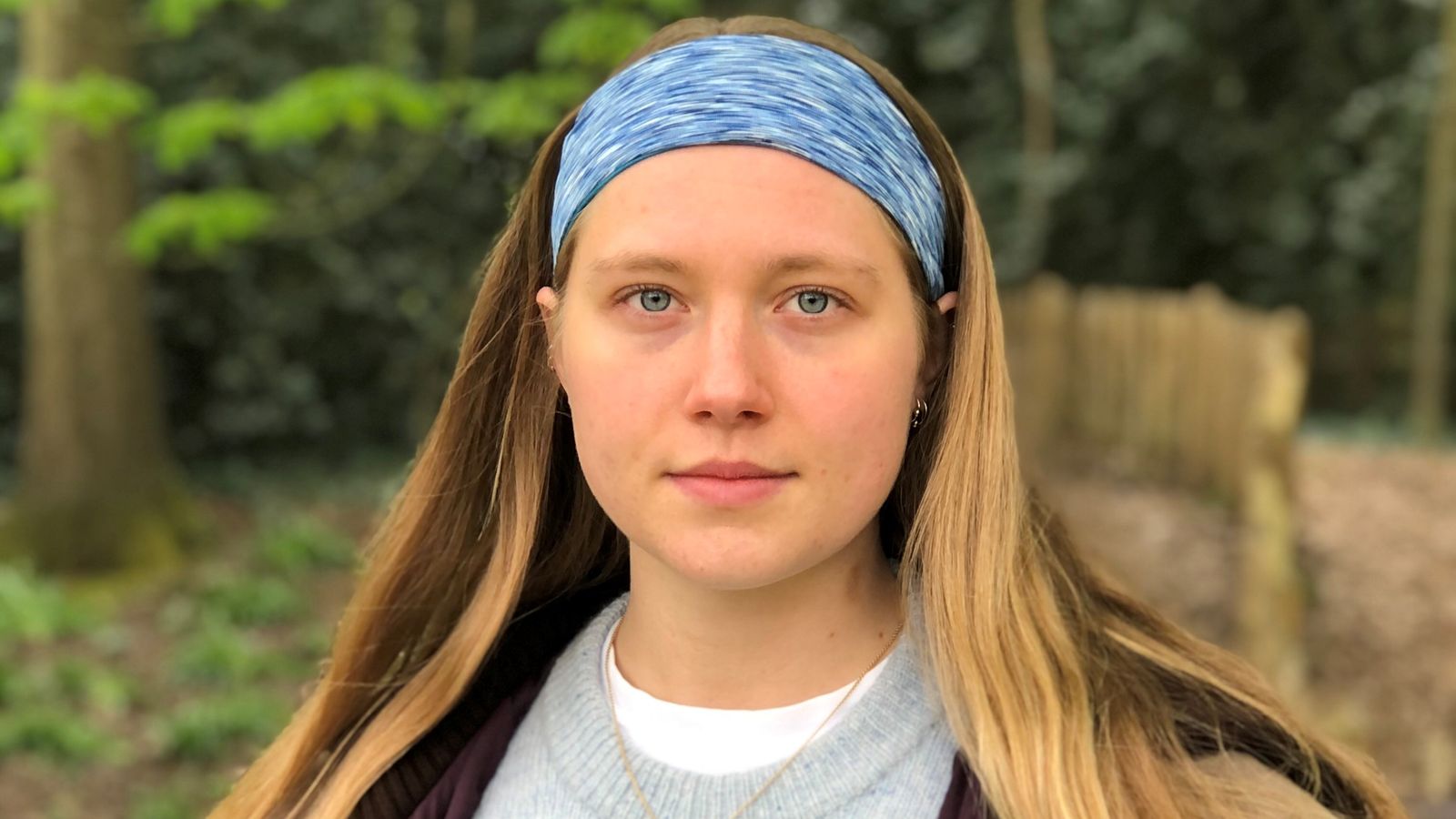
Take the case of six-year-old Ava Begley. Ava is one of the first children in the world to receive a diagnosis of RNU2-2-related disorder. For her parents, the diagnosis wasn't just a label; it was a lifeline. It meant they could finally stop searching for the "why" and start focusing on the "what next." While a diagnosis doesn't instantly provide a cure, it opens doors. It allows for targeted care, connects families with specialists, and provides a sense of peace that only comes from finally having a name for the monster under the bed.
The researchers estimate that roughly 1 in 40,000 people may be living with this specific condition. That might sound rare, but in the world of genetics, that’s practically a common cold. When you factor in other RNU-related diseases, the number jumps to 1 in 10,000. These aren't just statistics; these are thousands of people globally who have been misdiagnosed or left in the dark. Manchester’s breakthrough has effectively turned the lights on. This is about wellness in its most fundamental form: the mental and physical health of families who finally have a path forward.
A New Map for the Genetic Frontier
So, what happens now? Now that we know RNU2-2 is the culprit, the real work begins. Manchester University NHS Foundation Trust has already established a dedicated RNU clinic. This isn’t just about seeing patients; it’s about creating a global database. By studying the 84 known cases across the world, scientists can start to see patterns. Why do some children respond better to certain treatments? What are the early warning signs?
The discovery also paves the way for what we call "precision medicine." Instead of throwing broad-spectrum anti-epileptic drugs at the problem: which often have brutal side effects and limited success: doctors can now think about gene-specific therapies. We are moving into an era where we don't just treat the symptoms; we fix the code. It’s bold, it’s ambitious, and it’s happening right now in the UK.
This breakthrough also serves as a massive wake-up call for the entire scientific community. If RNU2-2 was hiding in plain sight, what else are we missing? There are thousands of these small, non-coding genes that have been largely ignored. The Manchester discovery has effectively validated the need to sequence and analyse the entire genome, not just the "interesting" bits. It's a testament to the power of big data and the importance of independent research that isn't afraid to challenge the status quo.
As we look toward the future, the implications for childhood epilepsy are enormous. We are looking at earlier interventions, which are crucial for brain development. If we can diagnose a child in the first few months of life, we can potentially alter the trajectory of their entire life. We aren't just decoding the brain; we’re learning how to help it heal. This is the kind of progress that reminds us why science matters. It’s not about the accolades or the complex papers; it’s about making sure that the next generation of children: and the Avas of the world: have a fighting chance at a life free from the shadows of the unknown.
The Manchester Gene Discovery is a reminder that even in 2026, there are still vast territories of the human experience left to explore. We’ve mapped the stars and the depths of the oceans, but the most complex frontier remains the three pounds of grey matter between our ears. And thanks to a group of dedicated scientists in a rainy city in Northern England, that frontier just got a little less mysterious.
The identification of the RNU2-2 gene represents a pivotal moment in genetic medicine. By shifting the focus from protein-coding regions to the functional importance of non-coding RNA, researchers have provided a diagnostic answer for thousands of families worldwide. This discovery highlights the necessity of comprehensive genomic sequencing and the potential for precision therapies in treating neurodevelopmental disorders. As clinical understanding grows, the path toward targeted interventions and improved patient outcomes becomes increasingly clear.