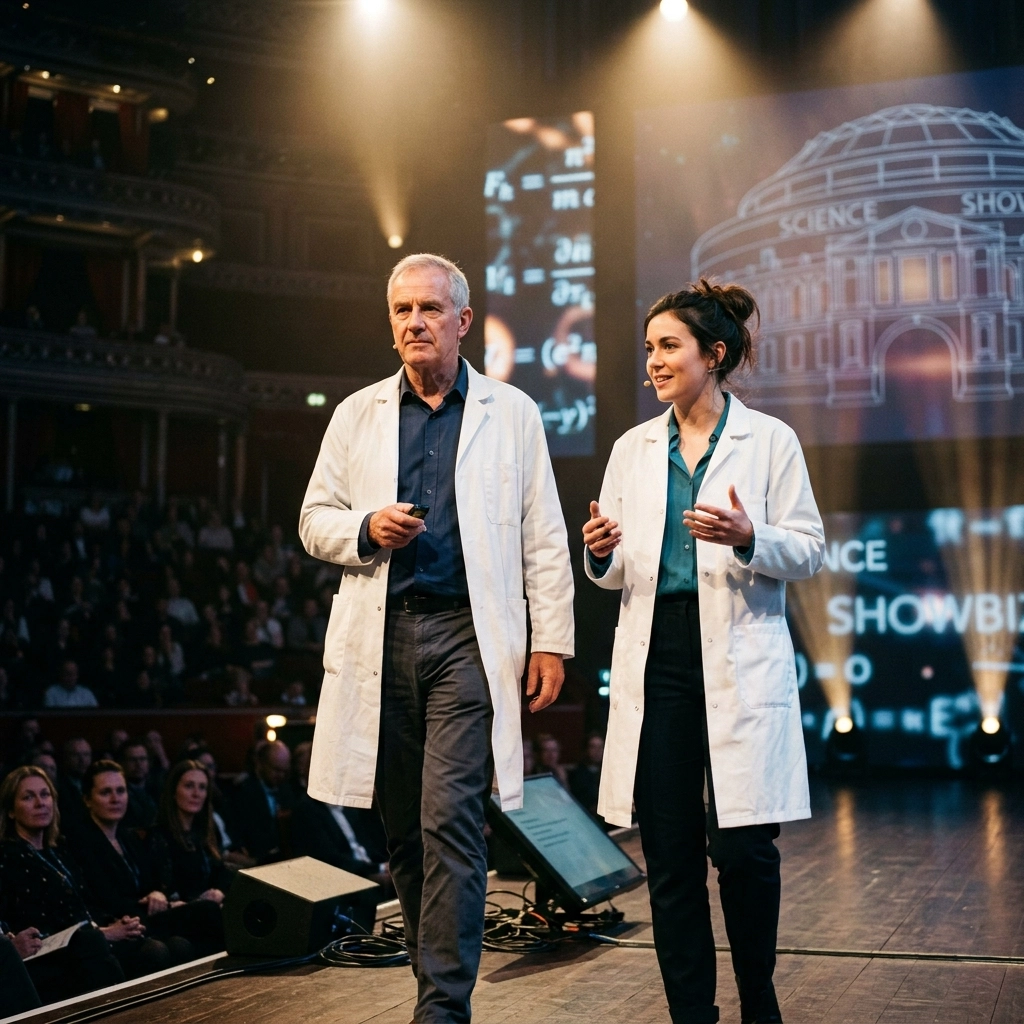
The Royal Albert Hall is an icon of British culture. It has hosted everyone from Jimi Hendrix to the BBC Proms, and it has seen more standing ovations than perhaps any other building on the planet. But recently, the glitter and the velvet have had to make room for something a bit more clinical. Enter Dr Daisy Fancourt, the Hall’s first Associate Scientist. This isn’t a guest appearance or a one-off lecture; it is a fundamental shift in how we understand the relationship between the arts and our physical well-being. At a time when the world feels increasingly fragmented, looking at the hard data behind our cultural habits is more important than ever.
For years, we have known that music makes us feel good. We know that a soaring chorus can give us goosebumps and a melancholy cello solo can move us to tears. However, "feeling good" isn’t a scientific metric. To bridge the gap between the ethereal magic of a live performance and the cold, hard facts of biology, the Royal Albert Hall decided it was time to put the arts under the microscope. This initiative represents a bold step for independent news uk readers who are tired of the same old celebrity fluff and want to see the real impact of culture on society.
Dr Fancourt is a leading expert in psycho-neuro-immunology. While that might sound like a mouthful, her mission is relatively simple: to find out exactly what happens to our bodies when we step inside a concert hall. This isn’t just about the "untold stories" of the performers backstage; it’s about the untold stories of the audience's immune systems, their stress levels, and their longevity. By treating the Royal Albert Hall as a giant laboratory, Fancourt and her team are redefining what it means to be a "patron of the arts."
The Lab in the Limelight
The appointment of an Associate Scientist at a major cultural venue is a global first. It signals a move away from seeing the arts as a luxury or a pastime, and toward seeing them as a vital component of public health. We are living through a period where social prescribing, the practice of doctors referring patients to community groups or arts activities, is becoming a cornerstone of the NHS. But for social prescribing to work, we need evidence. We need to know that a trip to the Albert Hall is as effective for mental health as a prescription of light exercise or a support group.
Fancourt’s work involves tracking a myriad of biological markers. When you sit in those famous red seats, your body is doing a lot more than just digesting an interval drink. Your heart rate variability is changing, your cortisol levels are shifting, and your brain is firing in ways that are distinct from your everyday experience. By studying these changes, the research team can quantify the "glow" we feel after a great show. It turns out that the arts can lower inflammation and boost the immune system, providing a literal shield against illness.
This intersection of science and showbiz isn't just about data points; it’s about the human experience. The Royal Albert Hall is a unique environment because of its history and its architecture. The "Albert Hall effect" is a real phenomenon where the sheer scale and communal nature of the experience amplify the physiological response. In an era of digital isolation, where we consume culture through tinny phone speakers and blue-light screens, the physical reality of being in a room with 5,000 other humans, all breathing and reacting in sync, is a potent biological event.
The Q&A: Riffs, Reverbs, and Research
To get to the heart of this unconventional partnership, we sat down to look at some of the most pressing questions surrounding this merger of the lab and the stage. The tone is less "white coat" and more "backstage pass."
Q: Be honest, is this just a fancy way for scientists to get free tickets to the Proms?
A: If only it were that simple! While the perks are undoubtedly better than a windowless lab in a basement, the work is rigorous. We aren't just tapping our toes to the music; we are collecting saliva samples, monitoring heart rates, and crunching massive datasets. The goal isn't just to enjoy the show; it's to understand why the show makes us enjoy life more. It’s about taking the magic and finding the mechanism.
Q: Can a rock concert actually be "good" for your health? Surely the noise and the late nights are a bit of a wash?
A: It’s all about the trade-off. Yes, your ears might ring if you stand too close to the speakers, but the hormonal payoff is huge. Live music has been shown to significantly reduce cortisol, the body’s primary stress hormone. High levels of cortisol are linked to everything from heart disease to obesity. If a two-hour set by a legendary band can reset your stress levels, that’s a clinical win. We are looking at the "untold stories" of how a loud guitar riff might actually be doing your cardiovascular system a massive favour.
Q: What is the most surprising thing you’ve found so far in the hallowed halls of the Albert?
A: The most striking finding is the power of collective synchrony. When an audience is deeply engaged, their heart rates actually begin to synchronise. They start to breathe as one. This creates a sense of social bonding that is incredibly powerful for mental health. In a world where loneliness is a literal killer, this communal biological experience is a vital piece of the puzzle. It’s not just about the person on stage; it’s about the person sitting next to you.
Q: Is there a specific genre that’s the most "medicinal"? Do we all need to start listening to Mozart?
A: Not necessarily. The health benefits are often tied to personal preference and emotional engagement. If you hate classical music, forcing yourself to sit through a four-hour opera might actually raise your stress levels. However, the complexity of certain compositions can stimulate the brain in unique ways. We are moving away from the idea of "prescribing" a specific genre and toward understanding the "dosage" of engagement. Whether it's Stormzy or Sibelius, the key is the intensity of the experience.
The Data of the Soul
As this research continues, the implications for the UK’s cultural landscape are profound. We are moving toward a future where the Royal Albert Hall is not just a venue, but a wellness centre. If we can prove, beyond a shadow of a doubt, that regular engagement with the arts extends life and reduces the burden on the healthcare system, the way we fund and value culture will have to change. It becomes a matter of necessity rather than a "nice-to-have" extra. This is the kind of forward-thinking analysis that defines independent news uk, looking past the surface to the underlying structures of our society.
This project also highlights the importance of the "human" in an increasingly automated world. While AI can generate music and algorithms can predict what we want to hear, they cannot replicate the biological feedback loop of a live performance. The sweat, the acoustics, the shared hush of a captivated crowd: these are things that happen in meat-space, and they have tangible biological consequences. Dr Fancourt’s work reminds us that we are biological creatures who evolved to be together, to share stories, and to find rhythm in the chaos.
The Royal Albert Hall’s decision to embrace science is a testament to its enduring relevance. By allowing researchers to peek behind the curtain, they are ensuring that the arts remain at the centre of the national conversation. It turns out that lab coats look quite at home in the Royal Box. As we look to the future, the data gathered here will likely influence how cities are designed, how schools are run, and how we treat our elderly. The "science of showbiz" is no longer a gimmick; it’s the new frontier of human understanding.
The marriage of data and drama is a long-term commitment. As the partnership evolves, we can expect more insights into how the arts can serve as a buffer against the pressures of modern life. The Royal Albert Hall has always been a place of spectacle, but now it is also a place of discovery. It is proving that the things that move our souls are the very same things that keep our bodies running.
The integration of scientific research into one of the world's most famous entertainment venues marks a significant milestone in our understanding of human health. By moving the laboratory into the concert hall, Dr Daisy Fancourt and the Royal Albert Hall are providing a rigorous evidence base for the life-changing power of the arts. This work ensures that the cultural sector is recognised not just for its economic contribution, but for its essential role in the biological and psychological well-being of the population. Through this lens, every performance becomes an opportunity for both artistic expression and scientific insight.