





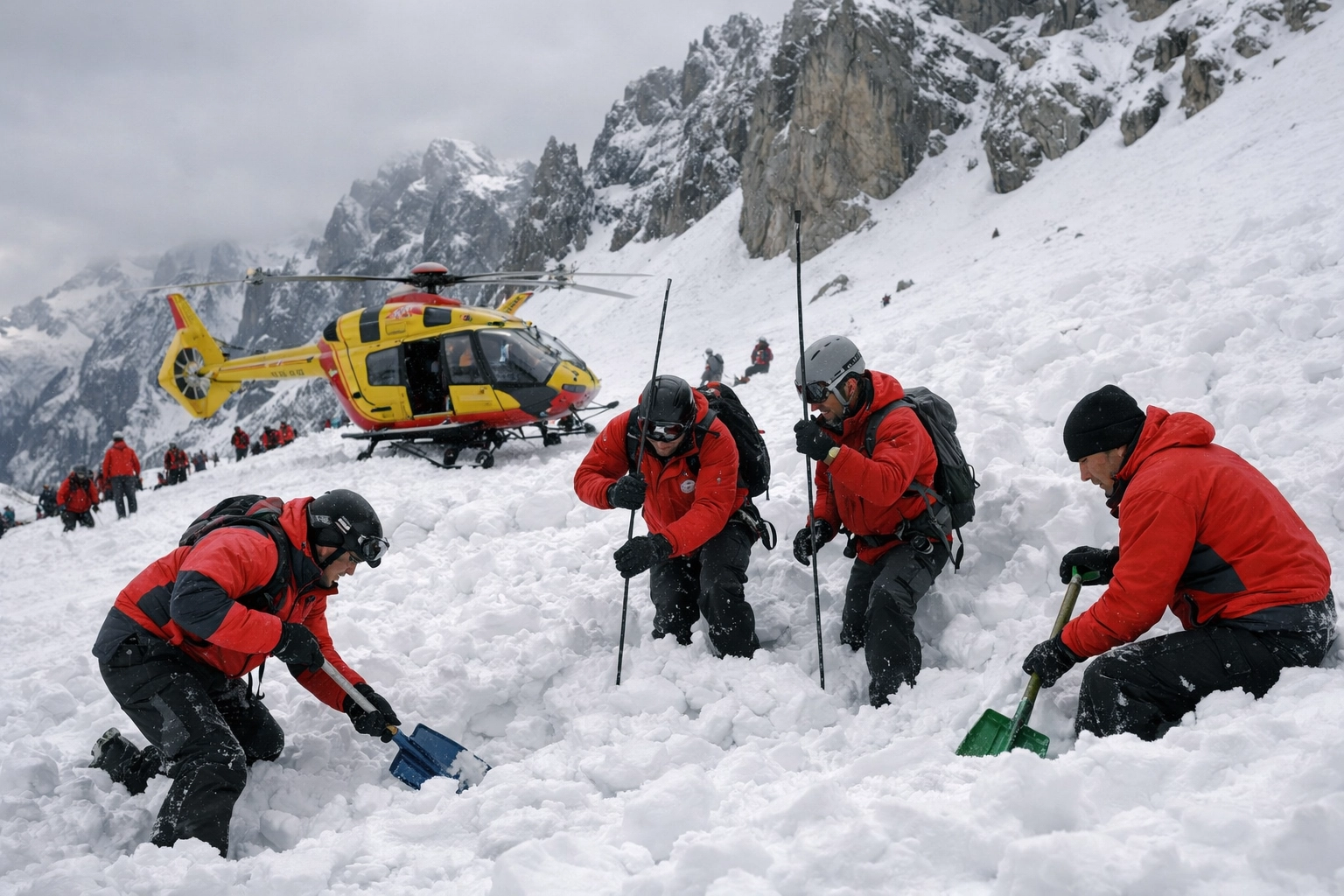
A massive avalanche in northern Italy has claimed the lives of two skiers and left several others injured in the South Tyrol region. The incident occurred on Saturday morning near the Austrian border, sparking a large-scale rescue operation involving multiple helicopters and dozens of alpine specialists.
The slide took place at approximately 11:40 a.m. local time on the slopes of Hohe Ferse, also known as Monte Tallone Grande. This peak, situated at an altitude of approximately 2,400 metres (7,874 feet), is a prominent feature in the Val Ridanna area near the town of Ratschings. According to local authorities, a total of 25 skiers were caught in the path of the descending snow and ice, though the majority managed to escape the primary force of the impact.
The two fatalities were confirmed shortly after rescue teams reached the site. In addition to the deaths, three individuals sustained serious injuries and were airlifted to nearby hospitals for emergency treatment. Two other skiers suffered minor injuries and were treated at the scene. The identity and nationalities of the victims have not yet been officially released, pending notification of their next of kin.
The fatal descent on Hohe Ferse
The Hohe Ferse is a popular destination for experienced skiers and mountaineers, known for its challenging terrain and panoramic views of the Italian and Austrian Alps. On the day of the incident, weather conditions were reportedly clear, though experts had noted underlying issues with the snowpack. The avalanche was triggered suddenly, catching a large group of off-piste skiers who were navigating the upper reaches of the mountain.
Witnesses described a thunderous roar as a massive slab of snow detached from the slope, gaining momentum as it swept down the mountainside. Of the 25 people caught in the slide, many were able to deploy safety equipment or find shelter behind rock formations. However, those directly in the path of the "white death" were buried under metres of compacted snow.
Survival in such conditions is a matter of minutes. The weight of the snow and the lack of oxygen create a lethal environment for those buried. Italian mountain rescue services (CNSAS) noted that the speed of the slide and the density of the snow made manual extraction difficult for those not equipped with transceivers and probes. Initial reports suggest that the victims were part of a group exploring the off-piste terrain, a practice that has seen a surge in popularity despite increasing warnings from local authorities.
The South Tyrol region has a long history of managing avalanche risks, with sophisticated monitoring systems in place. On Saturday, the official avalanche warning level was evaluated as being between low and moderate. This assessment, while indicating a relatively stable environment, does not rule out the possibility of isolated slides, particularly on steep, north-facing slopes where internal layers of snow can remain weakly bonded.
Co-ordinated rescue in the Val Ridanna
The response to the tragedy was swift and extensive, reflecting the high level of preparedness within the Italian Alpine rescue infrastructure. Upon receiving the emergency call, dispatchers co-ordinated the deployment of six helicopters from regional bases in Italy and nearby Austria. The aerial support was crucial for transporting medical personnel to the high-altitude site and for the rapid evacuation of the critically injured.
On the ground, approximately 80 personnel were involved in the search and recovery mission. This force included members of the Alpine Association, the Italian State Police, and local firefighters. Search dogs were also utilised to locate individuals buried beneath the surface. The rescue teams faced significant challenges due to the altitude and the risk of secondary avalanches, which often follow a primary slide as the surrounding snowpack becomes further destabilised.
The CNSAS technicians employed specialised electronic equipment to pick up signals from avalanche transceivers. For those skiers not wearing such devices, rescuers were forced to use traditional probing methods, a time-consuming process that involves driving long metal poles into the snow in a grid pattern. The efficiency of the co-ordinated effort meant that all 25 individuals were accounted for within several hours of the initial call.
Local authorities in Ratschings have expressed their condolences to the families of the deceased. The town, which relies heavily on winter tourism, has been left in a state of shock. Officials have reiterated the importance of skiers carrying essential safety gear, including shovels, probes, and transceivers, even when the official danger rating is considered manageable. The investigation into the exact cause of the trigger: whether it was natural or caused by the movement of the skiers themselves: is currently ongoing.
A season of record Alpine fatalities
The tragedy in South Tyrol is part of a broader and deeply concerning trend across the European Alps this winter. Data released by alpine safety organisations shows that as of mid-March, 127 avalanche-related deaths have been recorded across the mountain range. This figure is significantly higher than the typical seasonal average of 100 fatalities, prompting calls for a review of safety protocols and public awareness campaigns.
Italy has been particularly hard hit, with 33 deaths recorded so far this season. France and Austria follow closely with 31 and 29 fatalities, respectively. Experts attribute this spike in deaths to a combination of meteorological factors and human behaviour. A series of heavy snowfalls followed by sudden spikes in temperature has created a "sandwich" effect in the snowpack, where heavy, wet snow sits atop a weak, sugary base layer.
Rising temperatures and stronger winds have also played a critical role. When wind-blown snow accumulates on leeward slopes, it creates "wind slabs" that are highly sensitive to the weight of a single skier. Furthermore, the increasing number of enthusiasts venturing onto off-piste terrain: uncontrolled and unpatrolled areas outside of official ski resorts: has expanded the "danger zone" where accidents are likely to occur.
Meteorologists are also looking at the long-term impact of climate shifts on alpine safety. The increasing frequency of "rain-on-snow" events, where rain falls at high altitudes during the winter months, can lubricate the layers between the snow and the ground, leading to massive full-depth avalanches. As the season progresses, authorities in Italy, France, and Austria are urging extreme caution. With the spring skiing season approaching: a period traditionally associated with "wet snow" avalanches: the risk to the public remains at an elevated level.
The loss of life in Val Ridanna serves as a stark reminder of the inherent unpredictability of the mountain environment. While technology and rescue techniques continue to advance, the sheer power of an avalanche remains one of nature’s most formidable forces. The ongoing investigation will look to provide answers for the families involved, while the wider alpine community continues to grapple with one of the deadliest winters on record.