





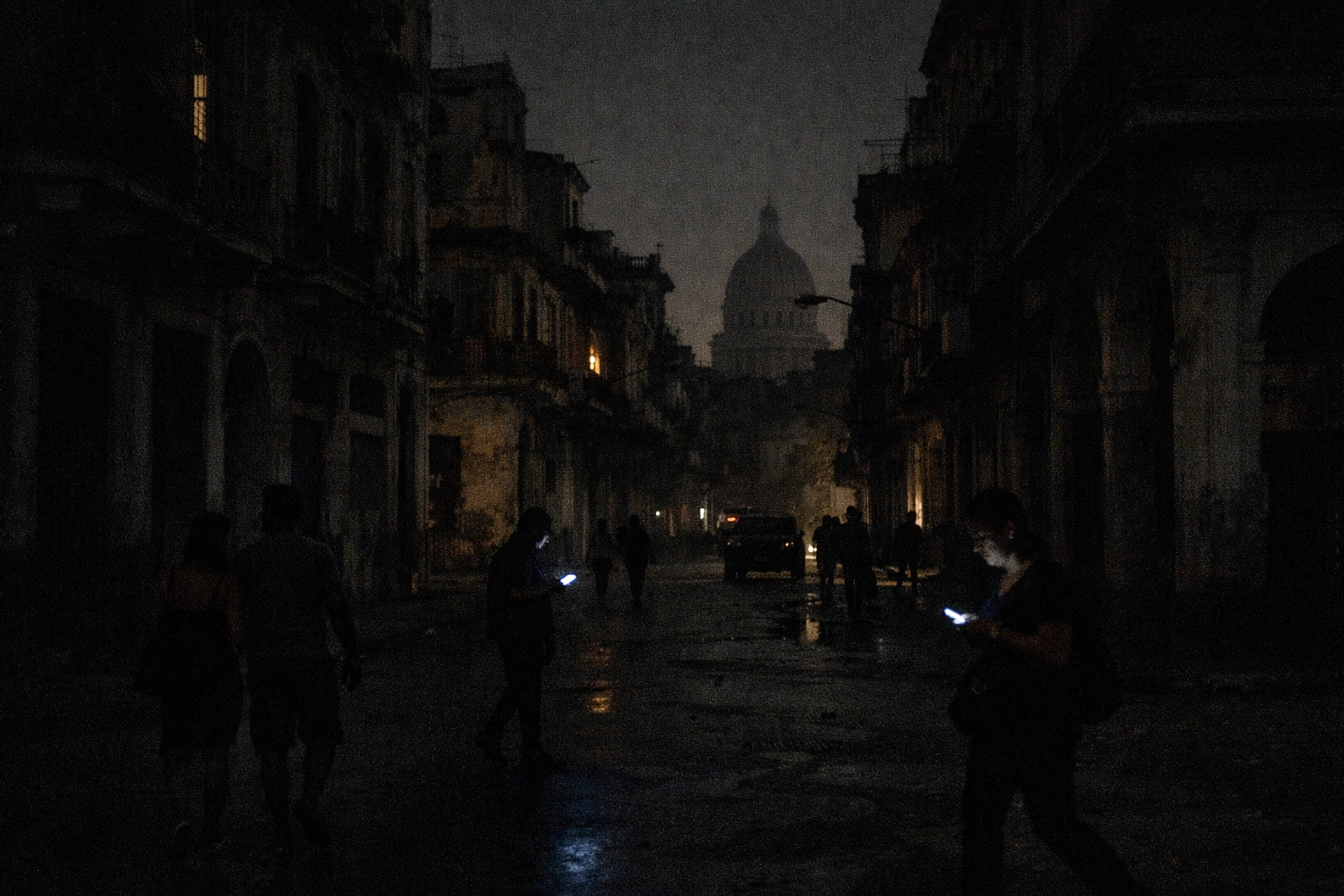
Cuba has been plunged into a nationwide blackout for the third time in less than four weeks. The Caribbean island’s fragile electrical infrastructure collapsed on Saturday, leaving more than 10 million residents without power as the government struggles to maintain a grid crippled by aging equipment and a chronic lack of fuel.
The failure was triggered by a technical fault at the Nuevitas thermoelectric plant in Camagüey province. While the breakdown of a single generating unit would be manageable in most modern systems, the Cuban National Electro-energetic System (SEN) is currently so unstable that the incident caused a cascading total collapse. By Saturday evening, the entire nation was effectively "off the map" in terms of electrical output.
This latest incident marks a significant escalation in the island’s ongoing energy emergency. For months, Cubans have endured "programmed" blackouts lasting up to 12 hours a day, but the total failure of the grid represents a deeper systemic crisis that the administration in Havana appears unable to resolve.
Infrastructure on the Brink: The Nuevitas Failure
The technical catalyst for this weekend’s darkness was the unexpected shutdown of a key unit at the 10 de Octubre plant in Nuevitas. According to officials from the Ministry of Energy and Mines, the failure created an immediate imbalance between demand and supply. Because the grid lacks any meaningful reserve capacity, the frequency dropped instantly, forcing other plants across the island to disconnect automatically to prevent permanent damage to their turbines.
The Cuban power grid is a relic of a different era. Most of its primary thermoelectric plants are between 40 and 50 years old, largely relying on Soviet-era technology that has received minimal investment since the early 1990s. Maintenance schedules have been repeatedly deferred due to a lack of hard currency and the difficulty of sourcing spare parts on the international market.
Engineers have described the current state of the SEN as a "house of cards." When one major plant like Nuevitas or the Antonio Guiteras plant in Matanzas goes offline, the remaining units are forced to pick up the load. However, these secondary plants are often operating at half-capacity due to mechanical wear and tear. The result is a system that exists in a permanent state of near-failure, where a single broken pipe or a faulty sensor can trigger a national catastrophe.
The recovery process is equally perilous. Restarting a national grid requires "black start" capabilities: using small distributed generators to provide the initial spark to larger plants. In a country where fuel for those small generators is increasingly scarce, the process of bringing the country back online can take days. Each failed attempt to synchronise the plants carries the risk of another total collapse, a cycle that has become demoralisingly familiar to the Cuban population this March.
The Fuel Crisis: Sanctions and Shifting Alliances
While technical failures are the immediate cause of the blackouts, the underlying reason the grid is so vulnerable is a desperate shortage of fuel. Cuba currently produces only about 40% of the petroleum it needs to power its economy and its domestic plants. The remainder must be imported, but the island’s traditional supply lines have all but evaporated in the opening months of 2026.
Geopolitics has played a decisive role in this energy strangulation. The removal of the long-standing leadership in Venezuela earlier this year has proven catastrophic for Havana. For decades, Caracas provided Cuba with subsidised oil in exchange for medical and security services. That "oil-for-doctors" deal has been effectively suspended by the new Venezuelan administration, which is seeking to redirect its resources toward domestic stabilisation and Western markets.
Simultaneously, the United States has intensified its economic pressure. In January 2026, the Trump administration issued a series of warnings regarding tariffs on any third-party nation or shipping company found to be transporting oil to Cuba. Washington has remained firm, stating that sanctions relief will only be considered if the Cuban government releases political prisoners and moves toward comprehensive economic liberalisation.
This "oil blockade" has left Cuba with few options. President Miguel Díaz-Canel recently admitted that the country had not received a single shipment from its regular foreign suppliers for three months. Attempts to secure oil from Russia and Mexico have met with limited success, as both nations face their own logistical and political hurdles. Without a steady supply of crude oil and diesel to run the backup generators that support the main grid, the system remains in a state of permanent "red alert."
A Nation in Limbo: The Human Cost of Darkness
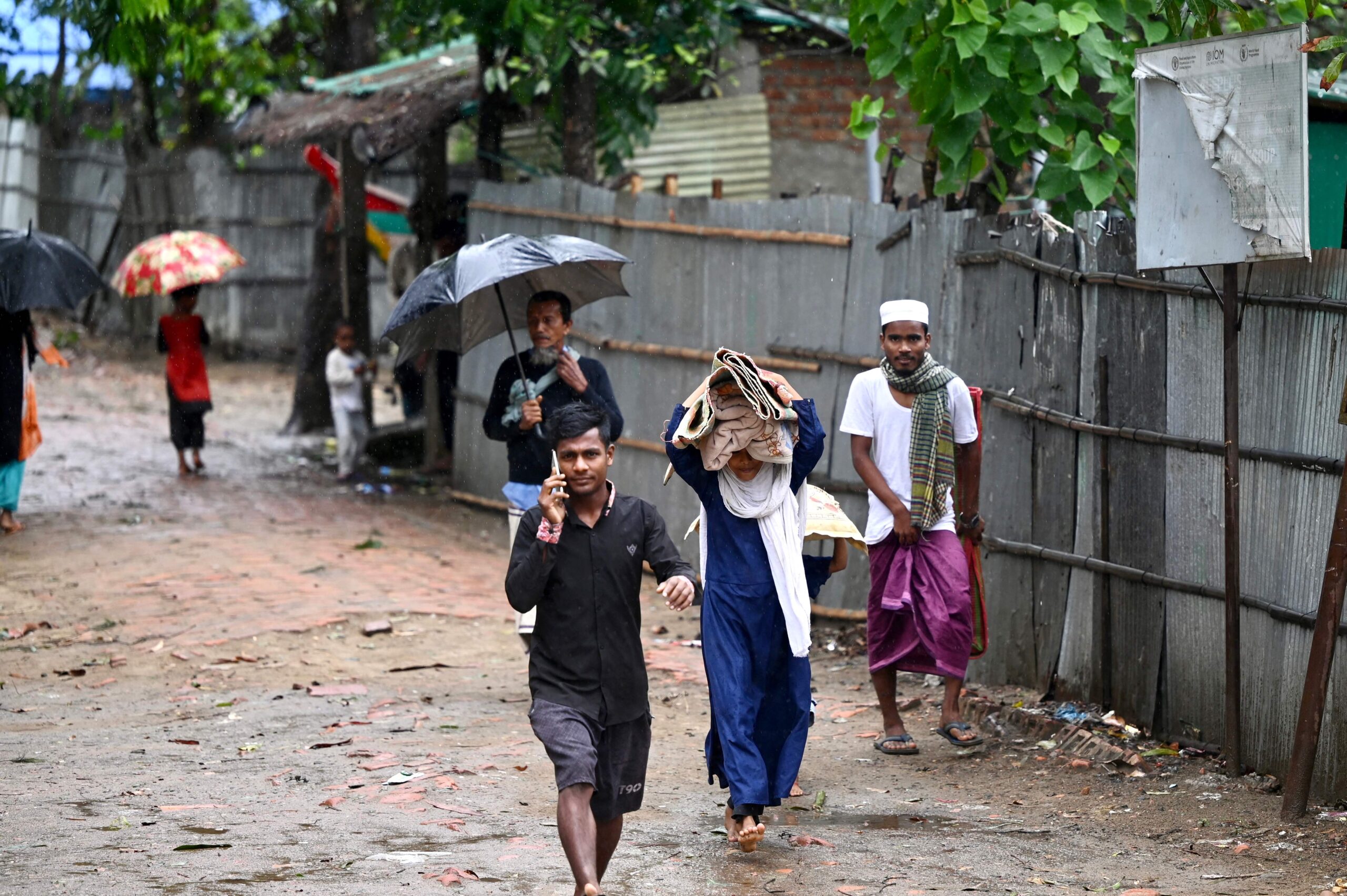
For the 10 million people living through the blackouts, the statistics of fuel imports and megawatt-hours are secondary to the grueling reality of daily life. In Havana, the streets fall into an eerie, total darkness as soon as the sun sets. The only lights visible in many neighbourhoods are the flickering screens of mobile phones and the occasional beam from a government-owned building equipped with a private generator.
The impact on food security is perhaps the most pressing concern. In a climate where temperatures regularly exceed 30 degrees Celsius, the loss of refrigeration is a disaster. Families are forced to cook and consume whatever perishable food they have as soon as the power cuts, leading to significant waste in a country already struggling with severe food shortages. For many, the "zero-hour" of a total grid collapse means the loss of their entire weekly ration of meat or dairy.
Public health is also at the mercy of the grid. While major hospitals in the capital are prioritised for generator fuel, smaller clinics in the provinces have reported being forced to cancel elective surgeries and move critical patients. Water supply is another hidden casualty; the pumps required to move water through the city's aging pipes are electrically powered. When the power goes out for an extended period, the taps run dry shortly after.
Frustration is beginning to boil over. While the government has called for "serenity" and "unity" during the crisis, there have been scattered reports of "cacerolazos": protests where residents bang pots and pans in the dark to signal their discontent. The frequency of these total collapses: three in a single month: has broken the sense of normalcy that Cubans have long maintained in the face of hardship.
As the government works to synchronise the Nuevitas plant and restore a semblance of order to the grid, the long-term outlook remains bleak. Without a massive infusion of capital to modernise the infrastructure or a breakthrough in geopolitical relations that restores the flow of oil, Cuba’s cycle of darkness is likely to continue. For now, the island remains a nation waiting for a light that may not stay on for long.