





Tehran has issued a direct and severe warning to the British government, stating that any military base used by the United States to launch "acts of aggression" against Iran will be treated as a legitimate target for retaliation. This escalation comes as the Middle East faces its most volatile period in decades, with Iranian military forces having already conducted 76 waves of retaliatory strikes against American assets under the banner of "Operation True Promise." As of March 2026, the conflict has shifted from a regional skirmish to a global security crisis that threatens to draw the United Kingdom into a direct kinetic confrontation with the Islamic Republic.
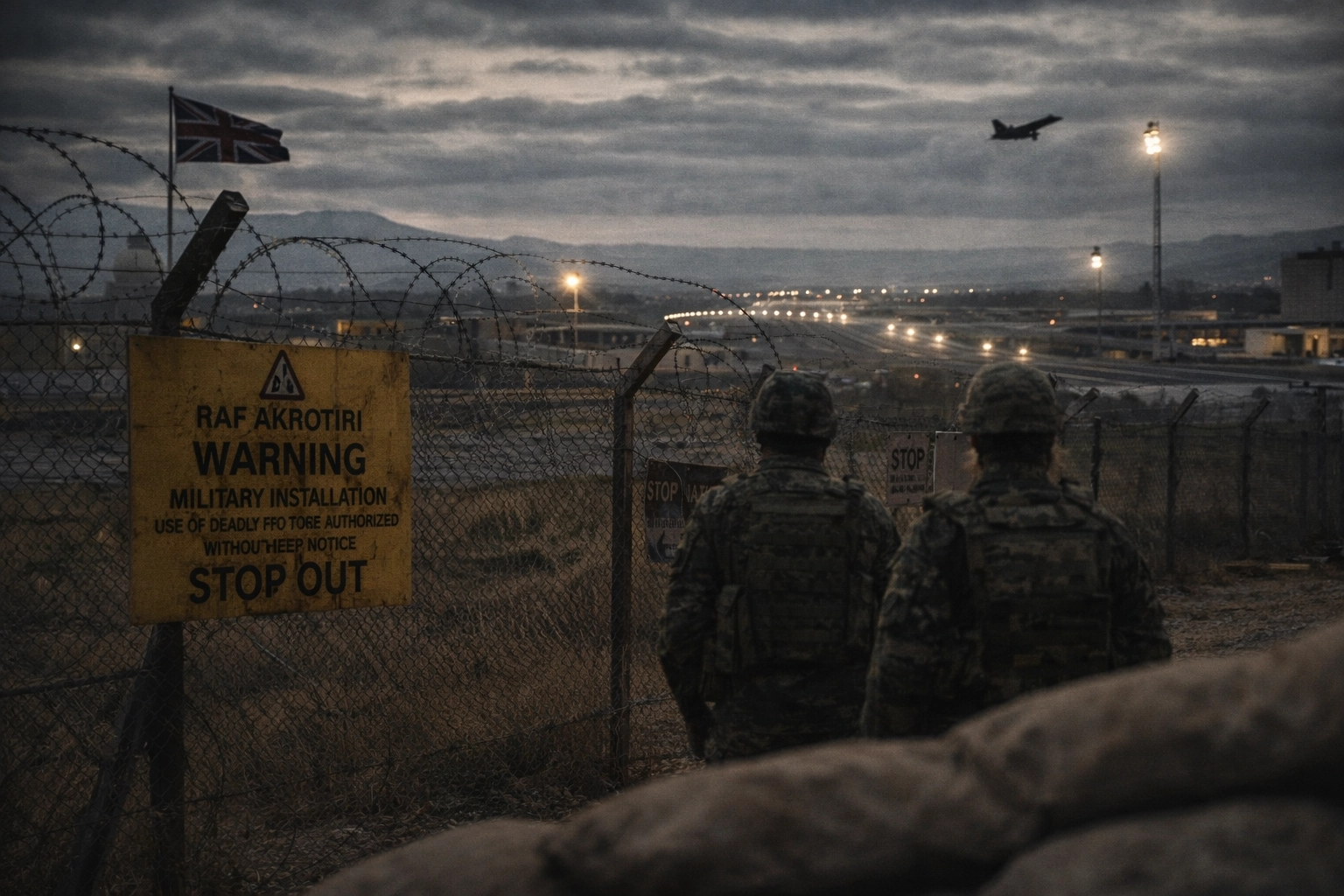
The Iranian Revolutionary Guard Corps (IRGC) delivered the message through diplomatic channels in Oman, making it clear that the British presence in the region: specifically the Sovereign Base Areas of Akrotiri and Dhekelia in Cyprus: is under intense scrutiny. The threat extends to British soil if the United States is permitted to fly long-range sorties from bases such as RAF Fairford or RAF Lakenheath. For the British Prime Minister, the warning presents a critical dilemma: maintain the "special relationship" and provide the logistics for American air power, or distance the UK from Washington to avoid being caught in the crosshairs of Iranian missile and drone swarms.
The Ultimatum to Westminster
The rhetoric emerging from Tehran is no longer confined to symbolic posturing. General Hossein Salami, commander-in-chief of the IRGC, stated that any nation providing "soil or airspace" for an American strike would face a response "proportional to the aggression." This follows the mid-March missile strikes on Erbil International Airport in Iraq, which killed seven U.S. service members and left dozens wounded. The effectiveness of these strikes has shocked Western intelligence agencies, revealing that Iranian drone and missile capabilities have evolved to bypass sophisticated air defence systems through sheer saturation and advanced guidance technology.
In London, the threat has triggered an immediate response. Prime Minister Keir Starmer has convened multiple emergency COBRA meetings to assess the vulnerability of British assets. The government is currently weighing the risks of its continued support for the U.S. Central Command (CENTCOM) operations. Intelligence reports suggest that Iran has already mapped British naval positions in the Persian Gulf and the Mediterranean, including the HMS Prince of Wales, which is currently deployed to the region. The IRGC’s "76th wave" demonstrated a level of coordination between ballistic missiles and "suicide" drones that suggests British Type 45 destroyers could be overwhelmed if targeted by a coordinated multi-axis attack.
The warning to Britain is part of a broader Iranian strategy to isolate the United States from its traditional allies. By making the cost of cooperation too high, Tehran hopes to force a British withdrawal from the regional security architecture. This comes at a time when the British public is already weary of foreign entanglements. The economic cost of heightened security and the potential for domestic disruption have added a layer of complexity to the government’s decision-making process. The Foreign Office has updated its travel advice for the entire region, while the Ministry of Defence has reportedly moved British assets into a "high-readiness" defensive posture.
Strategic Overreach and Base Vulnerability
The current crisis has exposed a significant strategic vulnerability for the West. In early 2026, several Gulf nations, including Saudi Arabia and the United Arab Emirates, took the unprecedented step of blocking U.S. military access to their bases and airspace. These nations, fearing Iranian retaliation against their oil infrastructure, have essentially neutralised the U.S.’s traditional launch pads in the region. This "regional lockout" has made British-controlled bases, particularly RAF Akrotiri in Cyprus, indispensable to American operations. Akrotiri remains one of the few locations from which U.S. and British aircraft can conduct reconnaissance and strike missions without seeking permission from regional monarchs.
Because of this reliance, the Pentagon has moved rapidly to bolster defences around these "western hubs." The U.S. recently relocated its Terminal High Altitude Area Defense (THAAD) missile system from South Korea to the Middle East, with segments reportedly being positioned to protect shared infrastructure with the UK. Additionally, twelve F-22 Raptor fighter jets were deployed to Israel’s Ovda Airbase in February 2026 to provide a rapid-response capability. However, the presence of these high-value assets only increases the likelihood that Iran will view these locations as high-priority targets. The sprawling nature of Western military infrastructure in the Middle East has become its greatest weakness, providing Iran with a target-rich environment that is difficult to defend in its entirety.
British military officials are privately concerned that the UK is being pulled into a war it did not start and cannot easily finish. The deployment of 2,500 U.S. Marines and additional warships to the Strait of Hormuz in mid-March has further escalated the situation. While the stated goal is to protect shipping lanes and critical energy infrastructure, Tehran views this as an encirclement. The "Base Threat" is a tactical move to break that circle. If Britain bows to the pressure and restricts U.S. usage of its bases, the entire American strategy in the region could collapse. If Britain stands firm, it risks a direct strike on a Sovereign Base Area, which would necessitate a formal British entry into the conflict under the rules of national defence.
Domestic Instability and the Economic Shadow
The threat from Iran is not just a military concern; it is a domestic political crisis. In the UK, the two-party grip on politics has been loosening throughout 2026, with smaller parties and independent movements gaining traction by criticising the government’s foreign policy. The prospect of a new war in the Middle East is deeply unpopular, especially as the country grapples with an ongoing economic crisis. Protests have already broken out in major cities, with demonstrators demanding that the government "de-escalate and decouple" from American military objectives. The fear is that a strike on a British base would not only lead to military casualties but also trigger a surge in domestic radicalisation and security threats within the UK mainland.
Economically, the "Base Threat" has sent shockwaves through the markets. The Strait of Hormuz, which Iran has threatened to close entirely if attacked, remains the world's most vital energy artery. A conflict involving British bases would almost certainly lead to a complete shutdown of the strait, sending oil prices to record highs and potentially crippling the UK's fragile recovery. The government’s COBRA meetings have focused as much on the economic fallout as they have on military readiness. Plans are reportedly being drawn up for emergency energy rationing should the conflict escalate into a full-scale blockade of the Gulf.
As the situation develops, the focus remains on the "to be continued" nature of Iran’s military posture. Each wave of "Operation True Promise" brings the world closer to a tipping point. For now, the British government is attempting to walk a diplomatic tightrope, reaffirming its commitment to international law while trying to avoid the specific "acts of aggression" that would trigger the IRGC’s promised retaliation. The coming weeks will be a test of British sovereignty and strategic patience. Whether the UK can remain a neutral bystander while hosting the machinery of American air power is a question that Tehran seems intent on answering through force.