



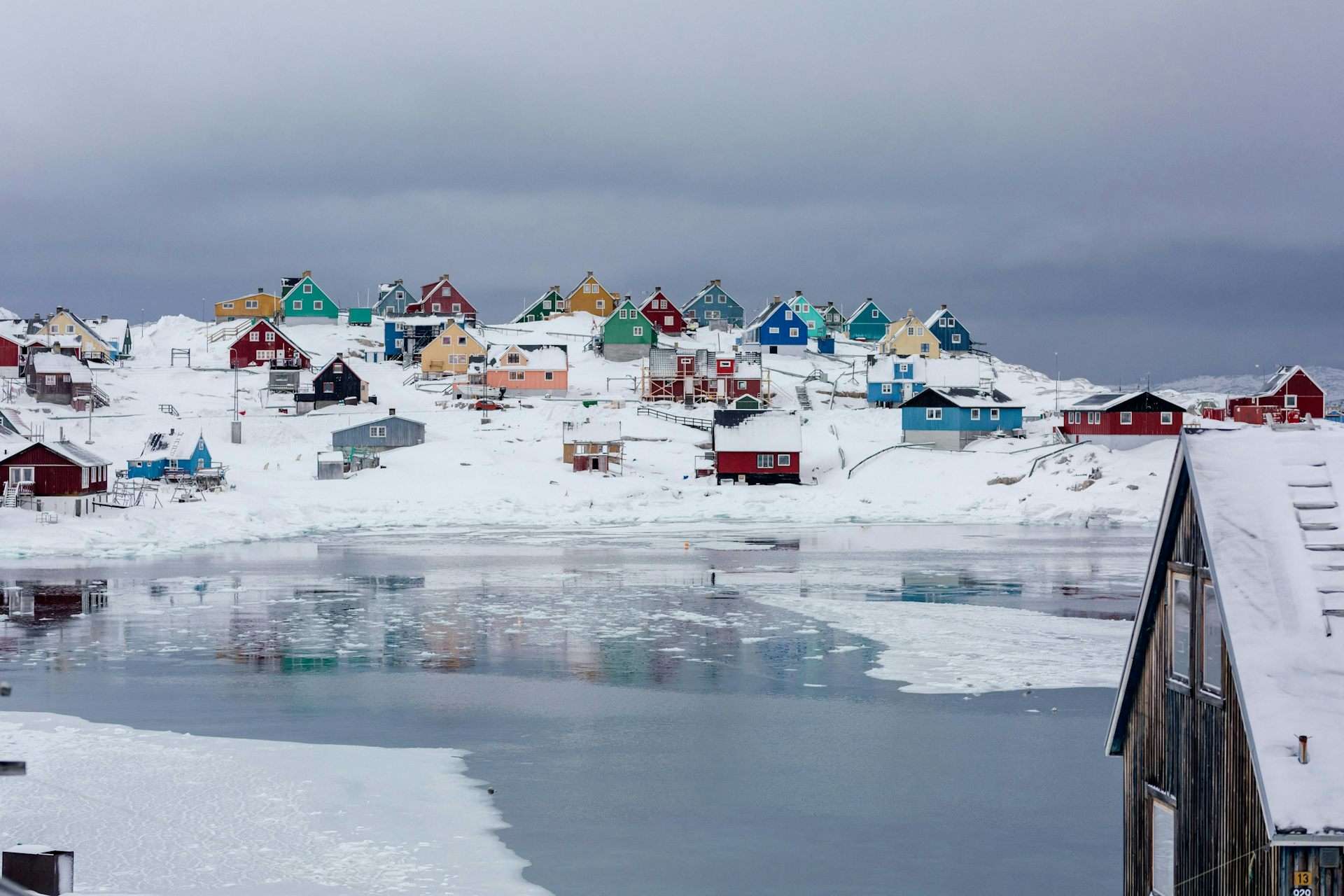
In January 2026, the Danish government authorised a classified military operation to rig Greenland’s primary infrastructure with explosives.
This move followed an unprecedented escalation in rhetoric from the United States regarding the forced annexation of the Arctic territory.
Documents recently brought to light reveal that the Danish military drafted contingency plans to destroy key runways to prevent American aircraft from landing.
The strategy was designed as a "scorched earth" defence to maintain sovereignty over the world's largest island.
According to military operations orders dated January 13, 2026, Denmark deployed elite units specifically trained in cold-weather demolition.
The mission was framed publicly as a routine NATO exercise, but the reality involved the preparation of high-grade explosives at strategic transport hubs.
This revelation has sent shockwaves through the diplomatic community and sparked fresh interest across alternative news sites.
The story highlights a desperate moment in European-American relations that remained largely obscured by mainstream headlines at the time.
The Blueprint for Strategic Sabotage
The Danish military’s operations order was a direct response to what Copenhagen perceived as a credible threat of military seizure.
Planners identified that the most effective way to stall a US incursions was to render the island's limited logistics network useless.
Soldiers from the Danish Frogman Corps and the Sirius Dog Sled Patrol were reportedly integrated into a multinational force for this purpose.
This force included contingents from Norway, Sweden, France, and Germany, signifying a unified European front against potential American expansionism.
The specific targets for demolition included the long runways at Kangerlussuaq and Pituffik, formerly known as Thule Air Base.
If American transport planes could not land, any ground invasion would be forced to rely on hazardous amphibious or parachute drops in sub-zero temperatures.
Medical units were also deployed alongside the demolition teams, carrying significant quantities of blood supplies in anticipation of active combat casualties.
The logistics of moving explosives into such a sensitive environment required extreme secrecy to avoid detection by US satellite surveillance.
Military analysts suggest that the deployment of Danish F-35 fighter jets was not for air superiority, but to provide a screen for these ground operations.
By January 15, the multinational force had established a "defensive perimeter" that the Danish government insisted was purely for training.
However, internal memos suggest the soldiers were operating under high-alert rules of engagement.
The presence of French naval vessels in the North Atlantic further complicated the maritime picture for US planners.
This coordinated effort remains one of the most significant untold stories of the current geopolitical era.
It demonstrates the lengths to which a medium-sized European power will go to protect its territorial integrity against a superpower ally.
Investigative journalism uk has played a vital role in piecing together the timeline of these events from leaked signals intelligence.
Geopolitical Escalation and the Maduro Catalyst
The catalyst for this sudden military posturing was not Greenland itself, but events occurring thousands of miles away in South America.
On January 3, 2026, US forces conducted a high-stakes raid in Venezuela to capture President Nicolás Maduro.
Following the success of this operation, the Trump administration appeared emboldened to settle other long-standing territorial interests.
The White House began issuing public statements claiming that Greenland was essential for "national security" due to supposed foreign influence.
The administration made unverified claims regarding a growing Russian and Chinese military presence on the island to justify a more aggressive stance.
Trump’s rhetoric shifted quickly from diplomatic proposals to buy the island to threats of economic and military consequences.
An AI-generated image posted by the US President showing a giant American flag planted in the Greenlandic ice went viral, further inflaming tensions.
By late January, the US announced a 10% tariff on Danish goods, set to rise to 25% by June if Greenland was not ceded.
This economic pressure was viewed by Copenhagen as an act of hybrid warfare.
The Danish Prime Minister responded by stating that Greenland’s sovereignty was not negotiable and that "the era of buying nations is over."
The standoff created a rift within NATO that many feared would lead to a permanent dissolution of the alliance.
Independent news uk sources reported at the time that several European nations were quietly preparing their own contingency plans for a post-NATO world.
The US capture of Maduro served as a proof-of-concept for the administration's "New Monroe Doctrine," which Denmark feared would extend to the Arctic.
The pressure on Denmark was immense, involving both back-channel threats and public intimidation tactics.
Despite the threat of devastating tariffs, the Danish government held its ground, bolstered by the support of its Nordic neighbours.
Sovereignty and the New Arctic Reality
As of March 21, 2026, the immediate threat of a US military takeover of Greenland has significantly diminished.
The Trump administration’s focus appears to have shifted toward other domestic and international priorities, though the "Greenland question" remains on the periphery.
Denmark’s sovereignty over the territory remains uncompromised, but the events of January have forever changed the security landscape of the North.
The Arctic is no longer seen as a zone of low tension, but as a primary theatre for great power competition.
The secret plan to blow up the runways served its purpose as a deterrent, proving that the cost of occupation would be high.
Greenlandic officials have used this moment to demand greater autonomy and a larger say in their own security arrangements.
The local population was largely unaware of the explosives buried near their homes until the recent leaks surfaced.
This has led to a complex debate within Greenland about whether they are safer under Danish protection or as an independent state.
The environmental impact of such a military standoff in the fragile Arctic ecosystem is also a growing concern for climate activists.
The "shadow fleet" of tankers and the increased presence of naval assets continue to patrol the waters around the island.
This narrative is a prime example of the untold stories that define our modern age, where digital propaganda and military hardware intersect.
The reliance on investigative journalism uk to uncover these contingency plans highlights the importance of transparency in international affairs.
The Danish government has neither confirmed nor denied the specific details of the sabotage plan, citing ongoing security concerns.
However, the presence of multinational troops in the region remains at a higher level than before the crisis began.
The relationship between Washington and Copenhagen is currently described by diplomats as "functional but fractured."
The lesson of the Greenland sabotage is that even the oldest alliances have breaking points when sovereignty is threatened.
As the ice melts and new shipping lanes open, the strategic value of this territory will only continue to rise.
The world now watches to see if the softening of the US position is a permanent shift or merely a temporary lull in a long-term campaign.
For now, the runways remain intact, and the explosives have reportedly been removed to secure storage facilities.
But the memory of January 2026 serves as a reminder of how quickly the global order can be challenged by a single administrative shift.