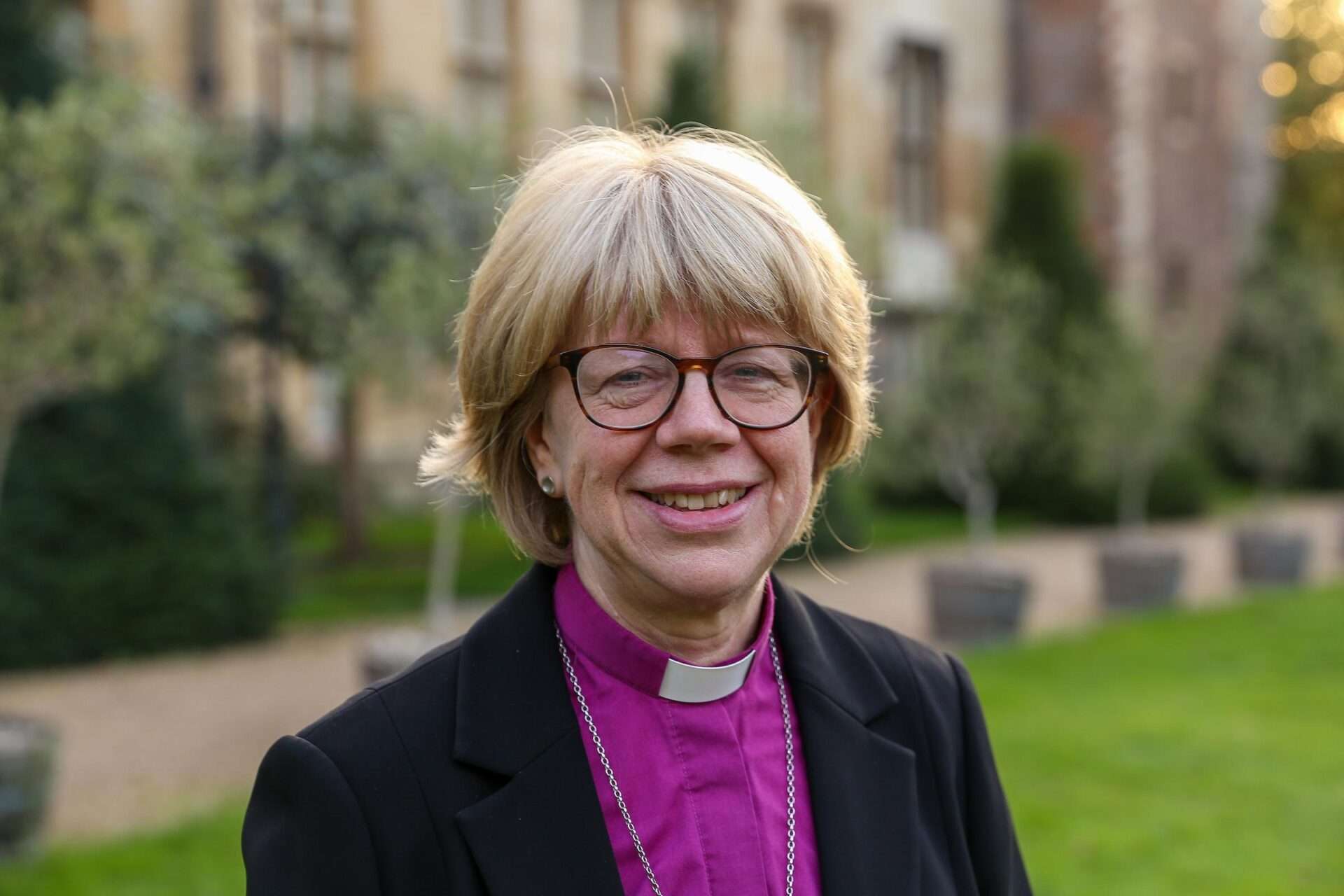
The doors of Canterbury Cathedral are set to open for an event that has not happened since the arrival of Saint Augustine in 597 AD. On 26 March 2026, Sarah Mullally will be formally installed as the 106th Archbishop of Canterbury.
It is the first time a woman will hold the title of spiritual leader for the global Anglican Communion, an organisation spanning roughly 85 million people across 165 countries.
Her appointment lands after a stretch of real upheaval for the Church of England. Mullally, 66, was confirmed in her new role during a legal ceremony at St Paul’s Cathedral on 28 January 2026, after her nomination by King Charles III in late 2025.
She succeeds Justin Welby, who stepped down in November 2024 following a report into the Church’s handling of historical abuse cases and growing rows over the blessing of same-sex couples.
Sarah Mullally’s ‘unimaginable’ path to the throne
Mullally’s route to Canterbury is famously not the classic one. Before she was a bishop, she was a nurse, with more than two decades in the National Health Service.
She went on to become the youngest-ever Chief Nursing Officer for England, advising government on health policy, before being made a Dame Commander of the Order of the British Empire for services to nursing and midwifery.
Her move into ministry began in 2001, when she was ordained as a deacon. By 2002, she was an Anglican priest, initially juggling parish life alongside senior NHS responsibilities.
In 2005, she left her government role to focus fully on the Church. People who have worked with her often point to that frontline, practical background as the reason she comes across as calm under pressure and focused on people, not internal politics.
She later served as the Bishop of Crediton and then became the Bishop of London in 2018, already making history as the first woman to lead the Diocese of London.
In her first remarks after her confirmation as Archbishop, she leaned on her medical experience, describing the Church as needing time for healing and recovery, and saying it was "in need of a period of convalescence".
Breaking 14 centuries of tradition in one afternoon
The scale of the moment is hard to overstate. Since the sixth century, every Archbishop of Canterbury has been a man.
The role is more than senior church management. The Archbishop is the symbolic head of the Anglican world and a national figure who appears at major state occasions.
This installation also lands at the end of a long, often tense, argument over women’s leadership in the Church of England. Women were first ordained as priests in 1994, and the General Synod later voted to allow women to become bishops in 2014.
Mullally has spoken openly about the resistance she has faced in a male-dominated hierarchy, including experiences of misogyny. She has said she wants a culture where people can flourish regardless of gender or background.
Her elevation will also be felt in Parliament. As Archbishop of Canterbury, she will sit in the House of Lords, placing a woman at the heart of one of Britain’s oldest institutions in a way that would have been unthinkable for most of its 1,400-year history.
What a female Archbishop means for a modern Britain
At home, the symbolism is immediate: a national church trying to look and sound like the country it serves.
For many Anglicans, and plenty of people who don’t go to church at all, this is a big cultural marker — a sign that the Church of England is finally catching up with modern expectations on equality and representation.
But it is not just a UK story. The Archbishop of Canterbury is the "focus of unity" for a global Communion already under strain, and Mullally’s appointment is being watched closely by churches around the world.
Some conservative leaders, particularly in parts of Africa and Asia, have criticised the direction of the Church of England in recent years, including debates linked to the "Living in Love and Faith" process and the move to allow blessings for same-sex couples in certain circumstances.
Closer to home, safeguarding remains the issue that will define trust. After Welby’s departure, Mullally has made clear that listening to survivors of abuse and strengthening safeguarding systems will be central from day one.
The installation in Canterbury is a historic first — and a celebration — but it also marks the start of a tough, high-stakes chapter for the Church in Britain and beyond.