



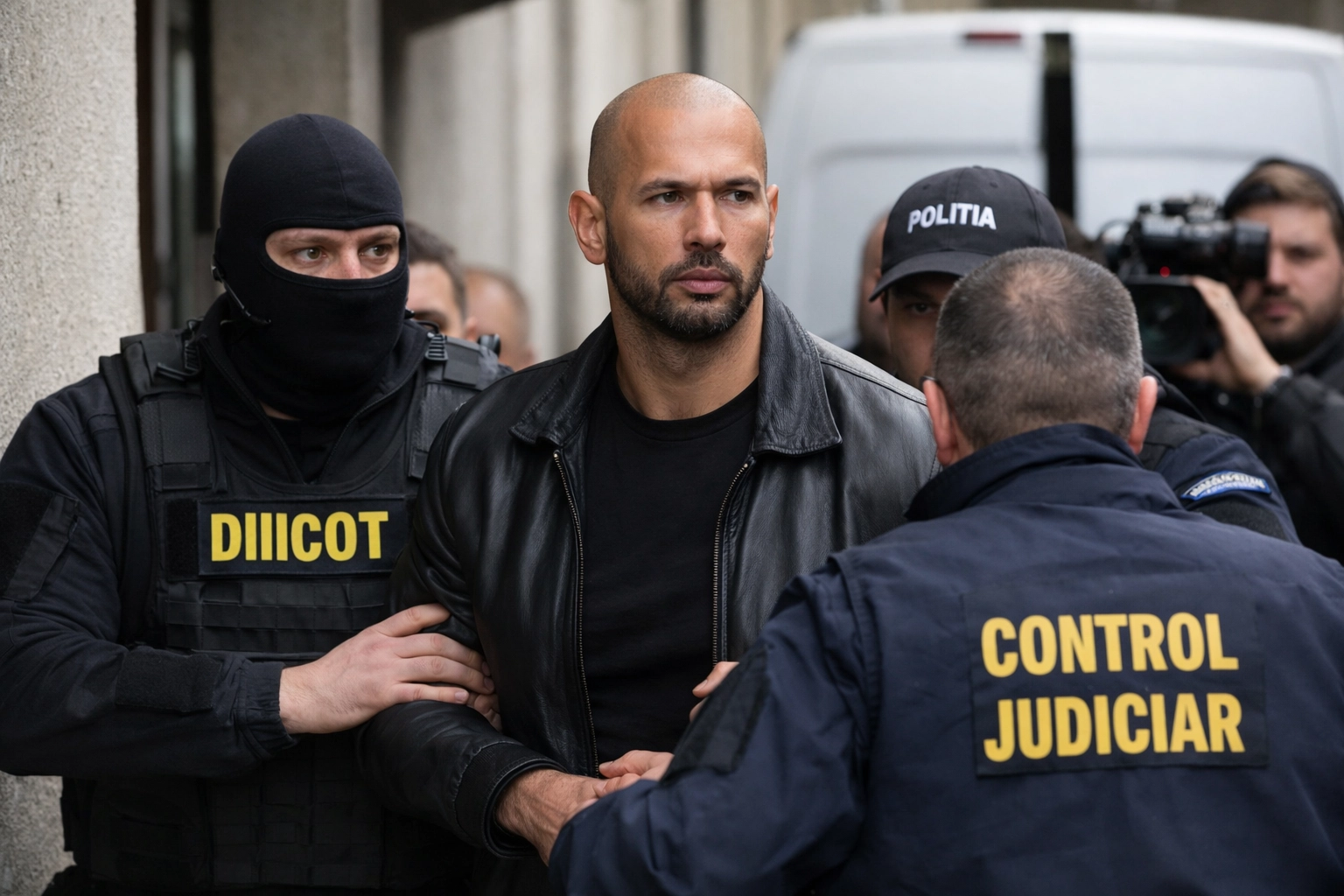
The high-profile legal battle surrounding Andrew Tate has taken a significant turn as the UK’s police watchdog, the Independent Office for Police Conduct (IOPC), moves to investigate the handling of historic sexual abuse allegations. This development shifts the spotlight from the controversial influencer’s current legal woes in Romania back to the British soil where the initial complaints were made nearly a decade ago. Hertfordshire Police are now under the microscope for how they managed reports involving three women back in 2015, a case that remained open for four years before being shelved in 2019. This internal scrutiny comes at a time when public confidence in police handling of violence against women and girls is already a point of national debate.
The core of the investigation lies in whether the police did enough when the allegations first surfaced. While Tate has dominated headlines for his "ultra-masculine" rhetoric and his subsequent detention in Eastern Europe, these UK-based allegations predate his global infamy. The IOPC’s involvement suggests that there are serious questions to answer regarding the diligence and professionalism of the initial four-year investigation. For the women involved, this represents a long-overdue accounting of a process they feel failed them at every turn, leaving them to seek justice through civil courts when the criminal system appeared to stall.
The Investigation Into the Investigators
The Independent Office for Police Conduct does not step in for minor procedural errors. Their involvement usually indicates a potential breach of professional standards that warrants an independent look outside of the force’s own internal affairs department. In this instance, the investigation is focusing on the actions of specific individuals within Hertfordshire Police. A former detective constable is currently facing potential gross misconduct proceedings. The allegations suggest a failure to properly investigate the claims brought forward by the three women in 2015. Gross misconduct is the most serious tier of disciplinary charge in the British police system, often leading to dismissal without notice and a permanent ban from serving in any police force again.
Furthermore, the watchdog is probing the conduct of two former detective sergeants who were responsible for supervising the investigation during its four-year lifespan. The scrutiny focuses on whether the oversight was sufficient and whether the supervisors failed to identify or rectify gaps in the evidence-gathering process. Hertfordshire Police made a voluntary referral to the IOPC in December 2023, a move often used by forces when they recognise that a high-profile case has the potential to damage public trust. By referring themselves, the force acknowledges that the optics of the 2019 case closure are problematic, especially given the gravity of the accusations and the eventual rise of the suspect to international notoriety.
The investigation is set to pull apart the timeline from 2015 to 2019. During these four years, the case seemingly moved through the system at a glacial pace. The IOPC will be looking for "investigative stagnation": periods where no active lines of enquiry were followed and no significant updates were provided to the victims. In the context of sexual assault allegations, delays are often cited as a primary reason why victims drop out of the process, and the watchdog will be keen to determine if the police's handling of the case contributed to its eventual collapse in 2019.
A Decade of Allegations and Legal Hurdles
To understand the weight of the current IOPC probe, one has to look back at the specific nature of the 2015 allegations. Three women originally came forward to Hertfordshire Police, and their accounts are harrowing. According to court documents later filed in the High Court, the allegations include extreme physical violence and coercive control. One woman alleged that Tate held a gun to her face and made explicit threats. Another claimant alleged she was assaulted with a belt, while a third stated she was grabbed by the throat on multiple occasions. These are not minor accusations; they represent a pattern of alleged predatory and violent behaviour that the police were tasked with investigating long before the "King of Toxic Masculinity" became a household name.
Despite the severity of these claims, the Crown Prosecution Service (CPS) decided in September 2025 not to authorise criminal charges, citing a lack of a "realistic prospect of conviction." This is a common hurdle in historic sexual assault cases, but in this instance, it has triggered the "Victim's Right to Review" (VRR) process. The VRR allows victims to challenge a CPS decision not to prosecute, forcing a different prosecutor to look at the evidence with fresh eyes. This legal mechanism is the last line of defence for victims who feel the system has reached the wrong conclusion. The fact that this review is ongoing, alongside the IOPC investigation, creates a dual-track pressure on the British legal establishment to justify why no criminal trial has yet taken place.
Parallel to the criminal review is a civil claim. The three original women, joined by a fourth, have taken their case to the High Court. Civil trials have a lower burden of proof than criminal trials: "balance of probabilities" versus "beyond reasonable doubt": and this trial is currently scheduled for June 2026. The claimants’ legal representatives have expressed a sense of relief that the IOPC is finally investigating the police’s role. They argue that the evidence was always there, but it was never "fully and fairly considered." This civil route is often the only way for survivors to get their day in court when the state’s criminal apparatus fails to cross the finish line.
The Global Legal Web and What Comes Next
The British investigation is just one piece of a much larger, international legal puzzle. While the IOPC and the High Court deal with the 2015 UK allegations, Andrew Tate and his brother Tristan remain embroiled in a massive human trafficking and rape case in Romania. The Romanian authorities have accused them of forming an organised criminal group to exploit women for digital content. Earlier this year, a UK court even approved a European arrest warrant for the brothers, meaning that once the Romanian legal proceedings are finished, they could be extradited back to the UK to face yet more allegations of rape and human trafficking involving a different set of victims from 2012 to 2015.
This creates a complicated legal "waiting room." The UK extradition is currently stayed, or paused, until the Romanian trial concludes. This could take years, given the complexity of the evidence and the potential for multiple appeals. In the meantime, the IOPC’s findings regarding Hertfordshire Police could have a massive impact. If the watchdog finds that the 2015 investigation was botched, it provides significant ammunition for the women in their High Court civil case. It also raises questions about whether a more competent investigation a decade ago might have prevented the alleged subsequent victims from being harmed.
The story of the Andrew Tate probe is no longer just about the man himself; it is a story about the failures of institutions. It highlights the friction between victims' accounts and the procedural hurdles of the police and the CPS. As the IOPC continues its work, the focus remains on the "gross misconduct" of those who were supposed to protect and investigate. Whether or not Tate ever sees the inside of a British courtroom for the 2015 allegations, the officers who handled his file will likely have to answer for their actions far sooner. The outcome of the 2026 High Court trial and the ongoing CPS review will eventually determine if the UK legal system can provide a definitive answer to the allegations that started in a small Hertfordshire town nearly ten years ago.