It has been several years since the world watched in shock as the conflict in Ukraine escalated. In response, the United Kingdom, alongside its Western allies, unleashed a wave of sanctions designed to cripple the Russian economy and starve its military of the resources needed to continue the fight. On paper, the strategy seemed clear: stop the flow of money, stop the flow of tech, and eventually, the conflict must cease. However, as any economist will tell you, global trade is a bit like water: if you block its path in one direction, it usually finds a crack or a different route to keep moving.
Recent data analysis and investigative work from independent news uk outlets have begun to reveal some uncomfortable truths. While direct trade between the UK and Russia has fallen off a cliff, dropping by over 77% since the early days of the war, a new pattern of "ghost trade" has emerged. We are seeing a massive spike in British goods being shipped to Russia’s neighbours, particularly in Central Asia. The question everyone is asking now is whether these exports are simply being rerouted to bypass the restrictions, effectively allowing the Russia war machine to keep ticking over with British-made components and fuel revenue.
Uncovering these untold stories is vital for understanding how the global economy actually functions under pressure. It isn’t just about luxury cars or high-end electronics; it’s about industrial equipment, drone components, and the complex world of oil refining. When we look closely at the numbers, it becomes clear that sanctions loopholes are being exploited on a massive scale, often involving third-party countries that have become convenient transit hubs for goods that are officially banned from entering Russian territory.
The Surprising Rise of the Central Asian Middleman
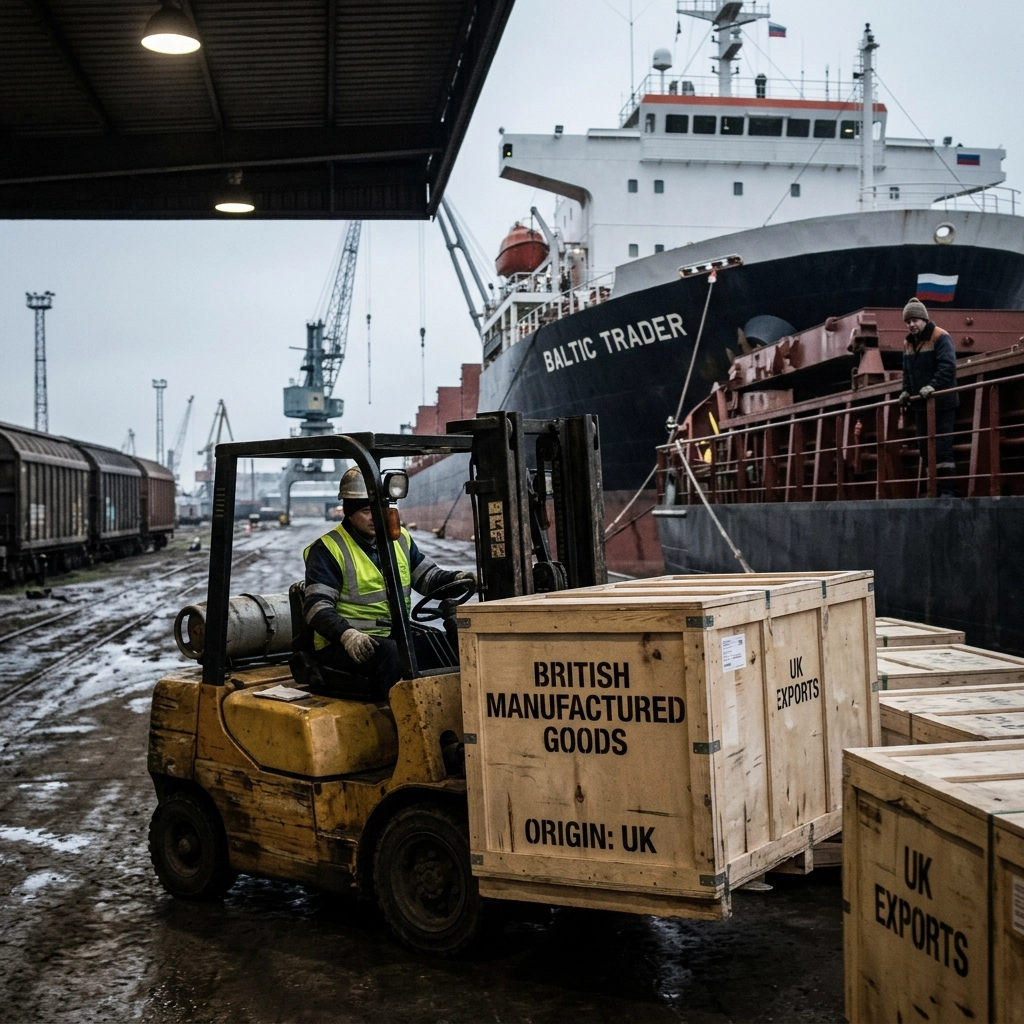
If you look at the trade balance sheets for countries like Kyrgyzstan and Uzbekistan over the last two years, you might think they were undergoing an unprecedented industrial revolution. British exports to these nations have skyrocketed in a way that seems almost impossible to explain through domestic demand alone. For example, data shows that exports of certain types of machinery and electronic components to Kyrgyzstan have increased by thousands of percentage points. While Kyrgyzstan is a beautiful country with its own growing economy, it is highly unlikely that its local market suddenly developed a thirst for millions of pounds worth of specialised British industrial equipment overnight.
The reality, as pointed out by various data analysts, is that these countries are acting as a "back door." Because they are members of the Eurasian Customs Union, goods can often move from Kyrgyzstan or Kazakhstan into Russia with very few additional checks. This creates a significant challenge for British customs and businesses. A UK company might sell parts to a legitimate-looking firm in Bishkek, thinking they are following the rules, only for those parts to be loaded onto a truck and driven straight across the border to a Russian factory.
These are the types of untold stories that often get lost in the broader headlines about frontline movements. The Russia war machine doesn't just need ammunition; it needs spare parts for its manufacturing lines, sensors for its equipment, and specialised lubricants for its heavy machinery. By shipping these "dual-use" items to Central Asian intermediaries, some British goods are inadvertently finding their way into the very supply chains the UK government is trying to dismantle. It highlights a massive enforcement gap in the current sanctions regime, where the focus has been on direct trade while the more convoluted indirect routes remain relatively porous.
The Refined Oil Loophole and the Shadow Fleet
Perhaps even more concerning than the movement of physical goods is the flow of money through the energy sector. While the UK has banned the direct import of Russian oil and gas, the "refining loophole" has become a major point of contention. This specific gap in the rules allows Russian crude oil to be sold to a third country: like India, Turkey, or China: where it is refined into products like jet fuel or diesel. Once the oil has been substantially transformed into a new product in a different country, it is legally no longer considered "Russian."
Analysis has shown that the UK has imported hundreds of millions of pounds worth of jet fuel refined from Russian crude. Since the start of the conflict, it is estimated that roughly £444 million worth of this fuel has made its way into British tanks. The problem here is that the initial sale of the crude oil still generates massive tax revenue for the Kremlin. Experts estimate that these specific UK imports have contributed over £140 million to the Russian state coffers via taxes. That is a staggering amount of money, and when you compare it to the humanitarian aid the UK sends to Ukraine, it starts to look like we are effectively subsidising both sides of the conflict.
Furthermore, there is the issue of the "shadow fleet." Russia has been using a fleet of older, often uninsured or under-insured tankers to move its oil around the world, frequently ignoring the $60-per-barrel price cap set by the G7. Interestingly, British companies have historically been the world leaders in marine insurance. While the government has put strict rules in place, some UK-insured tankers have still been found transporting Russian oil at prices that exceed the cap. This combination of the refining loophole and the shadow fleet ensures that the Russia war machine remains well-funded, despite the best efforts of Western diplomats to turn off the taps. It is a classic example of how sanctions loopholes can undermine even the most robust-looking political stances.
Tightening the Screws on the Russia War Machine
To be fair to the UK government, they aren't just sitting back and watching this happen. Recognising that the current system has more holes than a piece of Swiss cheese, there has been a recent push to tighten the screws. Prime Minister Keir Starmer and the current administration have recently authorised more aggressive actions to tackle the shadow fleet. This includes the potential for military and coastguard interventions to board and detain vessels suspected of flouting international sanctions. It’s a bold move that signals a shift from purely economic pressure to more direct enforcement.
In addition to tackling the ships themselves, the UK has recently announced its largest sanctions package in several years. This package specifically targets the logistical heart of the Russian energy industry, including firms like Transneft and various entities involved in the Liquid Natural Gas (LNG) trade. The goal is to make it so difficult and expensive for Russia to move its resources that the "loophole" trade becomes less and less profitable. By targeting the facilitators: the insurers, the shipping agents, and the middle-market traders: the UK hopes to collapse the infrastructure that allows the ghost trade to flourish.
However, as independent news uk reports continue to show, the cat-and-mouse game is far from over. For every middleman that gets sanctioned, another one pops up in a different jurisdiction. The complexity of modern supply chains means that a British component can change hands five times before it reaches its final destination, making it incredibly difficult for manufacturers to track their products once they leave the warehouse. Closing these sanctions loopholes completely will require not just British effort, but a coordinated global strategy that includes much tighter cooperation with countries in Central Asia and the Middle East.
Ultimately, the goal is to ensure that the UK’s economic policy aligns with its moral and political commitments. If we are to truly support Ukraine, the flow of British technology and the indirect funding of Russian energy must be addressed with more than just paperwork. It requires a fundamental shift in how we monitor international trade and a willingness to confront the reality that as long as there is a profit to be made, the Russia war machine will look for any way to keep its gears turning. The journey from a British factory to a Russian front line is a long and winding one, but by shining a light on these hidden paths, we take the first step toward closing them for good.
The situation remains a complex puzzle for policymakers. While the direct trade figures suggest the UK has successfully decoupled from the Russian economy, the indirect data tells a more nuanced story. By continuing to investigate these untold stories, we can hold the necessary institutions accountable and ensure that "independent news uk" serves as a vital tool for transparency. Only by identifying where the system is failing can we hope to build a more effective framework for the future, one that ensures British exports are never again used to fuel a conflict that the nation so vehemently opposes.