



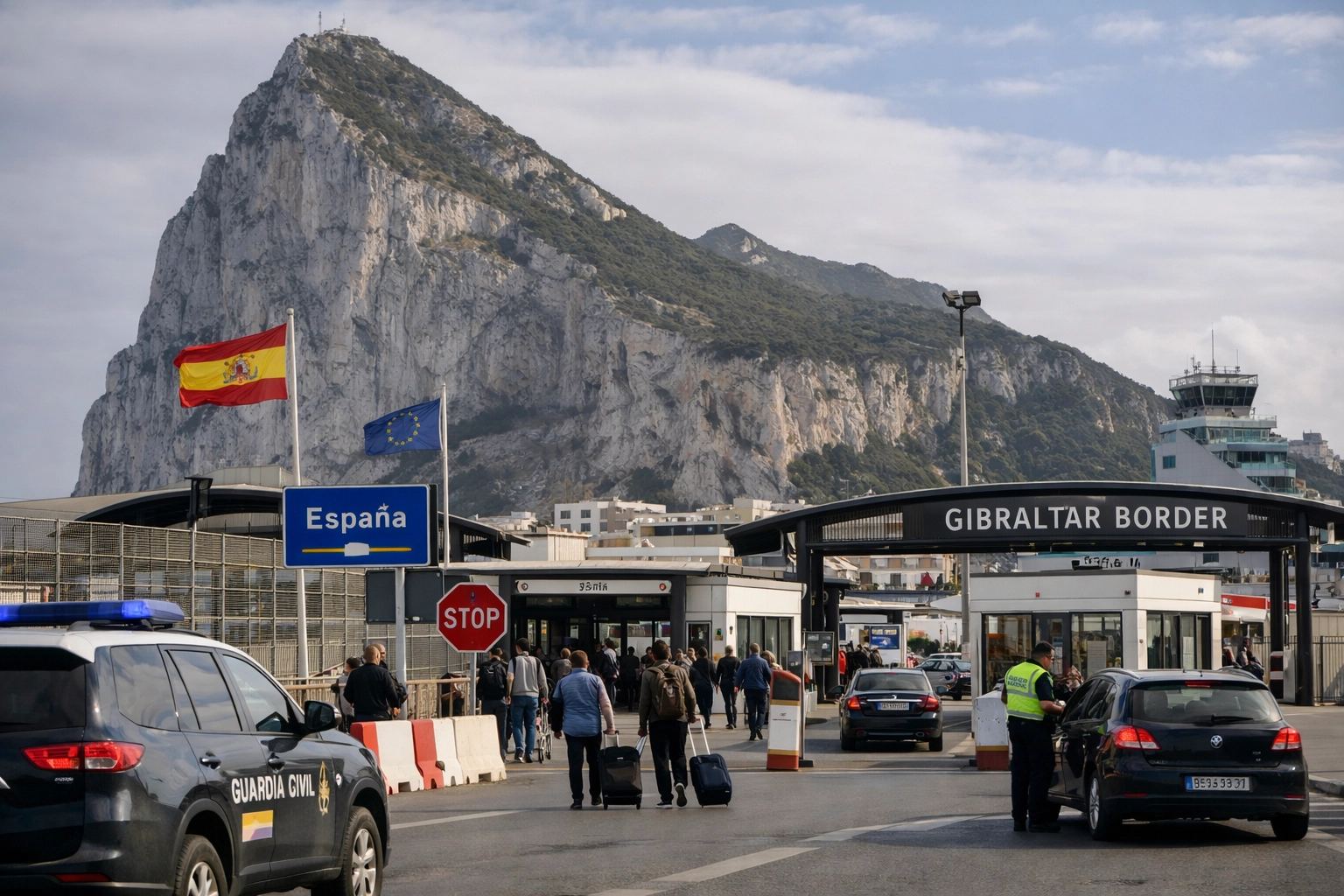
The landscape of the Iberian Peninsula is preparing for its most significant transformation since the UK’s departure from the European Union. On 10 April 2026, the physical barriers that have long defined the narrow 1.2-kilometre border between Gibraltar and Spain are scheduled to be dismantled. This shift follows a landmark treaty published on 26 February 2026, marking the end of years of diplomatic deadlock and economic uncertainty for the residents of the British Overseas Territory.
The agreement represents a bespoke solution to a complex geopolitical puzzle. While Gibraltar remains firmly under British sovereignty, it will now operate under a tailored Schengen arrangement. This ensures the fluid movement of people and goods across a border that has, at various points in history, been a flashpoint for international tension. For the 34,000 residents of "The Rock" and the thousands of Spanish workers who cross the frontier daily, the change is not merely political; it is a fundamental shift in daily life.
As the implementation date approaches, authorities in London, Madrid, and Gibraltar are racing to finalise the infrastructure required to support this new reality. The deal aims to eliminate the notorious "frontier queues" that have seen travellers waiting for hours in the Mediterranean sun. By moving immigration checks away from the land border and into the territory’s transport hubs, the UK and the EU are betting on a future of digital security and integrated trade.
A New Blueprint for the Frontier
The core of the new agreement is the total removal of physical barriers and routine checks at the land border. For the first time in modern history, the gate that separates Gibraltar from the Spanish town of La Línea de la Concepción will essentially cease to function as a checkpoint. Instead, the focus of border management will shift to Gibraltar’s airport and port. This "dual control" system is designed to maintain the integrity of the Schengen Area without requiring Gibraltar to officially join the bloc.
Under this arrangement, Gibraltar will manage its own immigration and policing, while Spanish officials: supported by the EU’s border agency, Frontex: will ensure Schengen security protocols are met. This model draws inspiration from the juxtaposed controls seen at London’s St Pancras International station or the Eurotunnel terminal in Folkestone. It allows for a layered approach to security where passengers arriving by air or sea are screened against both UK and EU databases simultaneously.
The technical implementation involves the installation of automated border management systems and enhanced biometric scanners. These systems are designed to process travellers rapidly, ensuring that the "fluid movement" promised by negotiators becomes a reality. The British military presence on the Rock, a key point of contention during negotiations, remains strictly under UK control. The treaty includes specific safeguards to ensure that military operations and personnel are not hindered by the new Schengen rules, preserving Gibraltar’s strategic role as a gateway to the Mediterranean.
Law enforcement cooperation is also set for an overhaul. The agreement mandates a strengthened partnership between the Royal Gibraltar Police and Spanish authorities. This includes real-time data sharing and joint efforts to combat cross-border crime. By removing the physical bottleneck of the land border, officials are relying on intelligence-led policing and high-tech surveillance to maintain security. The removal of the fence is not just a symbolic gesture of friendship; it is a transition to a 21st-century border that prioritises flow over friction.
Passport-Free Flow and Resident Rights
For the residents of Gibraltar, the impact of this deal is profound. Since Brexit, UK nationals living on the Rock have faced the same 90-day limitations and "wet-stamping" requirements as any other British citizen travelling to the EU. The new treaty changes the calculus entirely. Gibraltar residents will now be granted visa-free travel throughout the Schengen Area for up to 90 days in any 180-day period. Crucially, they will be exempt from the European Travel Information and Authorisation System (ETIAS) and the physical stamping of passports.
This unique status creates a mobility privilege that is currently denied to UK nationals residing in mainland Britain. It recognises the intrinsic link between the community in Gibraltar and the surrounding Spanish region of Campo de Gibraltar. For the 15,000 cross-border workers who live in Spain but work in Gibraltar’s finance, gaming, and tourism sectors, the end of border checks means more time at home and less time in transit. This "shared prosperity" zone has been a primary objective for the Gibraltarian government, which sought to protect the economy from the isolationist risks of a hard border.
The mobility benefits extend beyond just the residents. The treaty is expected to provide a significant boost to Gibraltar’s tourism industry. Visitors arriving from the EU will find it easier to include the Rock in their itineraries, while those arriving at Gibraltar Airport will have streamlined access to the Costa del Sol. This integration is expected to turn the airport into a regional hub, potentially attracting more international carriers and increasing the territory’s connectivity.
However, the transition is not without its challenges. The new rules require all goods sold within Gibraltar to be EU-compliant by the implementation date. While a three-month transition period has been established for existing inventory, businesses are already working to align their supply chains with EU standards. This alignment is the price of admission for a bespoke customs union that allows Gibraltarian goods to circulate freely within the EU market. For the first time, local businesses will have direct, frictionless access to over 400 million consumers, removing the customs barriers that have historically hampered local exports.
Economic Synergy and Security Stakes
The creation of a bespoke customs union between the UK and the EU, specifically for Gibraltar, is one of the treaty's most innovative features. It allows the territory to enjoy the benefits of the EU Customs Territory without officially being a member. This arrangement is designed to foster economic synergy, encouraging investment in a region that has often felt the sting of political volatility. By harmonising customs rules, the UK and Spain are attempting to create a stable environment for long-term growth.
This economic integration comes at a time when Europe is grappling with broader migrant crisis challenges. While the Gibraltar deal focuses on fluid movement, it does so against a backdrop of increasing pressure on the EU's external borders. The UK and Spain have had to balance the need for an open frontier in Gibraltar with the necessity of maintaining rigorous security against illegal migration and smuggling. The shifted checks at the airport and port are intended to act as a robust filter, ensuring that the removal of the land border does not create a "backdoor" into the Schengen Area.
The migrant crisis remains a significant political pressure point beyond the UK’s borders, and the Gibraltar arrangement is being watched closely by other territories with unique border situations. The success of the "Frontex-supported" model could provide a template for other regions seeking to balance sovereignty with regional integration. For now, the focus remains on the logistical reality of 10 April. Spanish authorities are already prepping infrastructure on their side of the line, while the Gibraltar government is conducting a public information campaign to ensure every citizen understands the new requirements.
As the legal review and parliamentary ratifications conclude in London and Brussels, the air in Gibraltar is one of cautious optimism. The territory is moving into an era where its British identity is secured by treaty, yet its European lifestyle is facilitated by modern technology. The "Beyond the Border" deal is more than a trade agreement; it is a recognition that in a globalised world, the most effective borders are often the ones you cannot see. The coming weeks will test the resilience of this new system, but for the people of the Rock, the prospect of a borderless walk into Spain is a milestone decades in the making.