British maritime authorities have been granted significant new powers to board and inspect sanctioned Russian 'shadow fleet' vessels operating within UK territorial waters. This tactical shift, authorised by the government in London, represents a major escalation in the effort to disrupt Moscow’s primary economic lifeline: the clandestine export of crude oil and petroleum products. For months, hundreds of ageing tankers have bypassed international sanctions by operating under opaque ownership structures and without Western insurance. The new directive allows the Royal Navy and the UK Border Force to physically intervene when these vessels enter the UK’s 12-nautical-mile limit, marking a transition from passive monitoring to active enforcement.
The "shadow fleet" consists of an estimated 600 to 800 vessels, many of which are more than 15 years old and would traditionally be headed for the scrap yard. Instead, they have been repurposed to transport Russian oil to global markets, often employing deceptive practices to avoid detection. These tactics include turning off Automatic Identification Systems (AIS), falsifying cargo documents, and conducting risky ship-to-ship (STS) transfers in open water. Until now, enforcement had largely relied on financial sanctions and port bans. However, the increasing frequency of these vessels traversing the English Channel: the world’s busiest shipping lane: has prompted the UK government to take more direct physical action to safeguard its waters and uphold international law.
The decision to authorise boarding operations comes amid growing intelligence that shadow fleet vessels are becoming increasingly emboldened. Recent reports suggest that some tankers have been operating with expired safety certificates and under the flags of nations with limited maritime oversight. By physically boarding these ships, UK officials can verify the identity of the crew, inspect the condition of the vessel, and confirm whether the cargo complies with the G7 price cap and existing sanction regimes. This move is expected to serve as a powerful deterrent to shipowners and operators who have previously operated with a sense of impunity in European waters.
The tactical shift in maritime enforcement
The authorisation for UK forces to board shadow fleet vessels signifies a departure from the traditional maritime policy of "innocent passage." Under international maritime law, ships are generally permitted to transit through a coastal state’s territorial waters as long as they do not prejudice the peace, good order, or security of that state. However, the UK government now argues that the inherent risks posed by the shadow fleet: ranging from environmental negligence to the financing of illegal warfare: justify more intrusive inspections. The Royal Navy, equipped with specialized boarding teams, will now play a primary role in identifying high-risk vessels for inspection based on real-time intelligence and historical movement data.
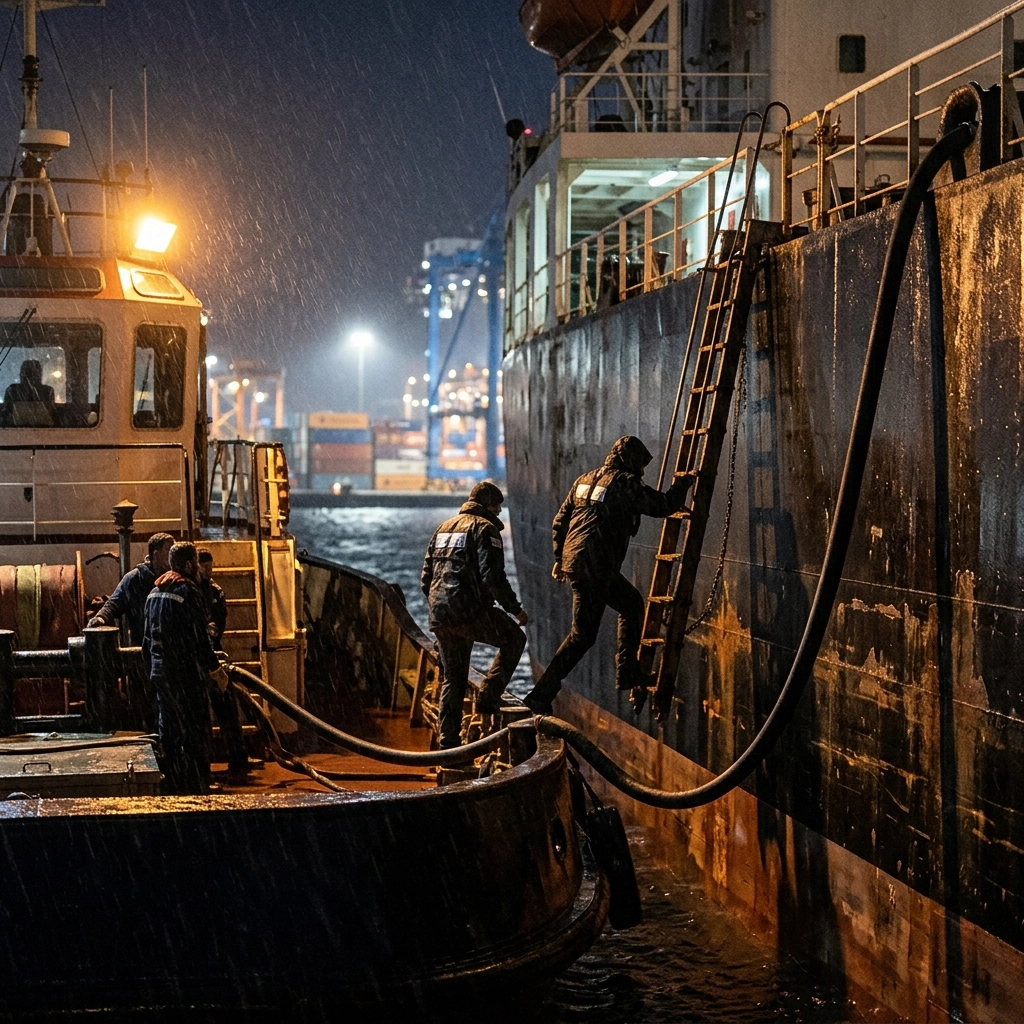
Tracking these "dark ships" has become a complex technological challenge. Many vessels in the shadow fleet engage in "spoofing," a practice where they manipulate their AIS signals to report a false location. In some instances, a tanker might appear to be moored in the Mediterranean while it is actually loading oil at a Russian terminal in the Baltic Sea. UK maritime surveillance assets, including P-8A Poseidon patrol aircraft and advanced satellite imagery, are being utilised to cross-reference AIS data with physical sightings. When a discrepancy is noted, or if a vessel is identified as being on the sanctioned list, boarding teams can be deployed via fast-response craft or helicopters to conduct a comprehensive audit of the ship’s logs and safety documentation.
The operational focus is not solely on the cargo but also on the legitimacy of the vessel’s insurance. A cornerstone of the G7 sanctions is the requirement for tankers to have Protection and Indemnity (P&I) insurance from reputable Western providers if they wish to trade above the price cap. Shadow fleet vessels almost exclusively use non-Western insurance or carry no insurance at all. If a vessel is found to be uninsured or under-insured while carrying millions of barrels of oil, it represents a direct threat to the UK’s economic and environmental interests. Boarding operations allow officials to ascertain the validity of these documents firsthand, rather than relying on digital records that can be easily forged or manipulated by shell companies based in offshore jurisdictions.
Environmental and national security implications
The primary driver behind the boarding directive is the catastrophic environmental risk posed by the shadow fleet. Many of these tankers are "substandard" vessels that have bypassed rigorous safety inspections for years. Because they operate outside the mainstream maritime industry, they do not undergo the regular dry-docking and hull integrity checks required by major registries. The English Channel and the North Sea are environmentally sensitive areas with complex tidal patterns and high traffic density. A mechanical failure or a collision involving a shadow fleet tanker could result in a massive oil spill, dwarfing previous disasters like the Torrey Canyon or the Braer.
The lack of valid insurance means that in the event of a spill, the UK taxpayer would likely be left to foot the multi-billion-pound cleanup bill. Western insurers are part of a global "pooling" system that ensures funds are available for environmental remediation; the shadow fleet operates entirely outside this safety net. By boarding these ships, UK authorities can assess the physical state of the engines, steering gear, and hull. If a vessel is deemed "unseaworthy," the UK has the power under the Merchant Shipping Act to detain the ship in port until repairs are made or the threat is neutralized. This preventative approach is seen as the only viable way to mitigate a "ticking time bomb" scenario in British waters.
Beyond the environmental concerns, there are significant national security implications associated with the shadow fleet. Intelligence agencies have expressed concern that these vessels could be used for dual-purpose missions, including underwater surveillance or the transport of prohibited technologies. The opaque ownership of the fleet, which often involves a web of shell companies in Dubai, Hong Kong, and the Seychelles, makes it difficult to determine who is ultimately in control of the vessels. Boarding operations allow for the verification of crew manifests and the inspection of communication equipment, ensuring that these tankers are not being used as platforms for hybrid warfare or clandestine intelligence gathering while transiting close to UK critical national infrastructure, such as subsea cables and wind farms.
The broader global response and legal hurdles
The UK’s move to board sanctioned ships is part of a broader international effort to close the loopholes that have allowed the shadow fleet to thrive. The International Maritime Organization (IMO) recently passed a resolution urging member states to take more decisive action against "dark shipping" practices. This includes encouraging coastal states to increase inspections and share intelligence on vessel movements. While the UK is one of the first nations to publicly authorise boarding for sanctions enforcement, other European nations are reportedly considering similar measures as the volume of Russian oil passing through the Baltic and Mediterranean seas continues to rise despite Western pressure.
However, the legal framework for such operations remains complex. While the UK has clear jurisdiction within its 12-mile territorial limit, the shadow fleet often operates in the "Exclusive Economic Zone" (EEZ) or on the high seas, where boarding rights are much more restricted. Under the United Nations Convention on the Law of the Sea (UNCLOS), a state generally only has the right to board a foreign-flagged vessel on the high seas if there is a suspicion of piracy, slave trading, or unauthorized broadcasting. To circumvent these limitations, the UK and its allies are increasingly using "port state control" measures and sanctioning the vessels themselves, which effectively strips them of their legal protection and makes them subject to seizure or inspection the moment they enter sovereign waters.
The ongoing battle against the shadow fleet is a game of cat-and-mouse that is expected to intensify throughout 2026. As the UK ramps up physical inspections, Moscow and its intermediaries are likely to develop even more sophisticated methods of evasion, such as using "feeder" ships to move oil to larger tankers in international waters beyond the reach of the Royal Navy. Nevertheless, the authorisation to board these vessels represents a firm statement of intent. It signals that the era of the shadow fleet operating with impunity in the English Channel is coming to an end, as the UK prioritises environmental safety and the integrity of international sanctions over the traditional norms of maritime transit.