



A group of teenagers in Cornwall has launched a pioneering autonomous project to remove plastic waste from the Atlantic Ocean using a custom-built drone. The collective, known as the Porthtowan Pioneers, has developed an unmanned surface vessel named 'Gulp' designed to patrol the shoreline and intercept microplastics before they reach deeper waters. This initiative comes at a time when the British coastline faces increasing pressure from marine debris, positioning the project as a significant entry in independent news uk and one of the year's most technical human interest stories.
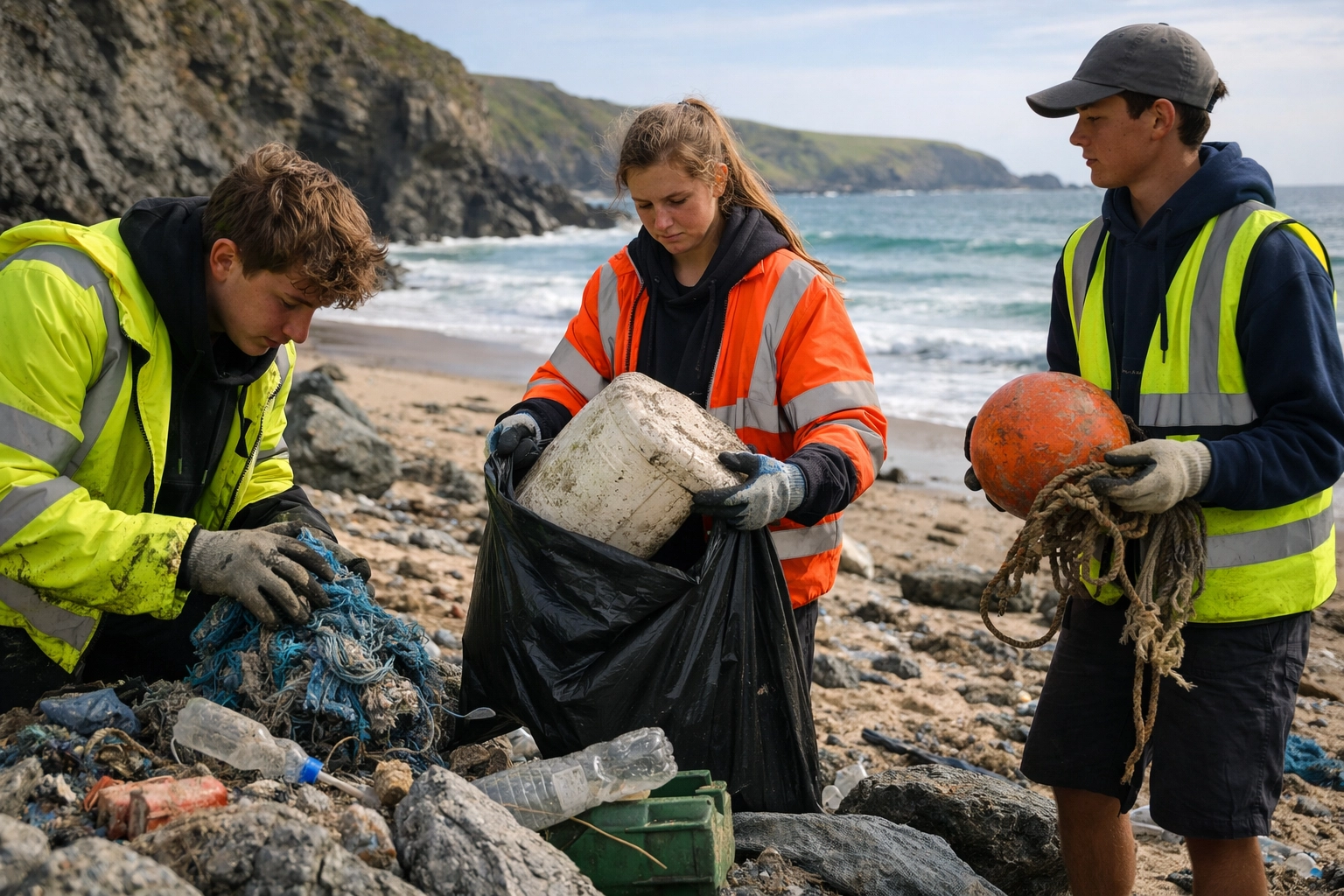
The project began as a local response to the worsening state of Porthtowan Beach, a popular surfing destination and Site of Special Scientific Interest (SSSI). Following a series of winter storms that left the tideline buried under layers of nurdles: small plastic pellets used in manufacturing: the group of five students decided to move beyond traditional manual beach cleans. Recognising that human effort alone could not address the volume of particulate waste, they sought an engineering solution that could operate around the clock.
The Porthtowan Pioneers consist of A-level students from local colleges, bringing together skills in robotics, marine biology, and computer science. Their objective was to create a device that could withstand the aggressive swell of the North Cornish coast while effectively filtering water for pollutants. The resulting craft, Gulp, represents eighteen months of prototyping and field testing in the harsh conditions of the Celtic Sea.
Engineering a solution for the Celtic Sea
The engineering phase of the Gulp project required the students to overcome significant logistical hurdles, primarily the corrosive nature of the Atlantic environment. Working out of a donated workshop space in St Agnes, the team utilised recycled carbon fibre and marine-grade aluminium to construct a chassis that was both lightweight and resilient. The drone operates as a catamaran, a design choice made to ensure stability during the unpredictable weather patterns common to the South West of England.
Power management was a critical factor in the design process. The Atlantic coastline of Cornwall is notorious for its varying light levels and heavy sea spray, making traditional solar power unreliable for consistent operation. To counter this, the Porthtowan Pioneers integrated a hybrid power system that combines high-efficiency photovoltaic panels with a micro-turbine. This allows the drone to generate energy from both the sun and the wind, extending its operational window to nearly twenty hours a day during the summer months.
The navigation system relies on a combination of GPS and LiDAR sensors to map the coastline in real-time. This ensures the drone can avoid rocky outcrops, surfers, and local wildlife, such as the grey seal colonies that frequent the area. The autonomy of the Gulp drone is its most significant asset; it can be programmed to patrol specific sectors of the bay where currents are known to deposit the highest concentrations of plastic. Data collected by the drone is uploaded to a central server, providing the team with a heat map of pollution levels across the Porthtowan and Chapel Porth area.
Funding for the engineering phase was secured through a combination of community crowdfunding and small grants from local environmental trusts. The project has garnered widespread support from the local community, who see it as a blueprint for how small-scale technology can address global environmental crises. By focusing on the intersection of technology and conservation, the Pioneers have demonstrated that high-level engineering is no longer the sole province of large corporations or government agencies.
Technical specifications of the Gulp drone
At the heart of the Gulp drone is a bespoke filtration system designed specifically to capture microplastics as small as five millimetres. Unlike larger ocean-cleaning vessels that target "ghost nets" and floating crates, Gulp is calibrated for the "invisible" pollutants that pose the greatest threat to marine ecosystems. The drone uses a series of progressively finer mesh screens, which are agitated by the motion of the waves to prevent clogging: a common failure point in previous ocean-cleaning prototypes.
The filtration unit is housed within the central pod of the catamaran. As the drone moves through the water, a front-facing scoop directs the surface layer into the intake. The internal AI system monitors the weight and volume of the collected material, notifying the team via a mobile application when the drone needs to return to shore for emptying. On average, the Gulp drone is capable of collecting up to 15 kilograms of plastic waste in a single deployment, ranging from degraded fishing line to fragments of single-use bottles.
The software powering Gulp was developed using open-source platforms, allowing the team to iterate quickly based on performance data. The AI has been trained to distinguish between organic matter, such as seaweed and driftwood, and synthetic materials. This ensures that the drone does not inadvertently remove essential nutrients or habitats from the water column. If the sensors detect a living organism, such as a jellyfish or a small fish, the intake system automatically shuts down, and the drone alters its course to maintain a safe distance.
In addition to its cleaning capabilities, Gulp serves as a mobile scientific laboratory. It is equipped with sensors that measure water temperature, pH levels, and salinity. This data is shared with researchers at the University of Exeter’s Cornwall Campus, contributing to a broader understanding of how climate change is affecting the coastal waters of the UK. The integration of data collection and active cleaning makes the Gulp drone a multi-functional tool in the fight against marine degradation, proving that human interest stories can have a rigorous scientific foundation.
The broader impact on Cornwall’s coastline
The deployment of the Gulp drone has had an immediate impact on the local environment and the public perception of plastic pollution. Residents of Porthtowan have reported a visible reduction in the amount of microplastic debris on the strandline since the drone began regular patrols. However, the true success of the project lies in its role as an educational catalyst. The Porthtowan Pioneers frequently host workshops for local primary schools, using the drone to explain the mechanics of pollution and the potential of STEM careers to solve environmental issues.
From a reportorial perspective, the project highlights a shift in environmental activism within the UK. There is a growing trend of "citizen science" where local groups take direct action through technological innovation. This shift is a key focus for independent news uk, as it represents a departure from traditional protest-based environmentalism towards a more pragmatic, solution-oriented approach. The success of the Gulp drone has already led to enquiries from other coastal communities in Devon and Dorset, looking to replicate the model.
The Porthtowan Pioneers are now looking toward the future, with plans to build a fleet of Gulp drones that can provide coordinated coverage across the entire North Cornish coast. They are currently exploring the use of biodegradable materials for the drone’s internal components to further reduce its environmental footprint. Furthermore, the team is in discussions with local authorities about integrating the drone's data into the official environmental monitoring programmes for the region.
The project serves as a reminder of the scale of the challenge facing the world's oceans. While a single drone in a small Cornish bay cannot solve the global plastic crisis, the Porthtowan Pioneers have proved that grassroots innovation can provide effective, localised solutions. As the Gulp drone continues its patrols against the backdrop of the Atlantic, it stands as a testament to the ingenuity of the next generation of British engineers and their commitment to protecting the natural world. The ongoing development of this project remains a focal point for those following human interest stories that merge technology with a profound sense of civic duty.