Police across the UK have carried out a major coordinated crackdown on organised crime, making more than 2,180 arrests and shutting down 335 active drug supply lines. The week-long intensification, which wrapped up in March 2026, targeted the “county lines” model, where gangs use dedicated phone lines to push drugs from cities into smaller towns and rural areas. It is the kind of fast-moving story independent news uk outlets keep a close eye on, because the impact lands right on people’s doorsteps.
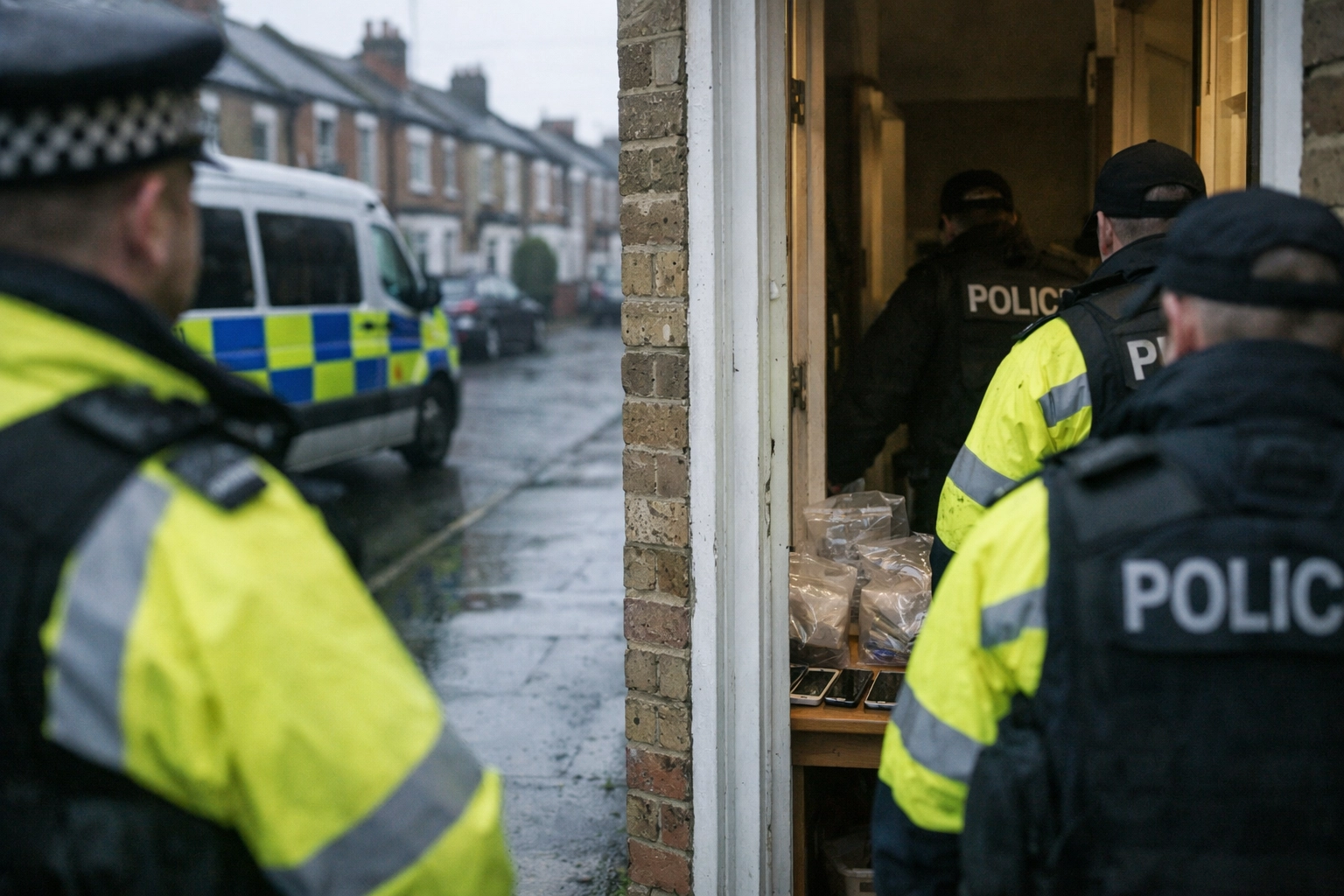
Officers seized more than 180kg of Class A drugs, alongside high-value designer goods and quantities of gold bars. Warrants were executed at hundreds of properties, with more than £1.5 million in cash recovered, believed to be criminal proceeds. Police also removed 121 firearms and 377 bladed weapons, including machetes and hunting knives, as part of efforts to cut the risk of serious violence linked to these networks.
A Nationwide Sweep of Criminal Infrastructure
Forces and regional organised crime units worked side by side to pull off the March 2026 crackdown. The focus was on so-called “line holders”, the people running the branded mobiles used to take orders and manage supply. That is also where investigative journalism uk often starts: follow the phones, follow the money, and you tend to find the organisers, not just the street-level dealers. During the week of action, police seized around 1,200 mobile phones, creating a big pool of digital evidence that could lead to more cases in the months ahead.
The seizures included 86.87kg of heroin and 84.65kg of cocaine, alongside roughly 15,000 cannabis plants found in industrial and residential sites. Officers also recovered gold bars and luxury vehicles, pointing to a wider mix of methods used to hide and launder profits. In practice, that means policing has to mix door-to-door enforcement with the less visible work: financial investigations that go after assets, not just arrests.
Untold stories from the operation also show just how far these lines can stretch. Networks linked to hubs such as London, Birmingham, and Liverpool were identified operating as far as the Scottish Highlands and coastal towns in Cornwall. Gangs often rely on hire cars and public transport to move “runners” and blend in, but tools such as ANPR and undercover surveillance have made sustained operation harder. Closing 335 lines in a single week shows how much of this now depends on coordinated intelligence and rapid disruption.
Protecting the Vulnerable from Modern Slavery
County lines is not just about drugs and money; it also runs on exploitation. In this latest crackdown, police and partner agencies said 1,348 people were safeguarded after being coerced into criminal activity. That total included 800 children, reported as 544 boys and 252 girls, with some as young as 12. Children are often used to move drugs and cash, pulled in by grooming, threats, and debt.
A major focus was “cuckooing”, where criminals take over the home of a vulnerable person, including people with mental health issues or drug dependency, and use it as a base. Officers visited 683 addresses suspected of being cuckooed during the week, offering support to residents and removing those involved in criminal activity. Police and support services describe it as a form of modern slavery, because it turns everyday homes into controlled spaces.
That safeguarding work sits alongside arrests under the “Safer Streets” mission, with specialist teams linking people to housing, counselling, and legal support to reduce the risk of being targeted again. Alongside enforcement, there is also a wider strategy backed by government funding: more than £42 million allocated to the County Lines Programme for the 2025–2026 financial year, supporting frontline work and longer-term efforts to stop repeat exploitation.
Official figures for July 2024 to September 2025 show more than 8,200 arrests and 1,600 charges against line holders linked to the programme. The approach is increasingly described as “total system”, with improved intelligence sharing between police, the NHS, and schools, aimed at earlier intervention when warning signs show up, such as unexplained money, frequent missing school, or sudden new contacts.
Through the rest of 2026, the question is whether disruption can be kept up, not just delivered in bursts. Seizures of weapons, including knuckledusters, batons, and firearms, underline the violence that can sit behind the trade. Even with 2,180 arrests, the untold stories often sit with communities dealing with the aftermath, where safeguarding, youth support, and neighbourhood policing can matter just as much as enforcement.
Looking Forward: Sustained Pressure and Support
Forces say the next phase will lean on the same basics: steady intelligence work, faster safeguarding referrals, and more financial disruption to stop lines quickly reforming under new numbers and new runners. The County Lines Programme funding for 2025–2026 is designed to keep that pressure on, while partner agencies focus on reducing repeat exploitation.
For readers following independent news uk and investigative journalism uk, this is likely to stay a live issue for months to come, with further arrests and safeguarding activity expected as evidence from seized devices is worked through.