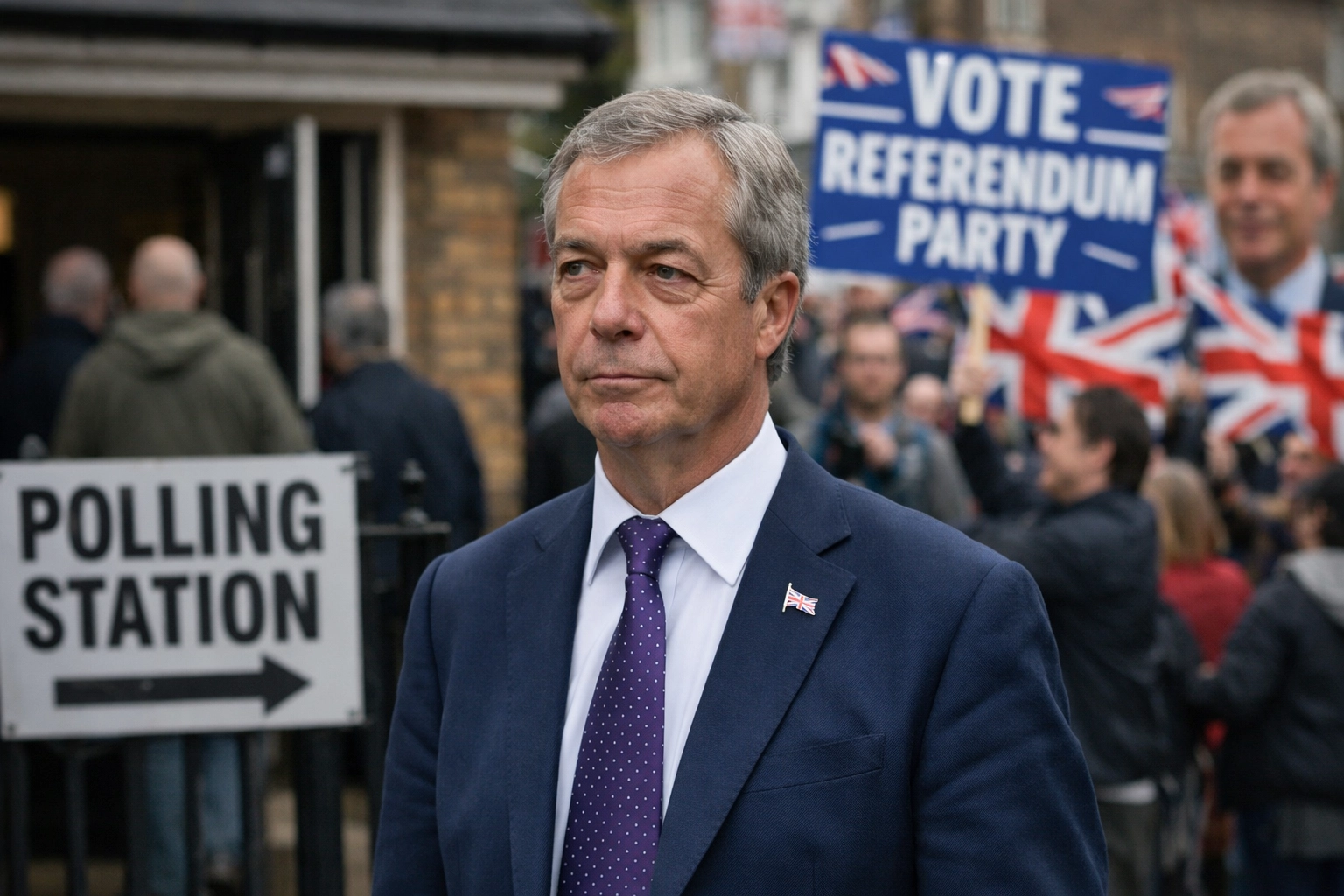
Nigel Farage has officially shifted the gears of British politics into high gear, transforming the upcoming May 2026 local elections into a high-stakes referendum on Keir Starmer’s premiership. With just weeks to go before voters head to the polls across England, the Reform UK leader has bypassed traditional local grievances in favour of a national narrative. His message is blunt: the Labour government has failed, and the local elections are the first opportunity for the British public to issue a formal verdict on the Prime Minister’s performance since the general election.
The campaign, operating under the slogan ‘Reform will fix it’, has seen Farage and his deputy leaders embarking on an extensive tour of the country. Unlike previous years where minor parties struggled to fill ballot papers, Reform UK has demonstrated an unprecedented level of organisation. For the first time in over a century, a third party has managed to field more candidates than both the Conservative and Labour parties in a local election cycle. This surge in participation is not merely a logistical feat; it is a signal of intent that the party aims to dismantle the two-party system from the ground up.
In the North East, particularly in councils like Sunderland and Gateshead, the atmosphere is electric. These areas, traditionally Labour heartlands that flirted with the Conservatives during the Brexit era, are now the primary battlegrounds for Farage’s ‘people’s army’. The strategy is clear: target the ‘Red Wall’ voters who feel abandoned by Westminster’s current direction. By framing the local vote as a referendum on national leadership, Reform UK is tapping into widespread frustration over the cost of living, public service delivery, and the perceived stagnation of the post-Brexit economy.
The Northern Front: Sunderland and Gateshead in the Crosshairs
The focus on Sunderland and Gateshead is a calculated move by the Reform UK leadership. These councils represent the industrial soul of the North East, yet they have become flashpoints for political discontent. Farage has spent significant time in these boroughs, criticising the ‘old parties’ for what he describes as a managed decline of northern towns. In Sunderland, the party is capitalising on local anger over council tax hikes and the perceived mismanagement of regional infrastructure. The narrative presented to voters is that a vote for Labour is a vote for the status quo, while a vote for Reform is a strike against the Westminster establishment.
In Gateshead, the campaign has taken a similar tone, with a heavy emphasis on community safety and the decline of high streets. Reform UK candidates are being positioned as community champions who are not beholden to the party whips in London. Farage has argued that the ‘old parties’: a term he uses frequently to group Labour and the Conservatives together: are two sides of the same coin, both committed to high spending and high immigration. By contrast, his candidates are promising a radical departure from standard municipal governance, focusing on what they call ‘common sense’ solutions to local problems.
The presence of high-profile Reform UK figures on the ground in the North East has forced both Labour and the Conservatives to divert resources away from traditional battlegrounds. In Sunderland, Labour has been forced onto the defensive, highlighting their record on local investment and job creation in the green energy sector. However, the Reform UK surge appears to be cutting through, particularly among voters who feel that the benefits of national policies have yet to reach their doorsteps. The results in these specific councils on election night are expected to be the first indicator of whether Farage’s gamble has paid off.
Challenging the Consensus: The Reform UK Policy Platform
Central to the Reform UK campaign is a policy platform that bridges the gap between local administration and national ideology. Farage has pledged that Reform-controlled councils will deliver substantial cost savings, claiming a potential reduction of over £400 million across their target councils within the first year. This figure, derived from proposed overhauls of procurement processes and the streamlining of council bureaucracy, serves as a cornerstone of their fiscal argument. The party maintains that by cutting ‘wasteful’ spending on diversity initiatives and non-essential consultancy, they can redirect funds toward frontline services like road maintenance and waste collection.
Immigration remains the most potent weapon in the Reform UK arsenal. Despite these being local elections, Farage has made strict immigration enforcement a central pillar of his pitch. He has called for a move to ‘net negative immigration’ and the immediate deportation of illegal migrants. This rhetoric resonates strongly in areas where residents feel that local services, such as GPs and housing, are under undue pressure. While local councils have limited direct power over national border policy, Reform candidates are framing their roles as vocal opponents of government-mandated migrant housing in their communities.
The party’s criticism of the ‘old parties’ extends to the handling of the economy and the ongoing industrial disputes that have plagued the UK throughout 2025 and early 2026. With the memory of the Easter chaos caused by junior doctors' strikes still fresh in the minds of the public, Reform UK has positioned itself as the only party capable of breaking the deadlock. Farage argues that the current government is trapped in a cycle of indecision, unable to reform public services or provide the economic stability required for growth. This ‘anti-establishment’ stance is designed to appeal to a broad demographic, from disillusioned small business owners to blue-collar workers.
A Referendum on Starmer: The Road to the General Election
The path to the May 2026 elections was not without its legal drama. Earlier this year, the government faced a significant setback when it initially planned to postpone elections across 30 councils, citing administrative reorganisation and capacity concerns. Reform UK immediately launched a legal challenge, arguing that the move was a politically motivated attempt to stifle the party’s momentum. In March 2026, the government withdrew its decision, ensuring that all contests would proceed as scheduled. Farage hailed this as a victory for democracy and a sign that the government is ‘terrified’ of the electorate’s verdict.
This legal victory has provided Reform UK with a surge of energy heading into the final weeks of the campaign. Farage has stated that these elections will ‘strike a mortal blow’ to his political opponents, setting the stage for the next general election. By framing the local contests as a referendum on Keir Starmer, he is forcing the Prime Minister to defend his national record at every doorstep. For Starmer, the stakes are equally high. A poor showing in the North East would not only embolden Reform UK but could also trigger internal dissent within the Labour Party regarding the government’s current trajectory.
As the 2026 local elections approach, the UK finds itself at a political crossroads. The traditional boundaries of local government are being redrawn by a campaign that is as much about national identity and leadership as it is about council services. Whether Farage can translate his significant candidate numbers and rhetorical energy into actual seats remains to be seen. However, by turning the local polls into a referendum on the ‘old parties’, he has already succeeded in shifting the national conversation. The results in Sunderland, Gateshead, and beyond will determine if this gamble marks the beginning of a new political era or a temporary disruption of the status quo.
The outcome of this electoral test will ripple through Westminster for months to come. If Reform UK secures significant gains, the pressure on the government to pivot on key issues like immigration and public spending will become immense. Conversely, if the Labour heartlands hold firm, Starmer will have a mandate to continue his current programme with renewed authority. Regardless of the winner, the May 2026 elections have already proven that the UK’s political landscape is more volatile than at any point in recent history. The ballot box now remains the final arbiter in Farage’s latest challenge to the political establishment.