Unrest in Tehran is having real-world knock-on effects in the UK, from public order policing in London to wider worries about security and energy prices. In March 2026, strikes and protests driven by economic pressure and civil liberties have grown into sustained tension that isn’t staying inside Iran’s borders.
Since late December 2025, the Islamic Republic has faced a surge of internal dissent that many observers describe as the most serious challenge to the leadership in decades. As Iran’s crackdown has intensified, the fallout has shown up in Britain too, including around North Finchley and Persian-language media hubs in West London.
From Tehran’s protests to London’s streets
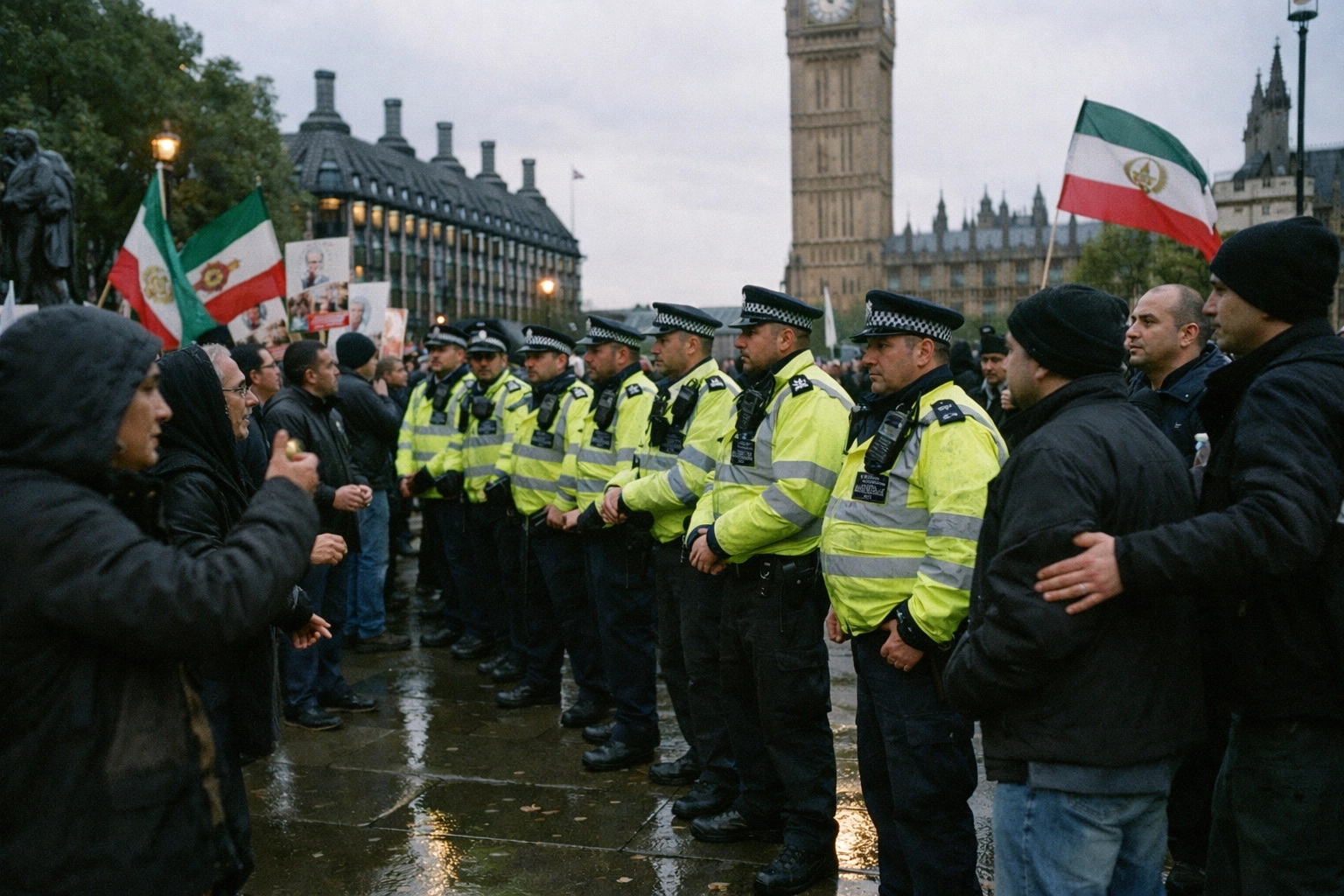
London has become a visible rallying point for parts of the Iranian diaspora as the 2026 protests have gathered pace. That support has also brought friction, and the Metropolitan Police have been trying to keep rival groups apart.
On 16 January, tensions boiled over when pro-regime and anti-government groups clashed at rallies in the capital. Four police officers were hospitalised and 14 people were arrested, underlining how quickly overseas political disputes can become a UK public order issue.
The Met has since imposed strict conditions on demonstrations, including “buffer zones” to stop opposing sides reaching each other. For readers looking for independent news uk, these incidents are a reminder that international conflict doesn’t always stay 3,000 miles away.
The community itself is not one single bloc, and motivations vary: some campaign for political reform, while others focus on the humanitarian impact of repression inside Iran. At the same time, Iranian officials have increasingly pointed to activists abroad, framing the UK as a centre of dissent.
Speaking out in Britain — and the bigger UK impact
One of the more worrying trends linked to the 2026 unrest is what researchers call “transnational repression”, where people who have left Iran still face intimidation. At NowPWR, this is where a lot of the untold stories sit: the gap between “being in the UK” and actually feeling safe.
In late January, reports emerged of Iranian dissidents in British cities receiving death threats via encrypted messages and phone calls. On 9 March, an anti-IRGC (Islamic Revolutionary Guard Corps) protester was stabbed and attacked with a bottle in North Finchley, in an incident described as targeted rather than random street violence. The case followed a pattern of intimidation highlighted previously by the stabbing of journalist Pouria Zeraati.
Iran International, the Persian-language broadcaster based in London, has also been described by regime-linked rhetoric as a “legitimate target”, raising concerns for journalists and staff working in Britain. Alongside threats, there have been moves linked to asset seizure, with documents reportedly submitted on fifteen Iranians living in the UK and elsewhere, aimed at using financial pressure to silence critics.
Through the lens of investigative journalism uk, this is part of a wider question for the UK: how effectively can the state protect people from foreign intimidation and political violence on British soil?
There’s an economic angle too. Rising tension around the Persian Gulf can feed into energy price volatility, with the UK bracing for potential knock-on effects on fuel and household bills if the situation worsens.
Politically, ministers are balancing human rights concerns with the risk of escalation, while the debate over tougher measures — including calls to proscribe the IRGC as a terrorist organisation — continues in Westminster.
Ongoing Tensions and Untold Stories
For the Iranian diaspora in the UK, the situation remains live, with police, community groups and broadcasters watching for further threats tied to events in Iran. Cases linked to alleged intimidation and targeted violence are still moving through investigations, and the outcomes will shape how seriously “transnational repression” is treated in practice.
At the same time, the wider UK impact is still unfolding, from public order planning in London to the economic sensitivity around energy markets and regional security.
For now, the direction of travel is clear: what happens in Tehran is still shaping British life, and the story is not finished.