Global Supply Chains: Red Sea Conflict
Global shipping networks are currently navigating their most significant disruption in recent history as the escalating conflict in the Red Sea forces a total reconfiguration of international trade routes. What was once a primary artery for global commerce has become a high-risk zone, with container shipments through the region plummeting by 75 per cent following a sustained campaign of Houthi attacks. As an independent news uk outlet, we are examining the untold stories of the maritime industry, where the stability of the global economy now rests on decisions made in the shadow of military escalation.
The Bab el-Mandeb Strait, a narrow 20-mile chokepoint connecting the Red Sea to the Suez Canal, remains the focal point of the crisis. For decades, this passage served as the fastest link between Asia and Europe, handling approximately 12 per cent of total global trade. However, the surge in hostilities involving U.S. and Israeli military actions against Iranian-backed forces has rendered the route untenable for the majority of the world’s leading carriers. The resulting shift in maritime logistics is not merely a temporary detour but a fundamental shift in how goods are moved across the planet in 2026.
The Shift to the Cape of Good Hope
The decision by major shipping lines to abandon the Red Sea has led to a massive rerouting of vessels around the Cape of Good Hope at the southern tip of Africa. This detour adds approximately 3,500 nautical miles to a typical journey from Asia to Northern Europe, extending the standard 30-to-40-day transit time by at least a fortnight. The operational impact of this change is profound, requiring carriers to deploy more vessels simply to maintain weekly service schedules. This increased demand for tonnage has effectively absorbed the global surplus of container ships that analysts had predicted would lead to a market downturn this year.
The longer route around Africa is not merely a question of time; it is a question of massive fuel consumption and environmental impact. Vessels travelling at higher speeds to minimize the delay are burning record amounts of bunker fuel, leading to a sharp rise in carbon emissions across the industry. For logistics managers in the United Kingdom, these delays have translated into a persistent "bullwhip effect" in supply chains. Manufacturers who previously relied on just-in-time delivery models are now being forced to hold significantly more buffer stock, increasing inventory holding costs and tying up vital working capital that would otherwise be used for business growth.
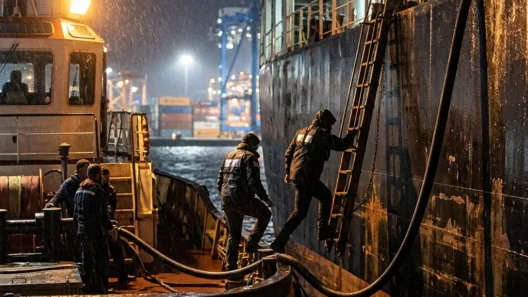
The disruption extends far beyond the containers themselves. The logistics of the reroute have put immense pressure on African ports, which are not traditionally equipped to handle the sudden influx of mega-vessels seeking refuelling and emergency repairs. Ports such as Las Palmas and Cape Town have seen a surge in activity, yet the infrastructure limits mean that any mechanical failure or weather delay in the Southern Hemisphere now has a direct, cascading effect on the availability of consumer goods in British high streets. The untold stories of these port workers, struggling to manage the diverted traffic of the world’s trade, highlight the fragility of the modern globalised economy.
Economic Fallout and Rising Freight Costs
The financial implications of the Red Sea conflict are being felt by every participant in the global supply chain, from multinational corporations to small-scale retailers. While container spot rates saw a modest decline in early 2026: dropping between 32 and 35 per cent from China to the United States: they remains significantly elevated compared to pre-conflict levels. The market remains in a state of high volatility, with any news of further military escalation in the Persian Gulf or the Mediterranean sending shockwaves through the freight exchanges.
Maritime insurance has become one of the most significant overheads for carriers still attempting to transit the region. War risk premiums have skyrocketed, in some cases increasing tenfold since the start of the hostilities. For those who choose to reroute, the costs are equally daunting; the additional fuel required for the African detour can cost upwards of £800,000 per voyage for a single ultra-large container vessel. These costs are inevitably passed down to the consumer, contributing to the persistent inflationary pressures that have defined the British economic landscape throughout the first quarter of 2026.
The crisis has also hit critical regional hubs in the Middle East. Shipping lines including CMA CGM and Hapag-Lloyd have, at various points, refused to transit the Strait of Hormuz, effectively cutting off direct supplies to major ports like Jebel Ali in the UAE, Khalifa in Qatar, and Dammam in Saudi Arabia. This has disrupted the flow of petrochemical products and consumer electronics, creating localized shortages and further complicating the global manufacturing outlook. As an independent news uk provider, we have observed that the secondary impacts on the UK’s energy security and raw material imports are only now beginning to be fully understood by policymakers in Westminster.
Furthermore, the "demurrage and detention" risks have heightened. Because shipments are taking longer to arrive, the schedule of arrivals at European ports like Felixstowe and Southampton has become unpredictable. When multiple vessels arrive simultaneously after being bunched together on the African route, it creates sudden spikes in port congestion. This lead to delays in unloading, which in turn triggers additional fees for cargo owners who cannot collect their goods within the allotted time. The complexity of managing these variables has turned global logistics into a high-stakes gamble for many British firms.
Geopolitical Deadlock and the 2026 Outlook
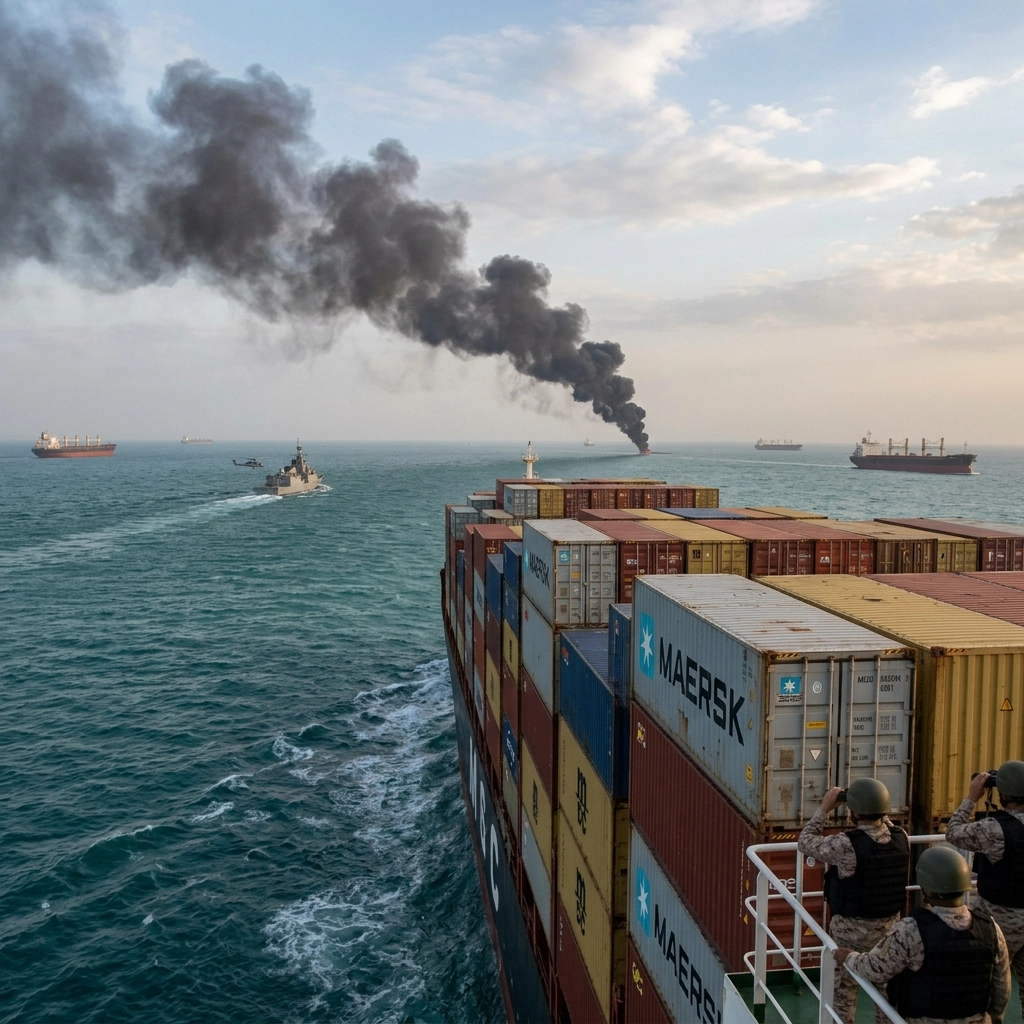
As of late March 2026, the prospect of a return to normality in the Red Sea appears remote. While some carriers, such as Maersk, had previously attempted to resume transits under military escort, the recent intensification of the conflict involving Iran has halted that momentum. Industry experts, including Vespucci Maritime CEO Lars Jensen, suggest that roughly 2 million twenty-foot equivalent units (TEUs) are currently impacted by the diversions. The consensus among maritime analysts is that a large-scale return of container shipping to the Suez Canal is unlikely for at least another six months, and even then, it would depend entirely on an immediate and sustained cessation of hostilities.
The geopolitical dimension of the conflict has created a stalemate that transcends simple maritime security. The Houthi movement’s ability to disrupt trade using relatively low-cost drones and missiles against multi-million-pound naval assets has exposed a significant vulnerability in the Western-led security architecture. The U.S.-led "Operation Prosperity Guardian" has provided some protection for tankers and bulk carriers, but the insurance market and the risk-aversion of major container lines mean that the "safe corridor" remains more of a concept than a reality for the world’s most valuable cargo.
Looking ahead through the remainder of 2026, the global supply chain is bracing for a "new normal" of extended transit times and structural instability. The untold stories of this conflict are found in the shifting strategies of global corporations, many of whom are now actively "near-shoring" production to Eastern Europe or North Africa to reduce their reliance on the vulnerable sea lanes of the Middle East. This transition away from the Suez-centric trade model represents a historic shift in global geography.
The situation remains fluid, with military developments in the region dictating the daily movements of the world's merchant fleet. For now, the global economy continues to pay the price for the Red Sea deadlock, as ships continue their long, costly journeys around the Cape, and the world waits to see if diplomacy can eventually reopen the gates of the Bab el-Mandeb. The impact on the UK remains a central focus for independent news uk reporting, as the nation navigates the repercussions of a trade war that shows no sign of abating.