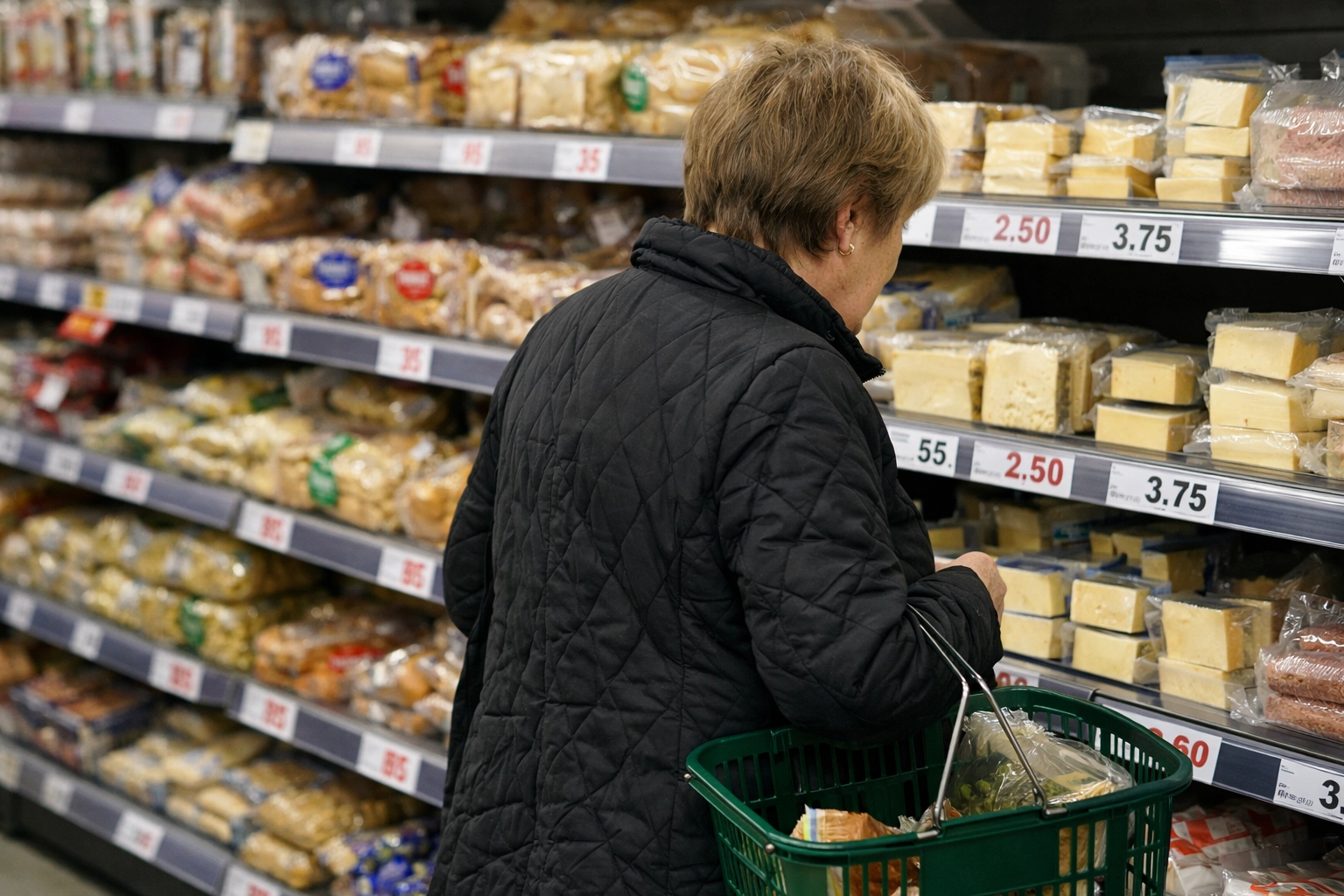
If your weekly shop has started to feel a bit brutal lately, you’re not imagining it. As fighting involving Iran has escalated, the knock-on effects have travelled fast, turning up in UK prices for everyday basics like cheese, pasta and bread.
This is where investigative journalism uk matters, because the story isn’t only about what’s happening on the ground. It’s also about shipping routes, fuel markets and fertiliser supplies — the unglamorous stuff that ends up deciding what you pay at the till.
At NowPWR, we focus on the untold stories that can get lost behind the loudest headlines. In a tightly connected global system, disruption in one corridor can mean higher costs and patchier supply thousands of miles away, which is exactly why following independent news uk helps make sense of what’s landing on your receipt.
The Strait of Hormuz: A Bottleneck for Global Food
To understand why your grocery bill is climbing, you have to look at a map of the Middle East. The Strait of Hormuz is a narrow waterway: only about 21 miles wide at its thinnest point: that connects the Persian Gulf with the Gulf of Oman and the Arabian Sea. It is arguably the most important chokepoint in the world, and not just for the oil that keeps our cars running. In the wake of the March 2026 escalations, this corridor has become a primary site of tension, and the impact on global trade has been nothing short of staggering.
While the world usually focuses on the oil tankers passing through, the Strait is also a vital artery for the global fertiliser trade. Gulf countries are some of the most significant exporters of ammonia and urea, the two essential components of nitrogen-based fertilisers. Current estimates suggest that roughly 30% to 33% of the world’s fertiliser trade is effectively blocked or heavily delayed due to the conflict. When a third of the world’s "plant food" stops moving, the agricultural sector starts to panic. It isn't just about the current crop; it is about the ability of farmers to plant anything for the next season.
This blockage creates a massive supply-and-demand imbalance. When fertiliser can't leave the Gulf, prices elsewhere skyrocket. We aren't just talking about a small tick upward; reports indicate global fertiliser prices have surged by as much as 45% in just a matter of weeks. For a farmer in the UK or elsewhere, this represents a massive increase in overheads. If it costs more to grow the wheat, the loaf of bread at your local shop is inevitably going to cost more. This is the kind of investigative journalism uk readers need to see: the direct line between a blocked waterway and the price of a sandwich.
Fertiliser and Fuel: The Hidden Costs of Farming
It’s easy to think of farming as a natural process of sun, soil, and rain, but modern agriculture is essentially a way of turning energy into calories. To do that, farmers need two main things: fuel for their machinery and fertiliser for their crops. Both are currently under massive pressure. Since the conflict in Iran began, global oil and gas prices have surged by more than 50%. Because natural gas is a primary feedstock for producing nitrogen fertiliser (the Haber-Bosch process, for the science fans out there), the double-hit of high energy prices and supply chain blockages is a "perfect storm" for the agricultural industry.
In the UK, our farmers are facing an impossible choice. With the cost of seeds, fuel, and essential nutrients like sulfur climbing alongside gas prices, many are being forced to reduce their fertiliser usage. While that might sound like a cost-cutting measure, it’s actually a recipe for lower yields. Less fertiliser means fewer crops per acre, which means less food on the market. When there is less food to go around, prices go up even further. It’s a vicious cycle that started in the Middle East but ends in your kitchen.
Through our lens of independent news uk, we see the untold stories of small-scale producers who are struggling to keep their heads above water. It isn’t just the big industrial farms feeling the pinch. Your local organic grower, your dairy farmer, and even the companies producing processed goods are all seeing their margins evaporate. When the price of fertiliser goes up 40%, and the fuel for the tractor goes up 50%, the "farm-to-fork" journey becomes incredibly expensive. These hidden costs are the real reason behind the "Dinner Table Deficits" we are seeing across the country.
Fertiliser, Fuel and the Ripple Effects
It’s easy to think of farming as sun, soil and rain, but modern agriculture runs on energy. Farmers need diesel for machinery and fertiliser for yields — and both are under pressure. Since the conflict involving Iran intensified, oil and gas prices have jumped by more than 50% in some market reporting, pushing up costs across the supply chain.
Natural gas is also a key input for nitrogen fertiliser production (via the Haber-Bosch process), so higher energy prices can feed straight into higher fertiliser prices. Add shipping disruption, and you get a one-two punch: supply gets tighter, and the cost of making what’s available rises.
In the UK, that can translate into hard choices. With seeds, fuel and nutrients like sulphur all climbing, some farmers cut fertiliser use to manage overheads — but that typically means lower yields. Lower yields mean less product reaching the market, and that usually means higher prices for shoppers.
And it’s not just a UK problem. Many developing countries rely heavily on imported fertiliser and have less financial headroom to absorb shocks. Kenya has reported fertiliser costs rising by around 40% since the conflict began, and in places where households spend 30% to 50% of income on food, even a modest price jump can push families into real hardship. Somalia, Bangladesh and Pakistan have also seen steep rises in key staples in some regions, with reports of 100% increases in the most extreme cases.
The awkward bit is the timing. Even if tensions eased quickly and the Strait of Hormuz was fully open again, the planting cycle doesn’t reset overnight. Lower fertiliser use now can mean smaller harvests months later, keeping pressure on prices well beyond the immediate headlines. We’ll keep tracking the untold stories behind the numbers, in the steady, factual way readers expect from independent news uk — and the story is still moving.