Hey everyone, it’s Penny here from NowPWR. Today we’re diving into a story that has been making headlines across the globe and sparking some pretty intense conversations in our office. If you’ve been following the news lately, you’ll know that things are changing rapidly in the Middle East, and not always in ways that people agree on. As part of our commitment to bringing you independent news UK style, we want to look at the untold stories behind the headlines. This week, the big talking point is Israel’s decision to pass a law that reintroduces the death penalty, a move that hasn't been seen in the country for over six decades.
It’s a heavy topic, for sure. On Monday, the Knesset, that’s Israel's parliament, voted through a piece of legislation that effectively changes the game for how certain crimes are punished. For many of us watching from the UK, the idea of the death penalty feels like something from a different era, but for those in the thick of it in Israel and the West Bank, it’s a current, vibrating reality. Let’s take a look at what’s actually in the law, why it’s caused such a massive stir, and what the world is saying about it.
The Nuts and Bolts of the New Legislation
So, what does this new law actually say? Well, it’s a bit more complex than just "bringing back the death penalty." The legislation specifically targets those convicted of murdering Israelis in what the government describes as "terrorist" acts. But here’s where the controversy really starts: the law creates two different paths depending on who you are and where the crime happened.
For Palestinians in the West Bank, the death penalty by hanging becomes the default sentence if they are convicted in military courts for deadly attacks. While there are some exceptions, the law is designed to be a mandatory starting point. On the flip side, for Israeli citizens convicted of similar crimes in civilian courts, the judges have a bit more wiggle room. They can choose between the death penalty or life imprisonment. This distinction has already raised a lot of eyebrows, with critics pointing out that it creates a two-tiered system of justice.
The implementation is also incredibly swift. Once a sentence is handed down, the execution is supposed to happen within 90 days. That’s a very tight window when you consider how long legal appeals usually take in most parts of the world. Prime Minister Benjamin Netanyahu was right there in the thick of it, personally voting in favour of the measure. It was heavily pushed by Itamar Ben-Gvir, the National Security Minister, who has been a vocal supporter of tougher stances like this for years. For the supporters of the law, this is about deterrence and justice for victims' families. For them, it’s a necessary step to protect their citizens in a very volatile environment.
A Wave of Global and Local Backlash
As you can imagine, the reaction from the international community was almost immediate and pretty much universally negative. Organisations like the UN and the European Union didn't hold back. Volker Turk, the UN rights chief, was quick to call the law a violation of international humanitarian law. He pointed out that the discriminatory nature of the law: treating different groups differently for the same crimes: is a major red flag for human rights.
Closer to home, the EU has been very vocal about their stance. They generally oppose the death penalty in all circumstances, arguing that it doesn't actually work as a deterrent and that it violates the fundamental right to life. Even some of Israel’s closest allies in Europe, like Germany, France, and the UK, had urged lawmakers to rethink the move before it was passed. There’s a real worry that this could escalate tensions even further in a region that is already at a breaking point.
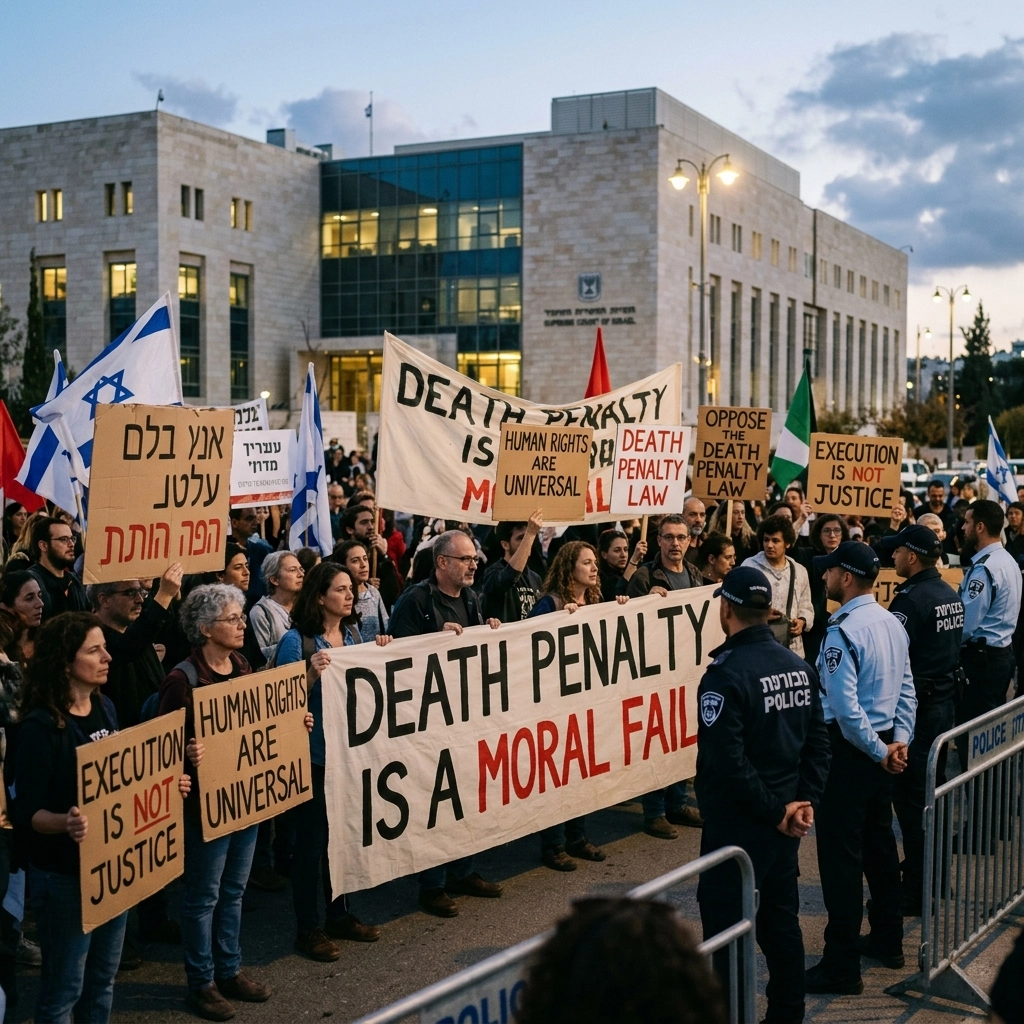
But it’s not just foreign governments speaking up. Inside Israel, the legal battle started almost the second the vote was over. Groups like the Association for Civil Rights in Israel and Adalah have already filed urgent petitions with the High Court of Justice. They’re arguing that the law is unconstitutional and racially discriminatory. They point out that the way the law is written, it essentially targets Palestinians while leaving a safety net for Jewish perpetrators. It’s a legal minefield that’s going to take months, if not years, to fully untangle, but the High Court has already ordered the government to respond by May 2026. It’s a tense wait for everyone involved.
Looking Back to Look Forward: Why Now?
To really understand why this is such a huge deal, we have to look at the history. Israel has actually had a de facto moratorium on the death penalty for a very long time. In fact, in the entire history of the state, only two people have ever been executed. The most famous case was Adolf Eichmann, a key architect of the Holocaust, who was hanged back in 1962. Since then, the death penalty has existed on the books but has never been used.
By bringing it back now, the government is making a massive statement. It’s a shift away from decades of judicial tradition. Critics argue that this isn't just about justice; it’s about politics. The current government is one of the most right-wing in Israel’s history, and this law is a key part of their platform. They argue that the threat of death will make someone think twice before carrying out an attack. However, many security experts and rights groups disagree. They suggest that for those willing to die for their cause, the threat of execution might actually serve as a form of martyrdom, potentially making the situation even more dangerous.
This brings us to the "untold stories" part of the equation. Behind the political debates and the legal jargon, there are families on both sides who are living through the consequences of this violence every day. There are people who believe that only the ultimate punishment can bring peace, and others who fear that this law only deepens the cycle of revenge. As an independent news UK outlet, we think it’s important to see all these layers. The world is watching to see if the High Court will block the law or if Israel will indeed see its first execution in over 60 years later this summer.
It’s a lot to process, isn't it? Whether you see this as a necessary security measure or a step backwards for human rights, there’s no denying that it’s a pivotal moment in history. We’ll be keeping a close eye on how the legal challenges play out over the next few months. It’s stories like these: complex, divisive, and deeply human: that remind us why staying informed is so important.
Thanks for sticking with me through this deep dive. At NowPWR, we’re all about giving you the full picture, even when that picture is difficult to look at. We’ll be back with more updates as this story develops. Stay curious, stay informed, and we'll chat again soon!