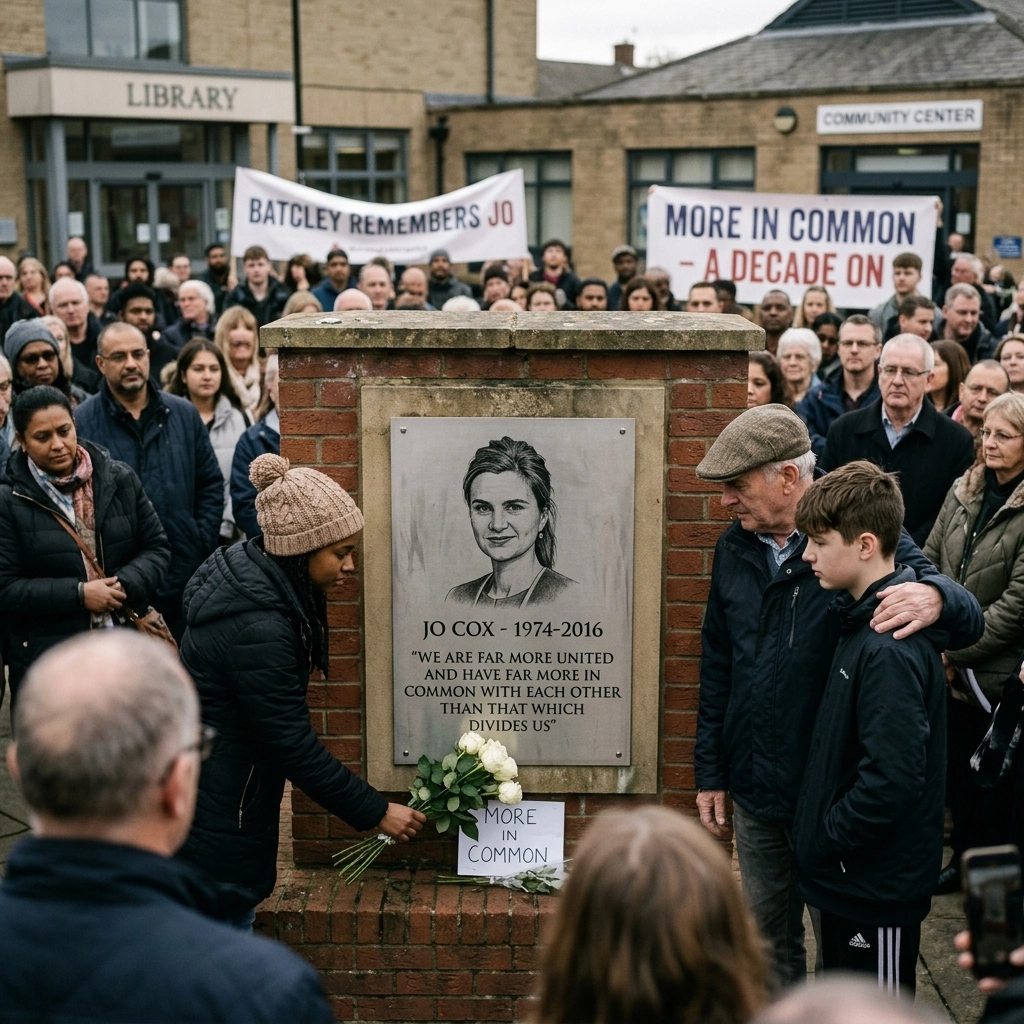
Ten years is a long time in politics, yet some moments remain etched into the collective memory of a nation. As we approach the tenth anniversary of the tragic passing of Jo Cox in June 2026, the landscape of British society has shifted in ways few could have predicted back in 2016. Jo was an MP for Batley and Spen for only a short while, but her impact has stretched far beyond her constituency and the timeframe of her life. Her maiden speech in the House of Commons contained a line that has since become a mantra for unity: "We are far more united and have far more in common with each other than things that divide us."
Reflecting on the last decade, it is clear that while the UK has faced significant periods of polarisation, the "More in Common" philosophy has provided a vital counter-narrative. It has sparked a movement that focuses on community resilience, the fight against loneliness, and a demand for a more civilised form of political discourse. At NowPWR, we believe in the power of independent news UK wide to highlight these untold stories of connection that often get lost in the noise of the 24-hour news cycle. Looking back at the legacy of Jo Cox isn't just about remembering a politician; it’s about examining how a single idea can transform the way thousands of people interact with their neighbours.
The Grassroots Growth of the Great Get Together
One of the most visible legacies of Jo Cox’s life is the Great Get Together. What started as a one-off tribute in 2017 has evolved into a cornerstone of the British social calendar. Over the past ten years, this initiative has seen millions of people across the country step out of their front doors to share food, conversation, and laughter with people they might otherwise never have met. These events aren’t just about tea and cake; they are about breaking down the invisible barriers that exist in our towns and cities.
In the decade since 2016, the Jo Cox Foundation has formalised this into a national "More in Common" network. We’ve seen untold stories emerge from small villages in the Highlands to bustling estates in South London, where residents have reclaimed their streets to foster a sense of belonging. In an era where digital echo chambers often reinforce our prejudices, these physical gatherings serve as a necessary antidote. They remind us that when we sit down face-to-face, our shared concerns: our children’s education, the state of our local parks, or the health of our elderly relatives: far outweigh our political differences.
The evolution of these community groups has also played a crucial role in crisis response. During the various social and economic challenges of the early 2020s, the networks established through the "More in Common" movement were often the first to mobilise, providing support for the vulnerable and ensuring no one was left behind. This decade has shown that "More in Common" is not just a sentimental slogan; it is a practical framework for building stronger, more resilient communities that can weather any storm. It is the kind of grassroots strength that independent news UK outlets are uniquely positioned to cover, bringing local triumphs to a national stage.
Tackling the Epidemic of Loneliness in Modern Britain
Before her death, Jo Cox had already begun the groundwork for what would become the Jo Cox Commission on Loneliness. She recognised, long before it became a mainstream political issue, that loneliness was a silent epidemic affecting people of all ages and backgrounds. Over the last ten years, this work has fundamentally changed the policy landscape in the UK. We saw the appointment of the world’s first Minister for Loneliness, a direct result of the commission’s recommendations, and a subsequent shift in how local councils and health services approach social isolation.
The decade between 2016 and 2026 has seen a move away from viewing loneliness as a personal failing and towards seeing it as a public health priority. The "More in Common" philosophy has been central to this shift. By encouraging people to look out for their neighbours and fostering inclusive community spaces, the movement has helped bridge the gap for those who feel disconnected. Untold stories of elderly residents finding new life through intergenerational projects or young parents finding support through community hubs are testament to the enduring relevance of Jo’s vision.
However, the challenge remains significant. As technology continues to change how we interact, the risk of "connected loneliness" has grown. The last ten years have taught us that policy changes are only half the battle; the other half is a cultural shift. We’ve seen a growing movement of people choosing to prioritise "social capital": the value of our social networks. This decade has proven that combatting loneliness requires a multifaceted approach: government action, local volunteerism, and an individual commitment to reach out. Jo’s legacy in this area is perhaps her most personal one, touching the lives of millions who have found connection because a spotlight was finally shone on their isolation.
The Long Road to a More Respectful Political Landscape
Perhaps the most difficult area of Jo Cox’s legacy to navigate is the state of political discourse. Jo was a champion of "Respectful Politics," advocating for a system where people could disagree passionately without resorting to abuse or intimidation. Looking back over the last decade, it is no secret that this has been a turbulent journey. The UK has seen high-stakes elections, intense debates over its place in the world, and a rise in the use of social media as a battlefield for political ideas.
Despite these challenges, the Jo Cox Foundation and various cross-party initiatives have worked tirelessly to keep the flame of respectful debate alive. We have seen the introduction of the Civility in Public Life programme and increased protections for representatives, but the real change is happening at the level of public expectation. There is a growing fatigue with the "politics of division," and a rising demand for leaders who can build bridges rather than walls. Independent news UK readers are increasingly looking for balanced, thoughtful analysis that avoids the inflammatory rhetoric often found in more partisan outlets.
The untold stories of politicians from opposing sides working together on legislation: from climate change to social care: rarely make the front pages, but they are a vital part of Jo’s legacy. In the ten years since her passing, there has been a concerted effort to train a new generation of political leaders through programmes like the Jo Cox Women in Leadership Scheme. These leaders are entering the fray with a commitment to the values Jo embodied: empathy, collaboration, and a fierce dedication to social justice. While the road to a truly respectful political landscape is long and often uphill, the foundations laid over the last decade provide a roadmap for a better way of doing politics.
The legacy of Jo Cox after ten years is not a static memorial, but a living, breathing movement. It is found in the neighbour who checks on the person living alone next door, the community group that holds a street party to welcome new arrivals, and the politician who chooses their words with care and respect. As we reflect on a decade of "More in Common," it is clear that while the world has changed immensely, the fundamental truth of Jo’s message remains as potent as ever.
The challenges of the next decade will undoubtedly require us to lean even further into these values. Whether we are navigating technological shifts, environmental changes, or economic fluctuations, our ability to find common ground will be our greatest strength. The untold stories of unity that have emerged since 2016 serve as a reminder that even in our darkest moments, there is a capacity for extraordinary kindness and collective action. By continuing to champion these values, we ensure that the progress made over the last ten years is not just a tribute to the past, but a promise for the future.