Kabul’s latest escalation has been hard to ignore this March, with residents reporting leaflet drops warning of strikes and a sharp rise in drone activity. What began as border friction has, since late February 2026, been described by officials on both sides in increasingly blunt terms, including talk of “open war”.
This has not come out of nowhere. Tensions between the Taliban-led government in Afghanistan and the Pakistani military have been building for months, and the current phase is now spilling across multiple provinces and border areas. For readers following independent news UK coverage, these are the kinds of untold stories that can get lost when attention shifts elsewhere.
What happened in Kabul — and the civilian toll
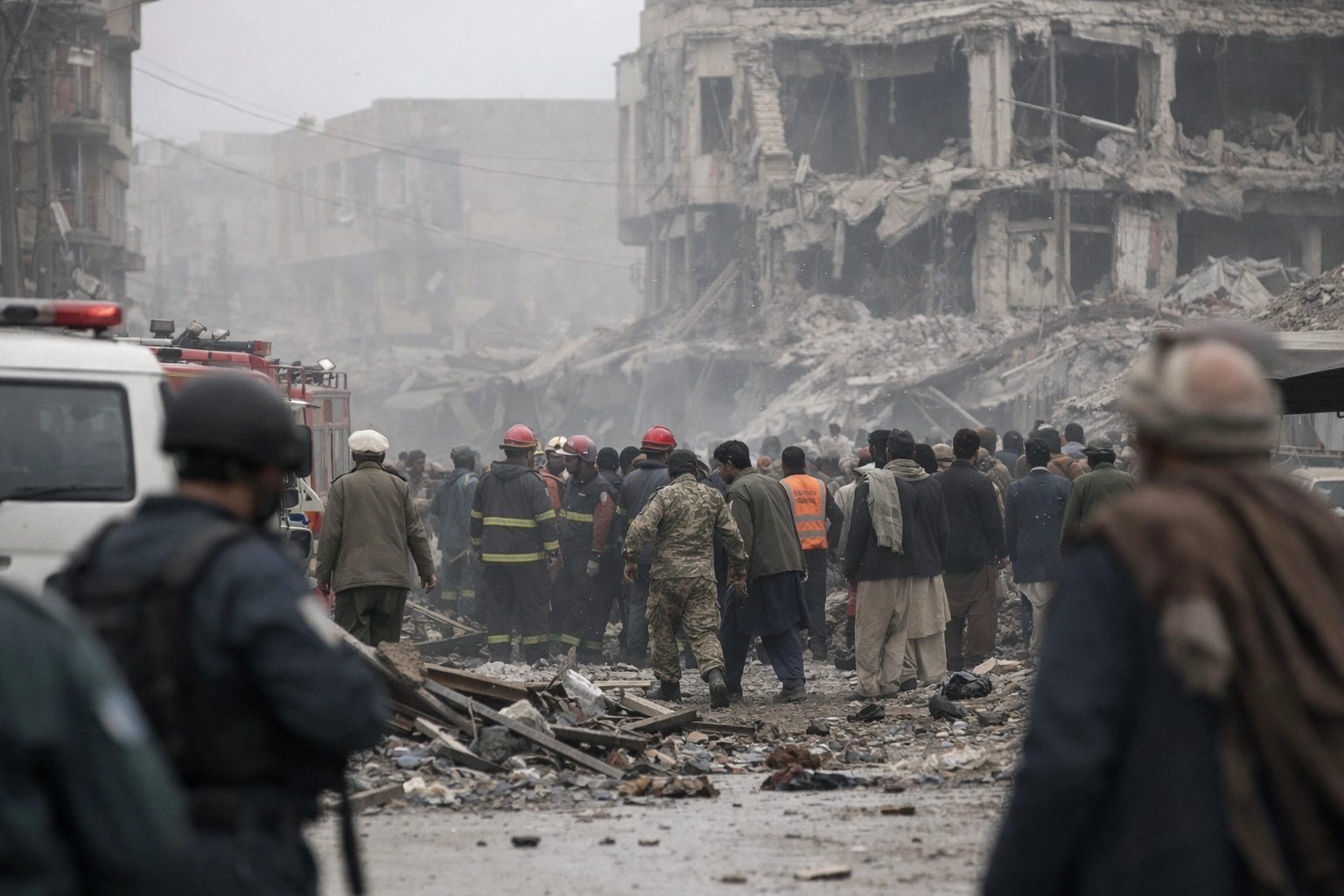
The deadliest reported incident in this surge came on 16 March, when an airstrike hit the Omid Addiction Treatment Hospital in central Kabul. Local accounts and reporting put the death toll at at least 408, with hundreds more injured.
Military officials said the site was being used to conceal secondary munitions, a claim that would shape any assessment under the laws of armed conflict. The UN Secretary-General condemned the strike and called for an urgent independent investigation into what was described as a potential breach of international humanitarian law.
The violence has not stayed in the capital. Through March, incidents were reported across at least ten provinces, with drones playing a bigger role and both sides accusing the other of crossing “red lines”, including in Paktika and Nangarhar. For civilians, that has meant disrupted healthcare, damaged infrastructure and repeated displacement — exactly the kind of on-the-ground detail investigative journalism UK audiences look for when the claims and counter-claims start flying.
Why it’s escalating — and why it matters beyond Afghanistan
At the centre of the current flare-up is the Afghanistan–Pakistan border, where long-running accusations and security pressures have collided. Islamabad has repeatedly accused the Taliban of allowing the Pakistani Taliban (TTP) to operate from Afghan territory, pointing to attacks inside Pakistan, including incidents in February such as a suicide bombing at a mosque in Islamabad. Pakistan’s military response has been framed as retaliatory strikes, but the pace and scale have pushed it towards a broader offensive.
The Taliban deny sheltering militants and have responded with cross-border raids and artillery fire. That tit-for-tat has proved difficult to slow down, even with mediation efforts by countries including China, Turkey and Qatar. A temporary pause agreed on 19 March offered a brief opening, though there are concerns it may simply allow both sides time to regroup.
Information is also part of the battlefield. Official accounts from Kabul and Islamabad often clash — “terrorist nests” versus “sovereignty” — and the gap between those narratives is where independent news UK reporting and investigative journalism UK can add value, especially when trying to track what is happening in border districts that rarely get sustained attention.
The wider consequences are already in focus. Regional instability can feed into migration pressures, security risks and market uncertainty, and the involvement of modern tactics such as drones and leaflet warnings points to a style of warfare that can displace people quickly, sometimes before strikes even land.
Global Support and the Path to Peace
Diplomatic pressure is building, but it is still not clear whether it will translate into a lasting de-escalation. China, Turkey and Qatar have all been linked to mediation efforts, while the UN has continued to push for scrutiny of alleged violations and for humanitarian access where services have been disrupted.
What happens next will likely hinge on two practical tests: whether both sides stick to any pause on strikes, and whether there is a credible channel for talks that includes border security, militant activity allegations and protections for civilians. For people on the ground, the immediate priority is simple — fewer attacks, functioning hospitals and safe routes to move.
With late March 2026 approaching, the direction of travel is still unclear — and the next developments will likely shape the next round of headlines, as well as the untold stories of the communities living through it.