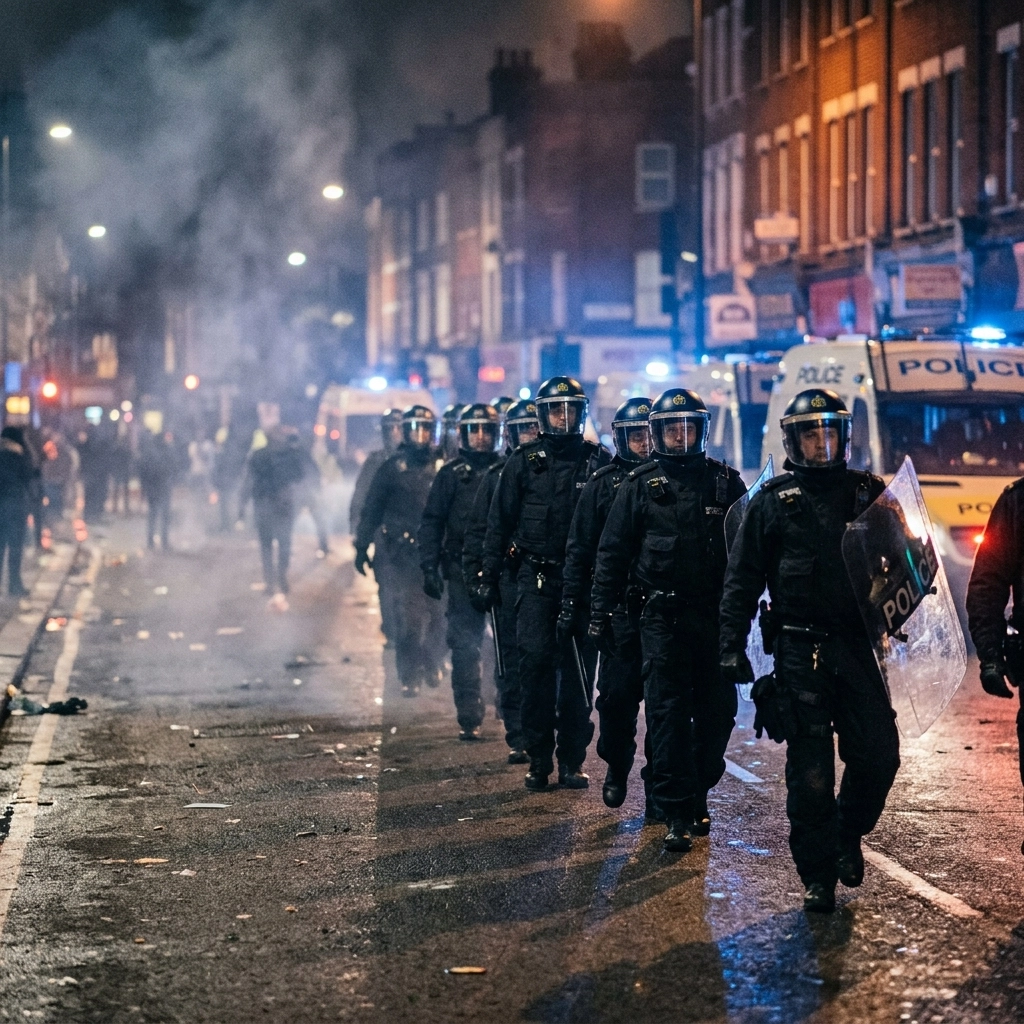
It is a strange world we are living in when a fifteen-second video on a smartphone can lead to a full-scale police operation on one of South London's busiest high streets. Over the last week, London has seen a series of disruptive events that look less like traditional protests and more like a new, digital-first form of civil unrest. The scenes at Clapham High Street were particularly jarring, as hundreds of teenagers descended on the area, not for a scheduled event or a political cause, but for a "link-up" organised through social media apps like TikTok and Snapchat.
This isn't just about a few kids hanging out; it is about the speed and scale at which modern disorder can manifest. Within minutes, a quiet afternoon of shopping at Marks and Spencer or Waitrose can turn into a chaotic scene of dispersal orders and arrests. For the residents and business owners in Clapham, the experience was unsettling, and for the police, it represented a significant challenge in managing public order in the age of viral content.
The shift from physical community spaces to digital ones means that the spark for these incidents happens far away from the eyes of traditional street patrols. By the time the crowds gather, the momentum is already high. As we look closer at these events, it is clear that the relationship between social media and street policing has reached a critical turning point.
The Mechanics of the Modern Social Media Riot
The unrest in Clapham and similar incidents in Birmingham were not random occurrences. They were highly coordinated, though the coordination happened in plain sight on public platforms. The term "link-up" has become the catch-all phrase for these mass gatherings. On TikTok and Snapchat, influencers or local ringleaders post a time and a location, often set to high-energy music, encouraging others to show up and "make a scene."
In Clapham, this resulted in hundreds of young people, some as young as thirteen, targeting major retail stores including Boots and Marks and Spencer. The atmosphere was reportedly volatile, with the sheer weight of numbers making it difficult for shop staff to manage. When the police arrived, the situation escalated. Five people were assaulted during the chaos, including four police officers. One officer had to be taken to hospital as a precaution, highlighting the physical danger present even in gatherings that some participants might view as "just a bit of fun."
What makes these social media-driven riots different from historical unrest is the lack of a central grievance. There is no manifesto or list of demands. Instead, the "content" is the goal. Participants are often seen filming the disorder on their own phones, hoping to go viral or gain followers by showing they were "there." This feedback loop: where the disorder is both the event and the marketing for the event: presents a nightmare for local authorities who are used to dealing with more predictable forms of public gathering.
Policing Strategy in the Digital Age
The Metropolitan Police and other forces across the UK have had to adapt their tactics rapidly to keep up with these trends. In the Clapham case, the police response was multi-faceted, focusing on both immediate containment and long-term investigation. Before the Tuesday incident, dispersal orders were already authorised. These orders give officers the power to tell groups to leave an area and not return for a set period, usually 48 hours. If they refuse, they can be arrested.
Detective Chief Superintendent Emma Bond, who has been vocal about the incidents, emphasised that this behaviour is "fuelled by online trends." To combat this, the police are no longer just looking at what is happening on the pavement. Specialist officers are now tasked with reviewing massive volumes of CCTV and body-worn camera footage. The goal is to identify not just those who were present, but the ringleaders who used their digital influence to encourage the disorder.
There is also a significant push for social media companies to take more responsibility. When a trend promoting criminal activity begins to gain traction, the "red flags" are often visible to the platforms' algorithms long before the police are notified. London Mayor Sadiq Khan has made it clear that those responsible will face the "full force of the law." This isn't just a hollow threat; the police are making it known that a "criminal record" is the most likely outcome for those involved. For a teenager, a conviction for violent disorder or assault on an emergency worker can permanently shut doors to future employment and international travel.
The Role of Information and Independent Media
As these events unfold, the way the public consumes information is also changing. Many people are moving away from traditional broadcast news, which can sometimes be slow to react to the rapid pace of digital-first unrest. This has led to an increased interest in alternative news sites that can provide more immediate, boots-on-the-ground perspectives. While traditional outlets provide the official narrative, people often look toward independent news uk sources to understand the underlying social trends and local impacts that mainstream media might miss.
The rise of independent news uk outlets is a direct response to the digital nature of modern life. When a riot is organised on TikTok, the community wants to know how it happened and what is being done to prevent the next one. Alternative news sites often bridge the gap between "viral rumours" and "official statements," providing a space for deeper analysis of why these teenagers feel the need to participate in such disruptive behaviour.
Looking forward, the challenge for London will be finding a balance between maintaining the freedom of digital spaces and ensuring the safety of the physical ones. The police have proven they can be robust in their response, but the "cat and mouse" game played on social media is far from over. As long as viral fame is seen as a reward, the risk of social media riots remains high. The focus must now turn to education and intervention, helping young people understand that the "link-up" they see on their screens has very real, very permanent consequences in the real world.
The events in Clapham serve as a wake-up call for parents, educators, and social media platforms alike. It is no longer enough to monitor where children go in the physical world; the digital streets they walk are just as capable of leading them into trouble. By the time the police are forced to deploy on the high street, the damage to the community and to the futures of those involved has often already been done. Moving forward, a collaborative effort between the police, tech companies, and local communities will be essential to ensure that the next viral trend doesn't end in more arrests and hospitalised officers.