




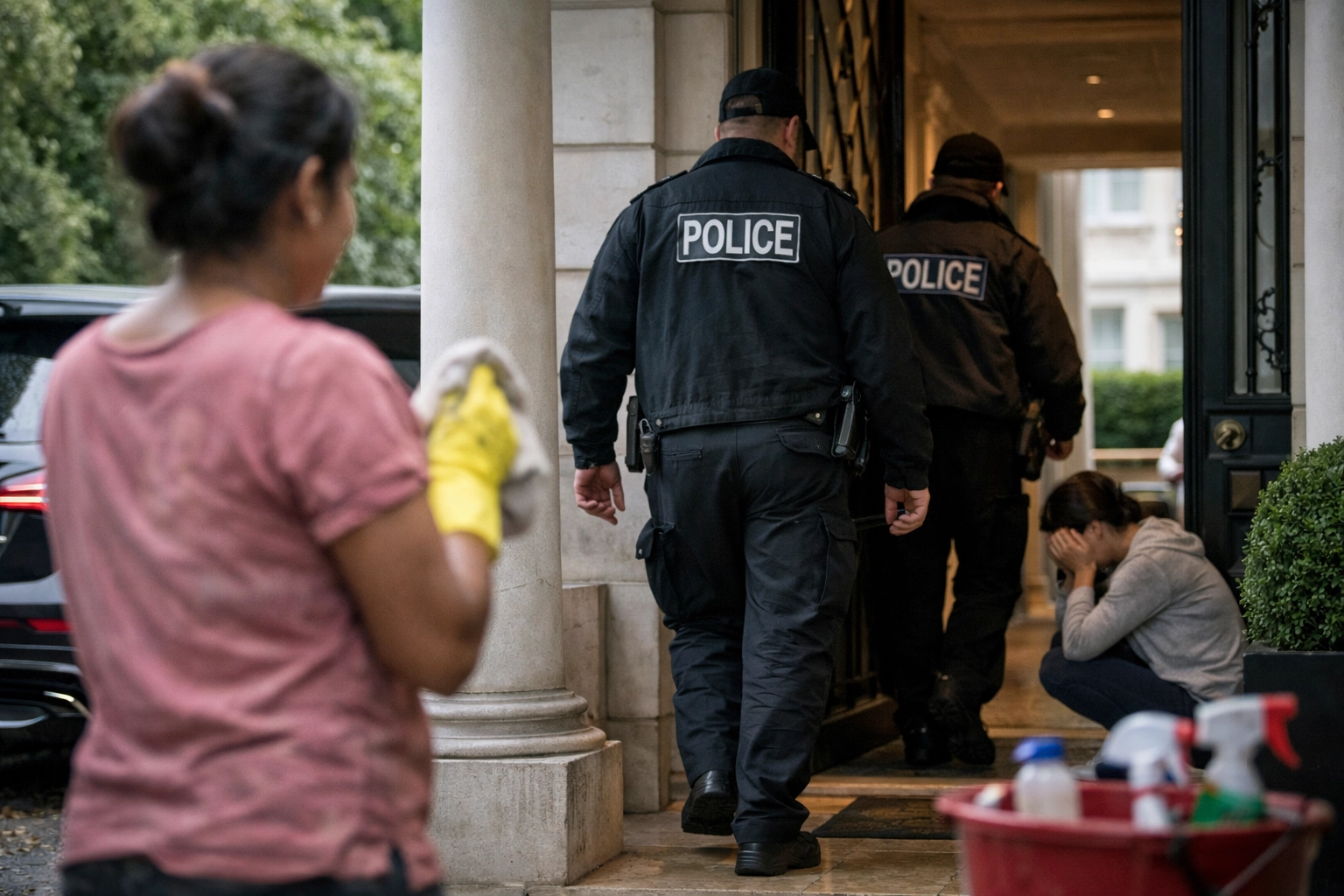
Behind the manicured hedges and stuccoed facades of London’s most exclusive postcodes, a different reality persists for thousands of domestic workers. In boroughs such as Kensington and Chelsea and Westminster, where property prices frequently exceed tens of millions of pounds, allegations of modern slavery are becoming an increasingly frequent fixture in human rights reports. This is a crisis occurring in plain sight, often shielded by the very privacy and prestige that define the capital’s luxury residential market.
While the city grapples with the "lights-out London" phenomenon: where swathes of high-end real estate sit empty as investment vehicles: the homes that are occupied frequently rely on a hidden workforce. These individuals, predominantly women from South East Asia, Africa, and the Middle East, enter the United Kingdom on Overseas Domestic Worker (ODW) visas. They are hired to cook, clean, and provide childcare for some of the world’s wealthiest families. However, the legal framework intended to protect them often leaves them vulnerable to extreme exploitation.
The scale of the issue is difficult to quantify due to the private nature of the work. Unlike factories or nail salons, which are subject to health and safety inspections, a private residence remains a sanctuary in the eyes of the law. This creates a significant barrier for authorities and charities attempting to identify victims of forced labour, human trafficking, and domestic servitude.
The invisible workforce behind the iron gates
The mechanics of domestic servitude in London’s luxury homes often begin long before the worker reaches Heathrow Airport. Many workers are recruited in their home countries with promises of fair wages and the opportunity to support their families. Upon arrival in the UK, however, the reality shifts abruptly. Passport confiscation is a primary tool of control used by employers to ensure compliance. Without travel documents, a worker is effectively trapped, unable to flee or seek help from local authorities.
Psychological coercion and physical isolation further cement this dependency. In many cases, domestic workers are prohibited from leaving the property without supervision. Their access to mobile phones and the internet is frequently restricted, preventing them from contacting family members or reaching out to support organisations. The layout of luxury homes, often featuring separate basements or "servant quarters," physically segregates these workers from the outside world, making their presence nearly invisible to neighbours or delivery drivers.
Wage theft is another hallmark of this hidden scandal. While the UK National Minimum Wage is a statutory requirement, many domestic workers in affluent households are paid a fraction of the legal limit. In extreme cases, they receive no payment at all, with employers claiming that the provision of food and a room: often a small, windowless space: covers the cost of their labour. This creates a cycle of debt bondage that is nearly impossible to break without external intervention.
The 2026 data indicates that the number of referrals to the National Referral Mechanism (NRM) involving domestic servitude has seen a steady rise. Advocates argue that these figures represent only the tip of the iceberg. The fear of deportation remains a powerful deterrent; many workers are told by their employers that the police will arrest them if they are found without their passports, leveraging their precarious immigration status to maintain a state of modern-day slavery.
Legislative hurdles and the private property barrier
The Modern Slavery Act 2015 was hailed as a landmark piece of legislation, designed to consolidate various offences relating to trafficking and slavery. While it has improved the prosecution of organised crime groups, its efficacy within the domestic sphere remains under intense scrutiny. A significant point of contention is the Overseas Domestic Worker visa. Changes made to the visa in 2012 initially tied workers to a single employer, a move that human rights groups argued was a "slave-maker’s charter." Although some flexibility was restored in 2016, allowing workers to change employers within a six-month period, the window of time is often too short for a victim of abuse to find new employment and secure their status.
The sanctity of the home also presents a unique challenge for the Metropolitan Police and the Home Office. Under current UK law, labour inspectors do not have the right of entry into private households unless they have a warrant based on the suspicion of a criminal offence. This means that unless a worker manages to escape and report their situation, or a whistleblower provides credible evidence, the abuse continues unchecked. The "private" nature of the crime makes it one of the most difficult forms of modern slavery to detect and prosecute.
Furthermore, the diplomatic immunity held by some wealthy residents in London’s "Ambassadors' Row" and surrounding areas complicates the legal landscape. While the UK government has taken steps to ensure that domestic workers employed by diplomats are aware of their rights, the hurdles to holding such employers accountable remain substantial. High-profile court cases have occasionally brought these issues to the surface, but for every case that makes it to a tribunal, hundreds more are believed to go unheard.
The disconnect between corporate transparency and private household management is also a factor. While large businesses are required to publish yearly modern slavery statements, there is no such requirement for the ultra-high-net-worth individuals who manage significant domestic staffs. The lack of accountability in the private hiring sector allows for a "shadow economy" of domestic labour to flourish in the heart of the capital.
A demand for transparency in the capital’s elite circles
As the 2020s progress, the pressure for systemic reform is mounting. International human rights organisations have repeatedly called on the UK government to decouple the ODW visa from specific employers entirely and to provide a clear pathway for victims of domestic servitude to regularise their status. The goal is to shift the power balance, ensuring that the threat of deportation is no longer a weapon that employers can use against their staff.
Community awareness is also being identified as a critical component of the solution. In boroughs like Kensington and Chelsea, local advocacy groups are working to educate residents and service providers: such as maintenance workers and healthcare professionals: on the signs of domestic servitude. These "first responders" are often the only outsiders who gain access to luxury homes, making their ability to spot red flags vital for the rescue of victims.
There is also a growing movement to standardise the recruitment of domestic staff for high-net-worth individuals. By requiring all domestic employment to pass through regulated agencies that conduct regular welfare checks, the opportunities for abuse could be significantly reduced. Such a system would move domestic work out of the shadows and into a regulated framework, similar to other service industries.
The current situation in London serves as a stark reminder that modern slavery is not a distant problem confined to global supply chains or remote regions. It is an active, ongoing issue residing within the most affluent sectors of British society. As the capital continues to attract global wealth, the demand for transparency and the protection of the most vulnerable workers remains a primary challenge for policymakers and law enforcement alike. The "hidden scandal" of London’s luxury homes is a test of the UK’s commitment to its own human rights standards, requiring a shift from reactive policing to proactive protection and legislative overhaul.