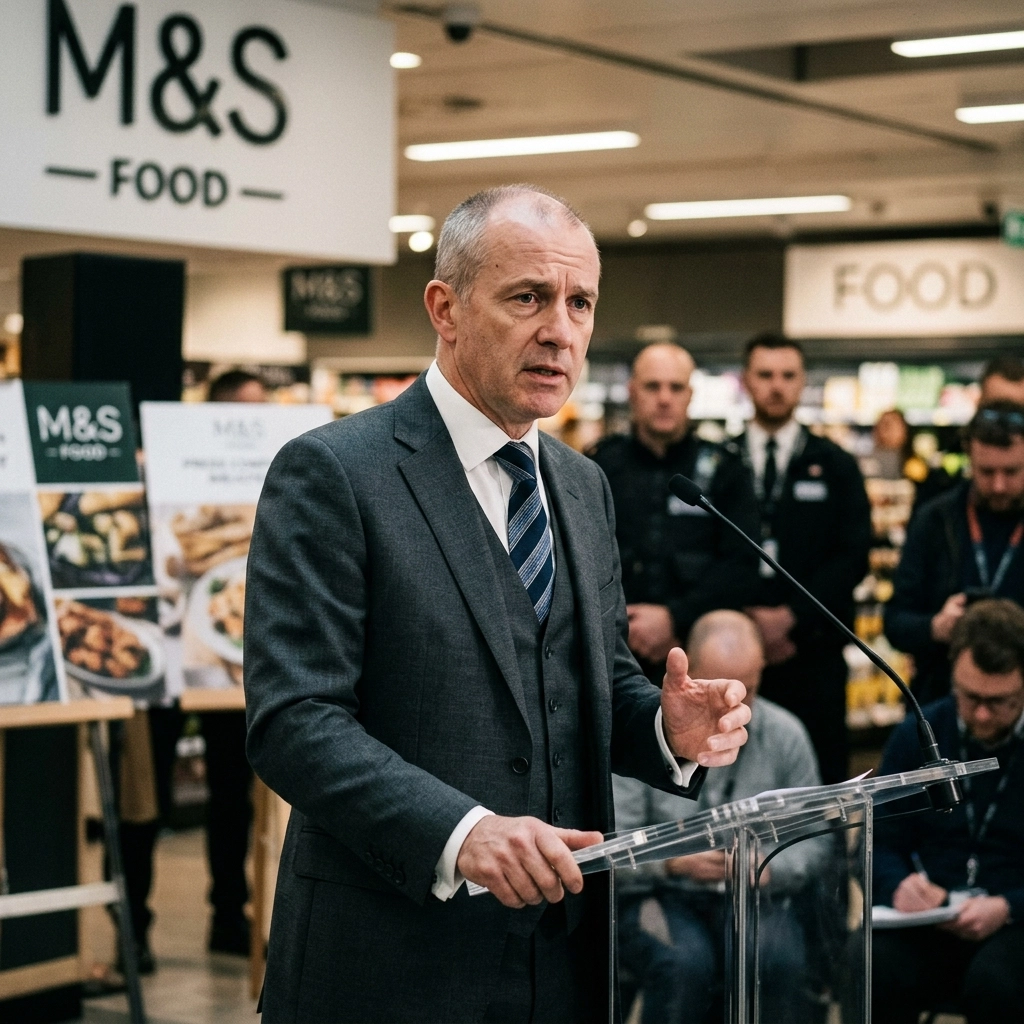
The British high street has long been the backbone of local communities, a place where people gather, shop, and work. However, a shadow has been growing over these familiar spaces, and recently, one of the most prominent voices in UK retail has decided enough is enough. The boss of Marks and Spencer has issued a stark and sobering warning regarding the state of retail crime in the United Kingdom, describing the current situation as more brazen, more organised, and more aggressive than ever before. This isn't just about a few missing items from the shelves; it is a fundamental shift in the safety and security of our public spaces, reflecting broader social challenges that are increasingly difficult to ignore.
In recent months, the narrative surrounding shoplifting has shifted from tales of individual desperation to a much more cynical reality. Retailers across the country are reporting that criminal gangs are operating with a sense of impunity, often targeting high-value items in broad daylight while showing a complete lack of regard for staff or security measures. For those who follow independent news uk, this trend is part of a larger conversation about the erosion of local policing and the changing nature of urban crime. The warning from M&S is a significant moment, marking a point where the industry is no longer willing to absorb these losses in silence.
The Escalation of High Street Lawlessness
The terminology used by the M&S leadership: "brazen" and "aggressive": is not chosen lightly. It points to a specific type of criminal activity that has moved beyond the traditional concept of shoplifting. We are now seeing incidents where groups of individuals enter a store, clear entire shelves of luxury goods or high-end clothing, and exit without any attempt to hide their actions. This level of openness suggests a belief that there will be no immediate consequences, a sentiment that is deeply troubling for both business owners and the general public. When we look at human interest stories from the perspective of retail workers, the toll is even more apparent. Staff members, who are there to provide a service and earn a living, are increasingly finding themselves on the front lines of verbal and physical abuse.
This rise in aggression has a ripple effect. It changes the atmosphere of a shopping trip from a pleasant weekend activity into something tense and guarded. Many shoppers have noticed an increase in security presence, tagged items, and even locked cabinets for basic goods. This transition is a direct response to the "organised" element of the crime mentioned by the M&S boss. These are not random acts; they are often coordinated efforts where stolen goods are quickly funneled into secondary markets or sold online. The sophistication of these operations means that traditional security measures are often bypassed, leaving retailers scrambling to find new ways to protect their stock and their people.
For those interested in real life stories news, the accounts from those working on the shop floor are harrowing. They describe feeling powerless as they watch their workplace be systematically targeted. The physical safety of employees is now a primary concern, overshadowing the financial loss of the products themselves. When crime becomes this blatant, it suggests a breakdown in the social contract: the unwritten agreement that we all behave with a certain level of respect and adherence to the law in shared spaces. The warning from M&S serves as a call to action to address this breakdown before the high street becomes a no-go zone for both retailers and customers.
The Political Fallout and Public Safety
The situation has moved beyond the aisles of the supermarket and into the halls of government. M&S has been particularly vocal in its criticism of local leadership, specifically pointing the finger at London Mayor Sadiq Khan. The argument presented is that a failure to effectively police the streets of the capital has created a vacuum where lawlessness can thrive. This political dimension adds another layer of complexity to the issue. It isn't just a matter of more security cameras; it's a debate about policing priorities, judicial outcomes, and the allocation of resources in a post-pandemic economy.
While the focus has been on London due to the high density of retail outlets, the problem is far from local. Retailers in cities across the UK are echoing these concerns. There is a growing sense that the retail sector has been left to fend for itself. When police forces are stretched thin, retail crime is often categorised as a "low-priority" offence, especially if no direct violence is involved at the point of theft. However, the M&S warning highlights that the threat of violence is always present in these aggressive encounters. The lack of a robust police response can embolden criminals, leading to the "brazen" behaviour currently being reported.
The conversation about public safety is also a conversation about the future of our urban centres. If major retailers feel that they cannot safely operate in certain areas, the inevitable result is store closures. We have already seen several big names pull out of high streets, citing both economic pressures and rising crime rates. This leads to a decline in footfall, which then impacts smaller, independent businesses that rely on the gravity of larger stores to bring in customers. The demand for better protection isn't just about corporate profits; it's about maintaining the viability of our towns and cities. There are even petitions circulating that call for tougher sentencing for those who assault retail workers, showing that the public appetite for change is significant.
A Shifting Landscape for UK Retailers
Looking ahead, the retail industry is at a crossroads. The economic impact of high-scale theft is substantial, but the cost of prevention is also rising. Retailers are having to invest heavily in private security, advanced CCTV, and forensic marking technologies. These costs are often passed down to the consumer, meaning that the law-abiding shopper ends up paying a "crime tax" on their everyday goods. In an era where the cost of living is already a major concern, this added pressure is the last thing families need. The human interest stories here aren't just about the victims of crime, but about the millions of people whose daily lives are subtly made more difficult and more expensive by this surge in activity.
Furthermore, the nature of retail work is being redefined. It is becoming a high-stress environment where conflict resolution skills are as important as product knowledge. This has led to challenges in recruitment and retention within the sector. Why would someone choose a career in retail if they feel their safety is at risk every time they clock in? This is a question that the industry and the government must answer together. The "real life stories news" coming out of the sector suggests a workforce that feels undervalued and unprotected.
To combat this, some retailers are exploring "inside" solutions, such as closer collaboration with other businesses to share intelligence on known shoplifting gangs. This collective approach might be the only way forward in the absence of a significant increase in public policing. By treating retail crime as a serious, organised threat rather than a series of minor incidents, there is a hope that the tide can be turned. However, as the M&S boss has made clear, this requires a shift in how the law is enforced and how the safety of our high streets is prioritised by those in power.
The warning issued by M&S is a reflection of a wider societal issue that touches on economics, politics, and the basic principles of law and order. It serves as a reminder that the health of our high streets is a barometer for the health of our communities. When brazen crime becomes the norm, it signals a need for urgent intervention. Whether through technological innovation, political pressure, or a renewed focus on community policing, the goal remains the same: to ensure that the high street remains a safe and welcoming place for everyone. The coming months will be a testing time for retailers and policymakers alike as they attempt to address this growing crisis and restore confidence in our public spaces.
The current situation regarding retail crime in the UK highlights a complex interplay between social behaviour, economic pressure, and the effectiveness of law enforcement. As major retailers like Marks and Spencer take a public stand, the conversation is moving from the stockroom to the national stage. The outcome of this debate will likely determine the look and feel of the British high street for years to come, impacting workers, businesses, and shoppers across the country.